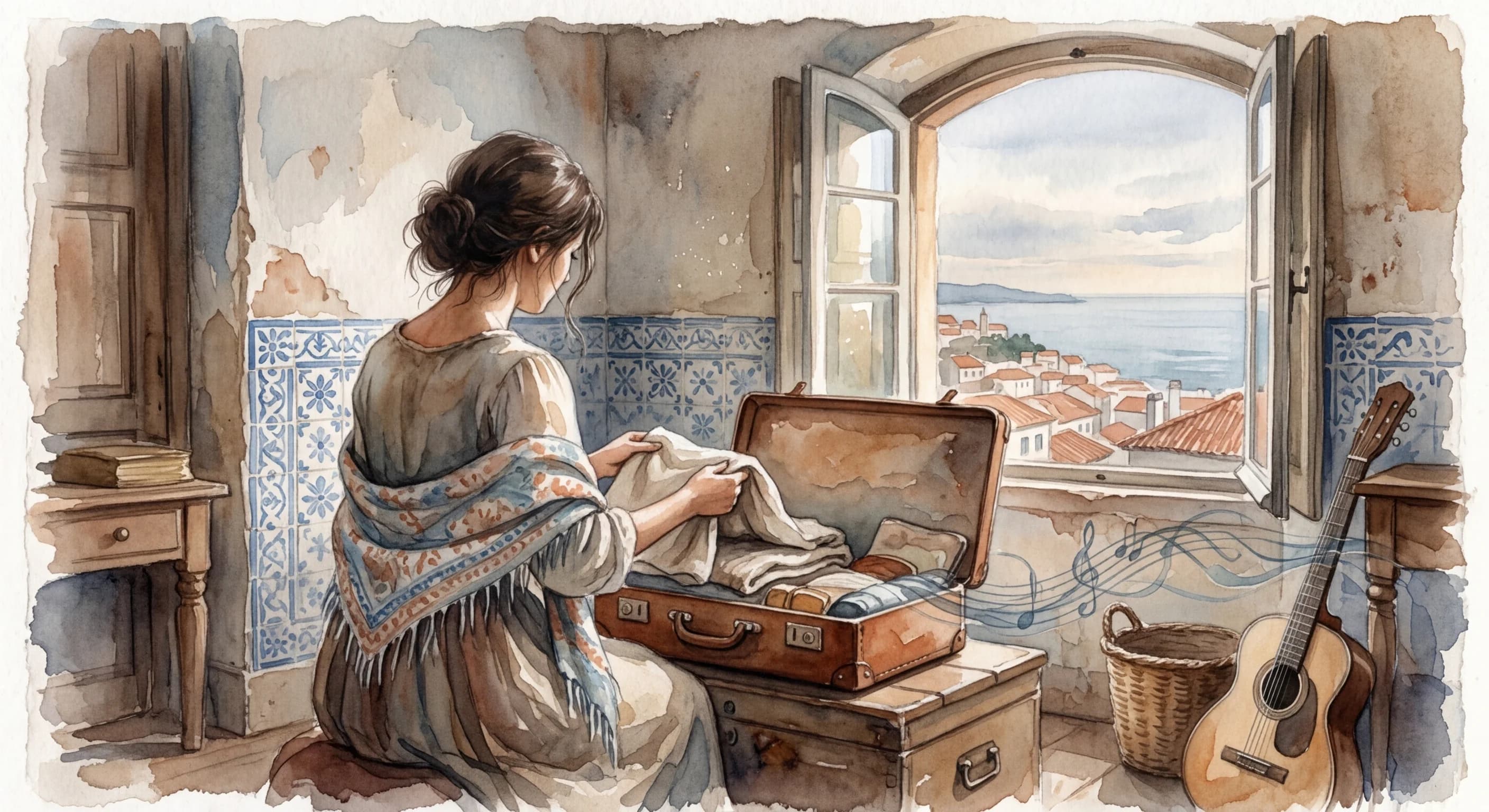
Empacar
/em-pah-CAR/
Meaning
While literally translating to 'to pack' or 'to put away,' 'empacar' in Portuguese, especially in Portugal, transcends a mere physical act. It encapsulates the profound, often bittersweet, process of preparing for departure, whether it's for a journey, a move, or a significant life transition. This isn't just about fitting items into a suitcase; it's an emotional ritual of sorting memories, confronting attachments, and mentally bracing for the unknown that lies ahead, imbued with a sense of farewell to what is being left behind.
Literal Translation
to pack
The Story Behind the Word
The deep emotional resonance of 'empacar' in Portuguese culture, particularly in Portugal, is intimately tied to a historical narrative of migration, seafaring, and a profound connection to 'saudade' – that untranslatable feeling of longing and nostalgia. For centuries, Portuguese people have embarked on journeys across oceans, often with the understanding that return was uncertain. 'Empacar' thus became more than just packing; it was the physical manifestation of severing ties, preparing for separation from loved ones, and carrying the essence of home within limited belongings. This act, therefore, carries the weight of a people accustomed to departures and the emotional labor involved in re-establishing oneself elsewhere, mirroring a national identity shaped by discovery and emigration. It reveals a culture that acknowledges the emotional toll of transitions, embedding it even in mundane actions.
Experience It
Leaving Home for University
Maria slowly folded her childhood clothes, each item a whisper of a memory. 'Estou a empacar,' she sighed to her mother, a mix of excitement for university and a pang of sadness for leaving her familiar room etched on her face. It was more than just packing; it was closing a chapter.
Before a Long Journey
As João meticulously arranged his belongings into his old travel trunk, he felt the weight of the upcoming months abroad. 'Tenho de empacar com calma,' he thought, knowing that each packed item represented a piece of his life he was taking with him, and another he was temporarily leaving behind.
The Deeper Meaning
The word 'empacar' reflects a worldview that acknowledges the inherent emotionality of transition and departure. It suggests that even seemingly practical actions are imbued with psychological weight. It underscores a cultural understanding that leaving a place or a phase of life is not merely a logistical challenge but a profound emotional experience, a process of internal as well as external preparation for the next chapter.
Did You Know?
The word 'empacar' can also be used, less commonly, to describe an animal that refuses to move forward, like a mule 'balking,' subtly linking the physical act of packing with a resistance to motion or change.
How It's Used
Used primarily when preparing to travel or move, signifying the act of packing belongings into suitcases or boxes.