Cofradia
/koh-frah-DEE-ah/
Meaning
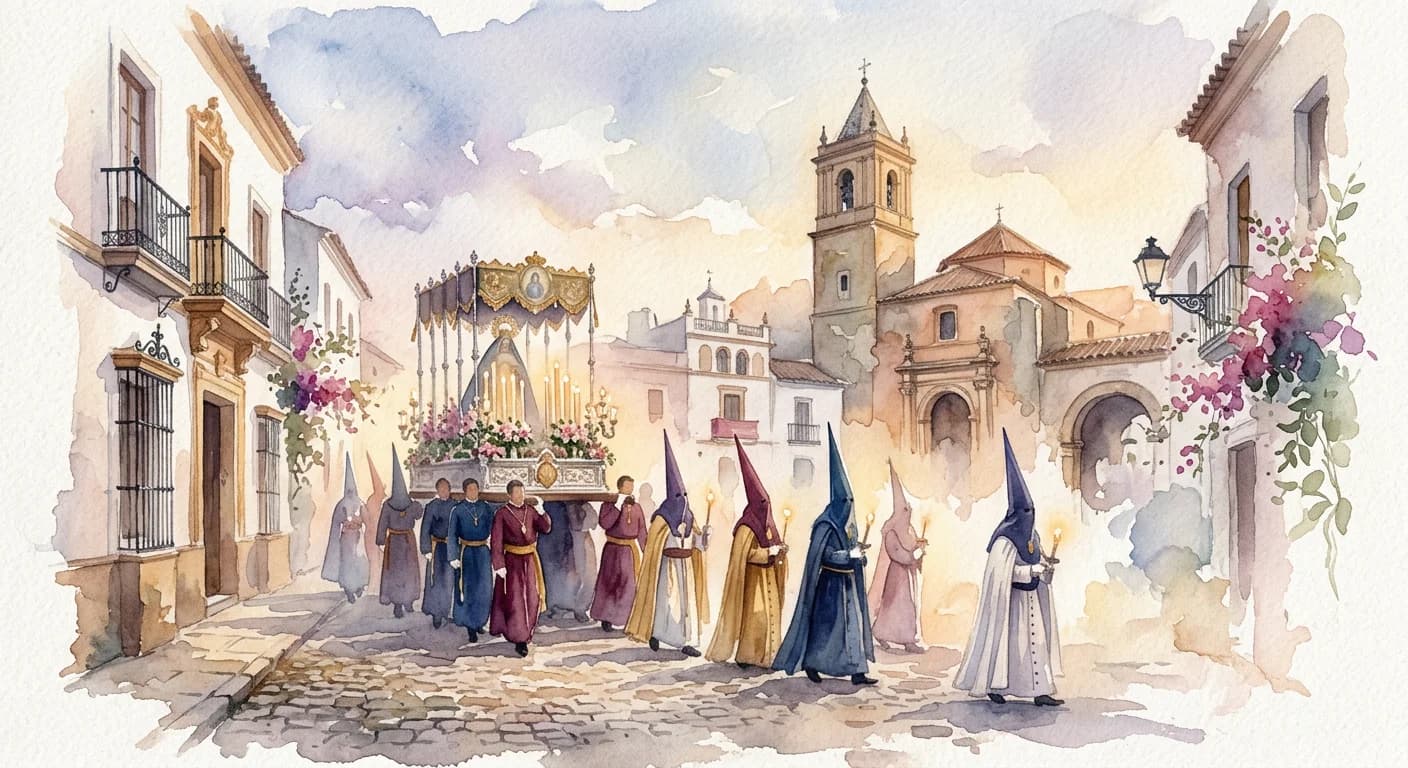
A "cofradía" transcends a mere religious club; it's a vibrant, intergenerational spiritual family bound by shared devotion to a patron saint or religious mystery. These brotherhoods are the custodians of ancient traditions, meticulously organizing elaborate processions that transform public spaces into living theaters of faith. Beyond ritual, they foster profound community ties, offering mutual support and engaging in charitable endeavors, embodying a collective identity where individual faith converges with communal responsibility and historical legacy.
Literal Translation
Brotherhood, confraternity
The Story Behind the Word
The concept of "cofradía" is deeply etched into Spain's cultural and religious fabric, dating back to medieval guilds and confraternities that combined spiritual devotion with social welfare. These organizations flourished during the Counter-Reformation, becoming powerful vehicles for popular piety and communal identity. They reveal a worldview where faith is not just a private affair but a public, communal expression, intricately woven into daily life and civic identity. The elaborate Holy Week processions, for instance, are not merely parades but solemn acts of public penitence and devotion, often passed down through families for centuries, connecting generations to a shared spiritual heritage and collective memory. This tradition highlights a culture that values collective action, ritual, and the visible manifestation of belief.
Experience It
Holy Week Procession
The brothers of the Cofradía de la Macarena, cloaked in their distinctive robes, meticulously prepared their revered paso for the Holy Week procession. For months, they had pooled resources and rehearsed, ensuring every detail honored their Virgin, embodying centuries of shared devotion and communal effort in Seville.
Community Support
When old Manolo fell ill, members of his local cofradía rallied around him, providing meals and assistance. Their bond extended beyond Sunday mass; it was a commitment to mutual care, reflecting the cofradía's role as a bedrock of social support and shared responsibility within the neighborhood.
The Deeper Meaning
The "cofradía" reflects a worldview where individual spirituality is inextricably linked to communal practice and historical memory. It posits that true devotion is not solitary but thrives within a collective, where shared responsibility, mutual aid, and the public expression of faith reinforce identity and belonging. This concept underscores the Spanish appreciation for tradition, ritual, and the visible manifestation of deeply held beliefs as cornerstones of societal cohesion.
Did You Know?
Some cofradías in Spain are so ancient that their founding documents predate the discovery of America, showcasing an unbroken chain of tradition for over 500 years!
How It's Used
Used to refer to religious brotherhoods or lay fraternities, particularly those involved in organizing religious festivals and processions, especially during Holy Week. It also broadly refers to any association or fraternity with a shared purpose, often with religious undertones.