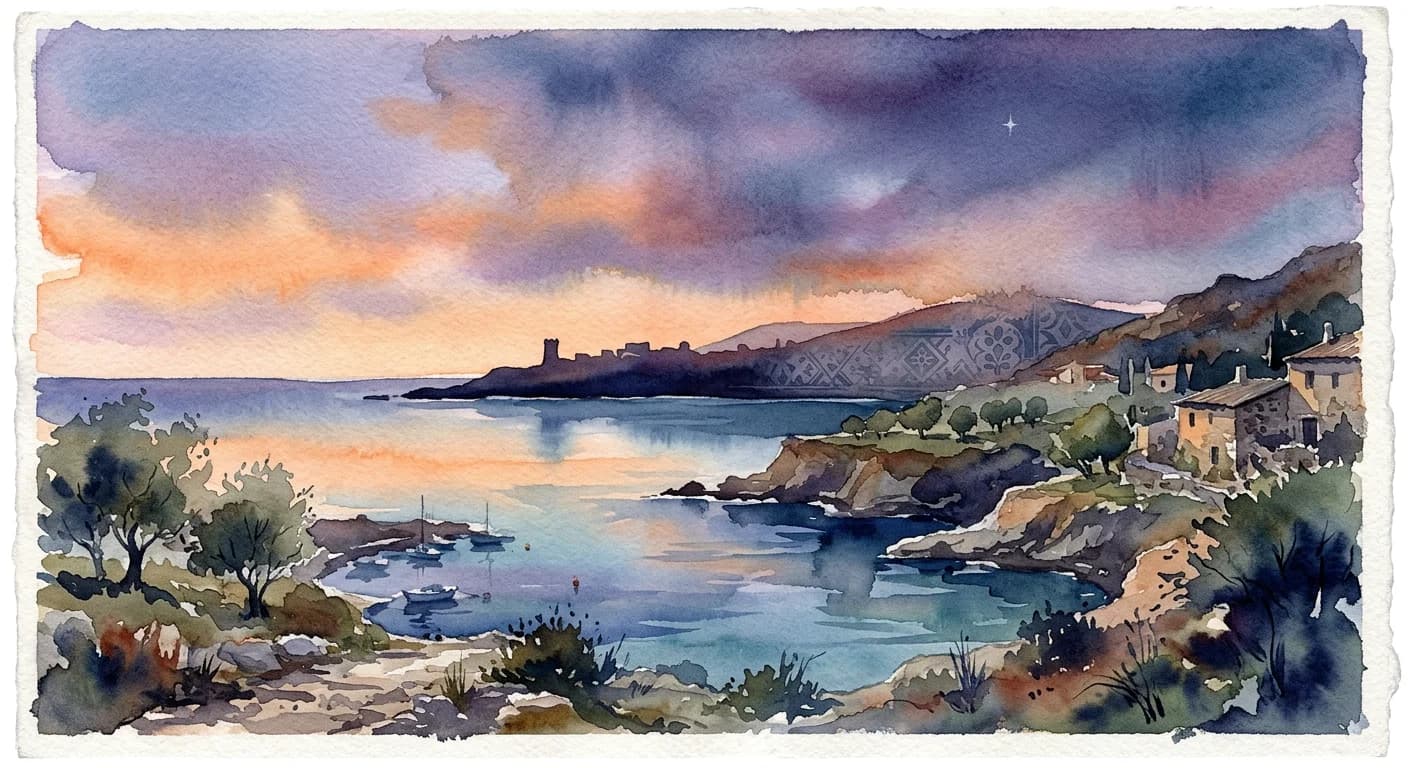
Crepúsculo
/kreh-POOS-koo-loh/
Meaning
Crepúsculo embodies the ethereal period when the sun dips below the horizon, painting the sky with fleeting hues of orange, purple, and deep blue, marking the gentle transition from day to night. It's more than just a time; it's a profound atmosphere, often imbued with a poetic melancholy, a quiet contemplation where the world seems to hold its breath. This liminal space evokes a bittersweet appreciation for the day's closure and the subtle, almost magical, shift in energy as light fades and the stars begin their slow emergence.
Literal Translation
Twilight/Dusk
The Story Behind the Word
In Spanish culture, deeply rooted in both Catholic tradition and a rich poetic heritage, 'crepúsculo' often signifies a moment of reflection and spiritual contemplation. It is a time when the boundaries between the mundane and the profound seem to thin, inviting introspection and a connection to something larger than oneself. This appreciation for transitional moments, for the beauty in fading light and impending darkness, reveals a culture that values contemplation, acknowledges the cyclical nature of life and death, and finds profound beauty in melancholy. It's woven into literature, music, and art, often symbolizing endings, new beginnings, or a quiet introspection.
Experience It
Evening Reflection
As the last embers of the day faded, María sat on her balcony, watching the 'crepúsculo' deepen over the city. The soft, fading light cast long shadows, and she found herself lost in thought, reflecting on the day's events and the quiet promise of the night.
Poetic Inspiration
The poet often sought inspiration during the 'crepúsculo,' finding the subtle interplay of light and shadow to be a profound muse. He believed this magical hour whispered secrets of life's impermanence and the quiet beauty of transition, filling his mind with evocative imagery.
What Gets Lost in Translation
English speakers might equate 'crepúsculo' simply with 'twilight' or 'dusk,' missing the deeper, almost spiritual, resonance it holds in Spanish culture. It's not merely a photometric measurement of light, but an emotional and contemplative state. The word carries a weight of poetic beauty and a sense of introspective pause that 'twilight' doesn't always convey, often implying a wistful appreciation for the transient.
Across Cultures
While many languages have words for twilight, 'crepúsculo' shares a similar poetic depth with the Portuguese 'crepúsculo' or the French 'crépuscule,' both deriving from the same Latin root. German has 'Dämmerung,' which also encompasses both dawn and dusk with a similar atmospheric quality, though perhaps less pronounced in its melancholic overtones. Japanese has 'tasogare,' literally 'who is that?,' referring to the time when faces become indistinguishable, highlighting the ambiguity of the fading light.
The Deeper Meaning
The word 'crepúsculo' unveils a philosophical appreciation for liminality and transition. It suggests that profound beauty and meaning can be found not just in clarity and light, but in the ambiguous, fading moments between states. This perspective embraces the bittersweet nature of existence, acknowledging that endings often precede beginnings, and that quiet contemplation in these in-between times is essential for understanding the natural rhythms of life.
Did You Know?
The word 'crepúsculo' comes from the Latin 'crepusculum,' which itself is derived from 'creper,' meaning 'dark, obscure.' It's related to 'crepuscular' animals, those active during twilight hours!
How It's Used
Used to describe the time of day around sunset or sunrise, often with a poetic or evocative connotation.