Criollo
/kree-OH-yoh/
Meaning
Criollo, in the Argentine context, transcends a mere descriptor of birth. It embodies the essence of something profoundly rooted in the American soil, yet undeniably shaped by Spanish heritage. It speaks to a unique identity forged in the crucible of colonization and subsequent independence, distinct from both the indigenous peoples and the European colonizers. This term evokes a deep sense of belonging to the New World, signifying a cultural blend that has given rise to Argentina's unique traditions, cuisine, and national character.
Literal Translation
Creole
The Story Behind the Word
The term 'criollo' emerged during the colonial era to differentiate Spaniards born in the Americas from those born on the Iberian Peninsula (peninsulares). This distinction was crucial, as criollos often faced discrimination in accessing high-ranking positions despite their wealth and education, fostering a nascent sense of separate identity. This simmering resentment ultimately fueled the independence movements across Latin America. In Argentina, 'criollo' became a cornerstone of national identity, celebrating a distinct blend of European influence adapted and transformed by the American landscape and its existing cultures. It signifies the birth of a new cultural paradigm, neither fully Spanish nor indigenous, but uniquely American.
Experience It
A Taste of Tradition
At the family barbecue, Tía Elena proudly announced, 'These empanadas are truly criollas, made with my grandmother's recipe.' Her words evoked generations of Argentine culinary heritage, passed down and perfected on this very land.
The Gaucho's Spirit
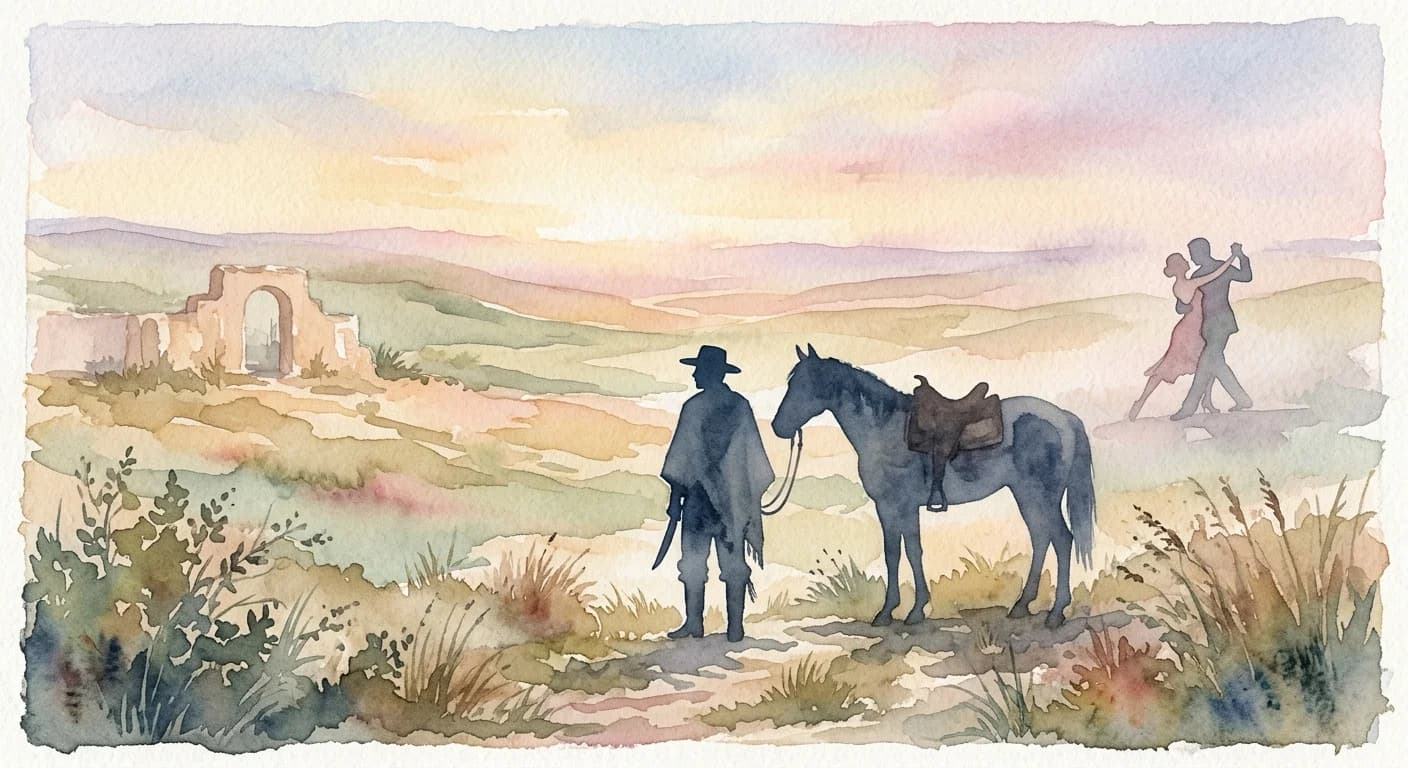
Watching the gauchos expertly herd cattle across the pampas, Martín remarked, 'Their horsemanship and connection to the land are the very definition of criollo.' It spoke to a deep-seated identity shaped by the Argentine countryside and its unique traditions.
The Deeper Meaning
Criollo reveals a profound philosophical insight into identity formation: that culture is not static, but a dynamic, evolving synthesis. It speaks to the ongoing process of adaptation and creolization, where diverse elements intertwine to create something entirely new and distinct. It underscores the idea that authenticity isn't solely tied to original purity, but to the unique character forged through historical confluence and geographical belonging.
Did You Know?
The 'criollo horse' is a distinct Argentine breed known for its endurance and hardiness, perfectly adapted to the demanding conditions of the Pampa, showcasing how the term extends beyond people to define truly native elements shaped by the land.
How It's Used
Used to describe people of Spanish ancestry born in the Americas, as well as food, animals, and cultural elements originating from the Americas but with Spanish influence.