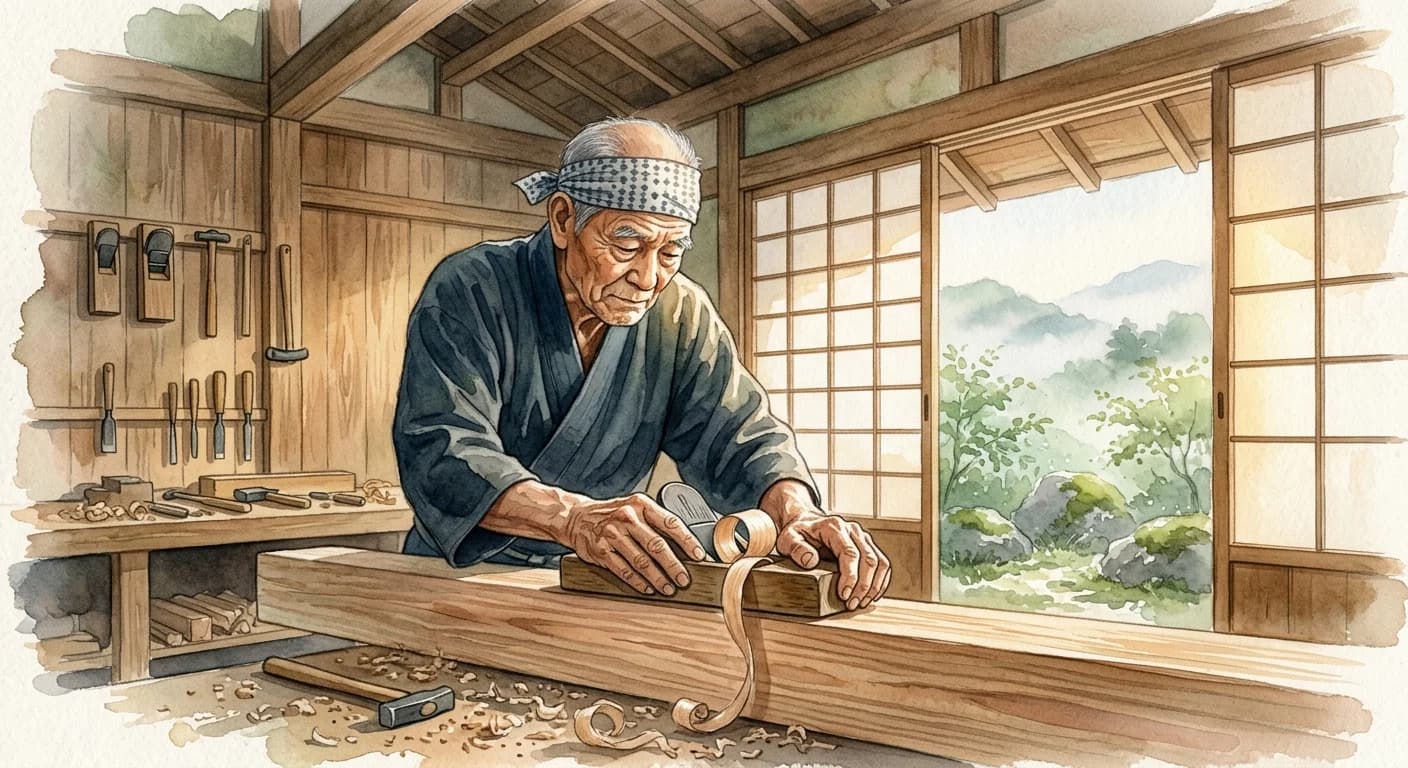
Daiku
/DAH-ee-koo/
Meaning
A Daiku is far more than a mere carpenter; they are master craftsmen, deeply attuned to the spirit of wood and the art of construction. With hands skilled through generations of tradition, they transform raw timber into enduring structures, meticulously joining elements without nails, embodying precision, balance, and aesthetic harmony. Their work is a testament to patience, an unwavering dedication to material integrity, and a profound respect for both functionality and beauty, creating spaces that resonate with timeless Japanese sensibility.
Literal Translation
carpenter
The Story Behind the Word
The term Daiku is steeped in centuries of Japanese architectural history, particularly in the construction of temples, shrines, and traditional homes. It reflects a culture where craft is seen as a spiritual path, a way of life, not just a job. The Daiku's mastery extends beyond technical skill; it includes an understanding of the wood's grain, its natural tendencies, and how it will age, ensuring structures that last for hundreds of years. This holistic approach reveals a worldview that values harmony with nature, sustainability, and the belief that true beauty emerges from meticulous attention to detail and honest craftsmanship. The respect for a Daiku stems from their ability to imbue structures with a sense of peace and permanence, connecting past generations with the future.
Experience It
Respecting the Master Daiku
A young apprentice watched in awe as the elderly Daiku meticulously planed a beam, its surface becoming impossibly smooth. He understood that the master wasn't just shaping wood; he was coaxing out its inherent beauty, a skill honed over sixty years, commanding silent reverence from all present.
Building a Tea House
When the wealthy merchant decided to build an authentic tea house, he sought out the most renowned Daiku in the region. He knew that only a true master could create a structure where every joint, every angle, and every piece of timber would contribute to a profound sense of tranquility and perfect balance.
The Deeper Meaning
The concept of Daiku embodies the Japanese philosophy of 'mono no aware' (the pathos of things) and 'wabi-sabi' (imperfection, impermanence, incompleteness). It acknowledges the inherent beauty in natural materials and the passage of time, embracing the wood's character rather than forcing it, and creating structures that age gracefully, becoming more profound with each passing season.
Did You Know?
Many traditional Japanese wooden structures, built by Daiku, have stood for over a thousand years without nails or screws, relying solely on intricate joinery.
How It's Used
Used to refer to a traditional Japanese carpenter or builder, emphasizing their skill and craftsmanship.