Dalang
/DAH-lahng/
Meaning
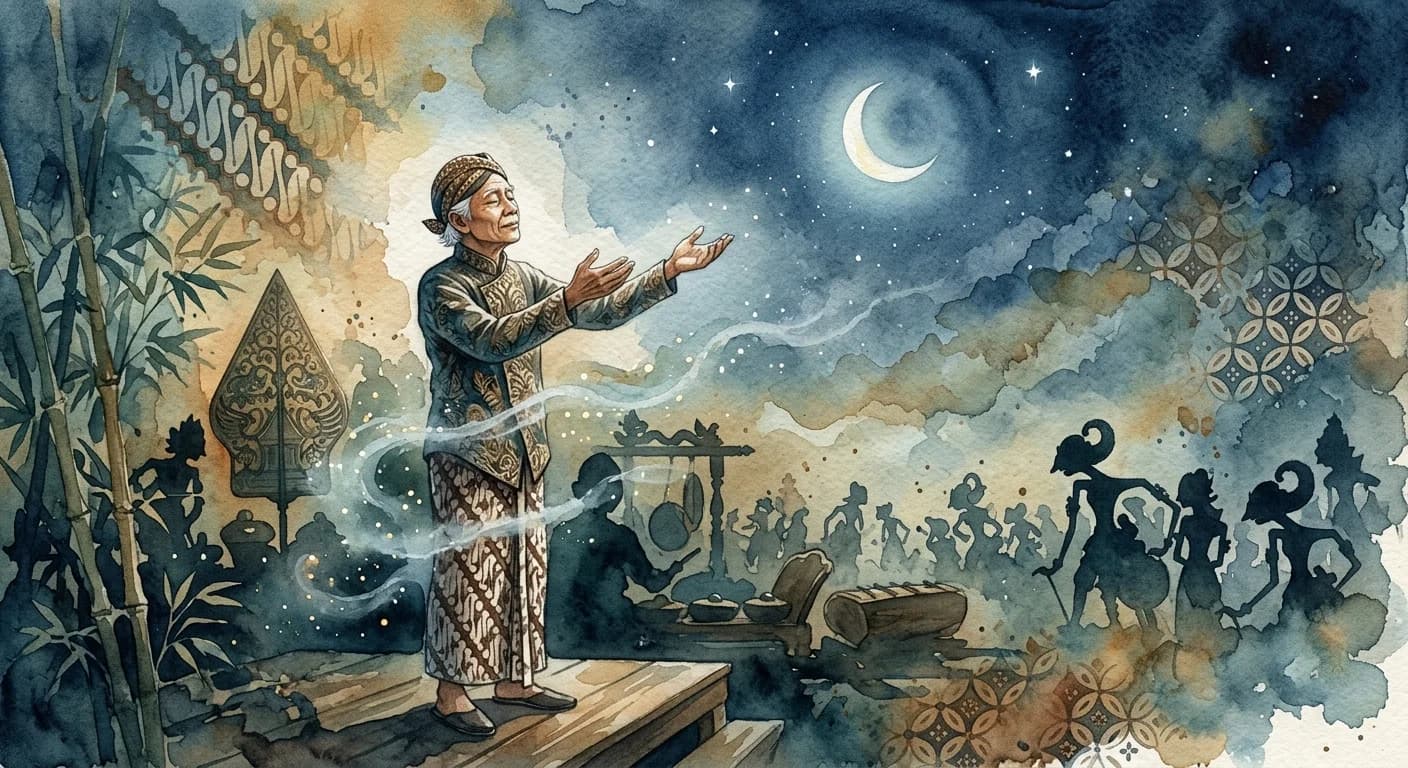
A Dalang is the revered master puppeteer of Javanese Wayang Kulit, a singular figure who breathes life into an entire universe of shadow. Far more than a performer, they are the conductor of the gamelan orchestra, the chameleon voice for dozens of characters, and the profound storyteller who weaves ancient epics, spiritual wisdom, and contemporary social commentary into a mesmerizing, all-night spectacle. They command not just puppets, but the very hearts and minds of their audience, guiding them through moral dilemmas and existential reflections.
Literal Translation
Puppet master
The Story Behind the Word
The concept of the Dalang is deeply embedded in Javanese spiritual and philosophical traditions, reflecting a worldview where art, spirituality, and social commentary are inseparable. Wayang Kulit performances, led by the Dalang, traditionally served as a primary vehicle for transmitting moral lessons, religious teachings (Hindu, Buddhist, and later Islamic), and historical narratives. The Dalang's ability to manipulate shadows speaks to the Javanese understanding of reality and illusion, where the seen (the puppet) and unseen (the shadow, the voice, the spirit) coexist and interact. Their role as an intermediary between the mundane and the mythical, guiding souls through complex narratives, underscores a culture that values wisdom, eloquence, and the power of storytelling to shape individual and collective understanding. This word exists because it embodies a multi-faceted spiritual and intellectual leadership essential to Javanese cultural identity.
Experience It
Village Wayang Night
Under the full moon, the village gathered, hushed and expectant. The Dalang began his rhythmic tapping, the gamelan responded, and soon, the intricate shadows danced on the screen, his voice shifting effortlessly from a booming king to a mischievous clown, captivating every soul until dawn.
Modern Dalang's Message
In a contemporary performance, the Dalang subtly wove in critiques of local corruption and environmental issues, using ancient characters to voice modern concerns. The audience chuckled knowingly, understanding the deeper message veiled within the epic tale, a testament to the Dalang's enduring relevance.
The Deeper Meaning
The Dalang embodies the Javanese philosophical concept of 'rasa' – deep feeling, intuition, and spiritual insight. Their mastery isn't just technical; it's a profound connection to the spiritual essence of the stories and characters. This reveals a worldview where truth is often found in nuanced expression, where spiritual lessons are absorbed through immersive cultural experiences, and where a single individual can serve as a conduit for collective wisdom and moral guidance.
Did You Know?
A Dalang traditionally performs for up to 9 hours straight, without breaks, embodying dozens of characters and conducting an orchestra, a true marathon of artistic and intellectual prowess!
How It's Used
The term 'Dalang' refers to the puppeteer in Wayang Kulit performances. It is also sometimes used metaphorically to describe a person who skillfully manipulates events or people from behind the scenes.