Dengaku
/DEN-gah-koo/
Meaning
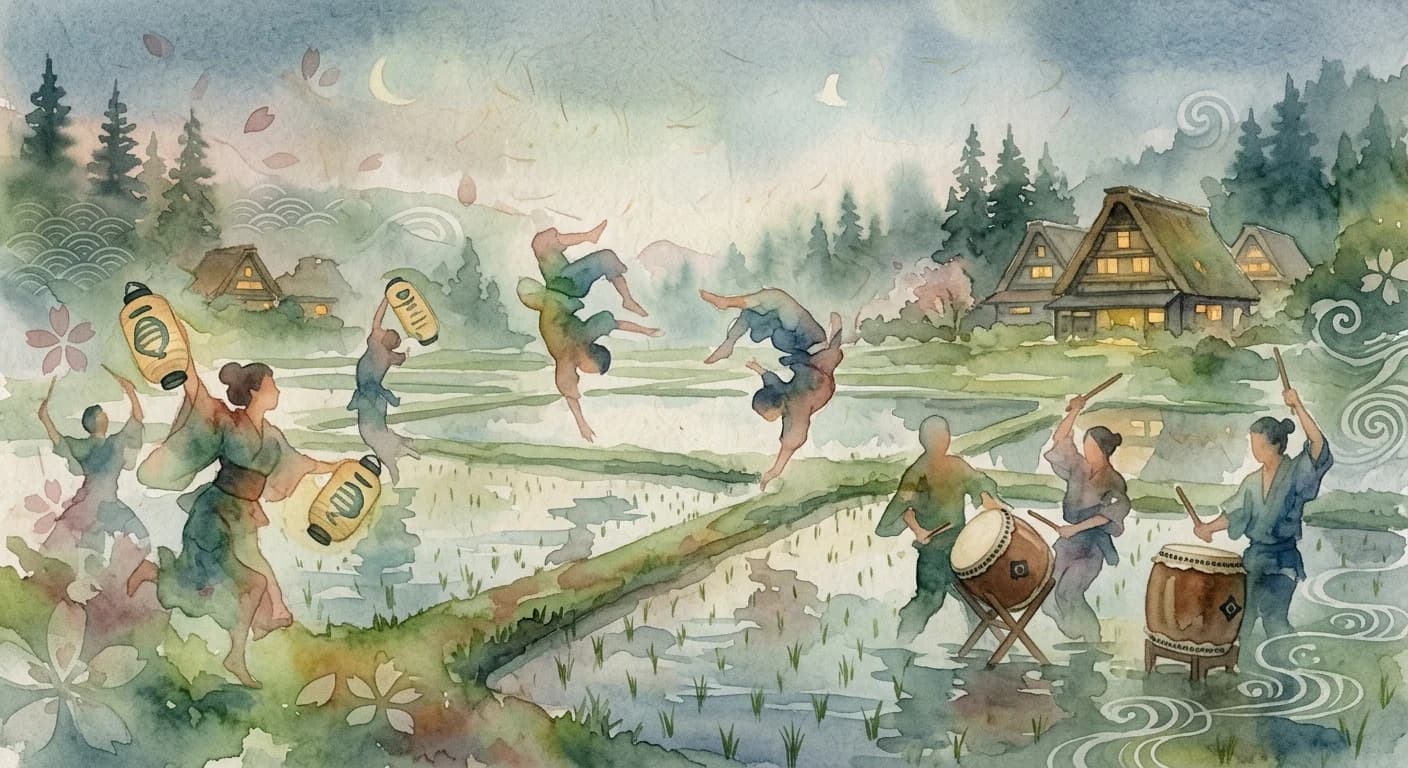
Dengaku is a vibrant, ancient Japanese folk performance that electrifies rice paddies during planting season, weaving together spirited music, dynamic dance, and acrobatic feats. It embodies a raw, unrefined energy, characterized by rhythmic chanting, energetic movements, and the distinct sounds of drums and flutes, creating an atmosphere of jubilant communal celebration. More than mere entertainment, it is a profound agricultural ritual, invoking blessings for a bountiful harvest and celebrating the intrinsic vitality of nature and the interconnectedness of community with the earth's cycles.
Literal Translation
Field entertainment
The Story Behind the Word
Dengaku's origins are deeply rooted in ancient agricultural rites, specifically rituals performed to pray for a good harvest and to appease the deities of the fields. Its evolution from simple field work songs and dances into a more formalized performance genre illustrates how communal survival was inextricably linked to the rhythms of nature. The word itself, 'field entertainment,' highlights this direct connection to the land and the labor of cultivation. It reflects a worldview where the sacred and the mundane, work and celebration, are not separate but intertwined, with human activity seen as part of a larger cosmic dance. This cultural practice reveals a profound respect for nature's power and a belief in the efficacy of collective human effort and spiritual invocation to ensure prosperity.
Experience It
Village Harvest Festival
The air thrummed with anticipation as the village gathered around the newly planted rice paddies. Children clapped in time to the taiko drums, their eyes wide as performers in vibrant costumes leapt and twirled, their movements a living prayer for a rich bounty. This was Dengaku, a joyous explosion of sound and motion, ensuring the gods heard their pleas for a prosperous harvest.
Ancient Shrine Performance
Within the serene grounds of the ancient shrine, a group of dancers began to move with a primal energy. Their chanting echoed through the trees, a cadence passed down through generations, as they performed a Dengaku piece. It wasn't just a show; it was a continuation of tradition, connecting the present community to their ancestors and the timeless cycle of fertility and renewal.
The Deeper Meaning
Dengaku embodies a profound ecological philosophy, demonstrating how human endeavor, artistic expression, and spiritual belief are woven into the fabric of the natural world. It underscores a holistic worldview where life is an ongoing cycle of planting, growing, harvesting, and renewal, with humanity playing an active, celebratory role in this divine drama. It reflects the Japanese concept of *kami* (deities or spirits) being present in nature, and the importance of harmonious interaction with the environment for collective well-being.
Did You Know?
Dengaku is considered a direct ancestor of Noh theater, one of Japan's oldest and most revered dramatic arts, evolving from its lively, outdoor performances into more refined indoor stage productions.
How It's Used
Dengaku is used to refer to a specific genre of traditional Japanese folk entertainment, encompassing both the performance itself and the associated music and dance forms. It is often associated with festivals and agricultural rituals, particularly in rural areas of Japan.