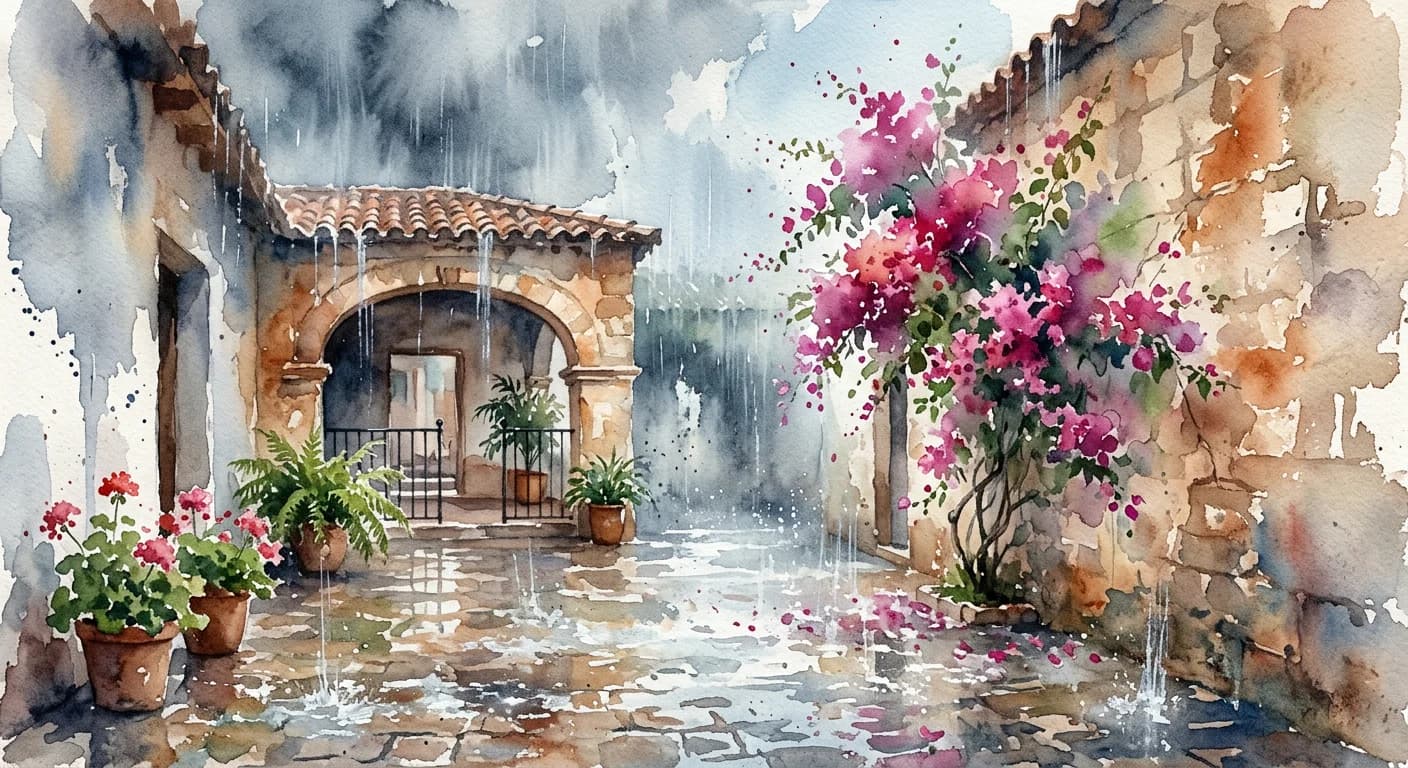
Aguacero
/AH-gwah-SEH-roh/
Meaning
An aguacero is far more than just rain; it's a meteorological ambush, a sudden, furious deluge that descends without warning, transforming sun-drenched streets into temporary rivers in mere moments. This intense, often brief, downpour possesses an almost theatrical quality, arriving with a startling force that can drench you to the bone before you've had a chance to seek shelter. It vividly captures nature's capacity for abrupt and overwhelming intervention, leaving a lasting impression of its raw, untamed power.
Literal Translation
Big water / Shower
The Story Behind the Word
The existence and common usage of 'aguacero' in Spanish-speaking cultures, particularly in Spain and Latin America, reflect a deeply ingrained relationship with a climate often characterized by dramatic shifts. Unlike the more prolonged, predictable rains of temperate zones, many regions experience intense, short-lived storms that are pivotal for agriculture and urban planning. This word embodies a cultural acceptance, and even anticipation, of nature's sudden ferocity. It speaks to a worldview where the environment is a powerful, dynamic entity that demands respect and adaptability, rather than something to be tamed or fully controlled. The term's prevalence underscores a collective experience of being at the mercy of sudden weather phenomena, making preparedness (or the lack thereof) a recurring theme in daily life.
Experience It
Sudden Beach Escape
The beach was packed, sun blazing, when suddenly the sky turned an ominous grey. Before anyone could react, an 'aguacero' erupted, sending umbrellas flying and sunbathers scrambling for cover, their towels instantly soaked.
Caught in the City
Walking home from work, enjoying a pleasant evening, a violent 'aguacero' hit. Within seconds, the street became a torrent, cars splashed through deep puddles, and pedestrians huddled under awnings, completely drenched.
The Deeper Meaning
The word 'aguacero' encapsulates a philosophical acceptance of life's unpredictability and the raw, untamed power of nature. It highlights a worldview where humans are not always in control, reminding us of our vulnerability and the need for adaptability in the face of sudden, overwhelming forces, both meteorological and metaphorical.
Did You Know?
In some Spanish regions, an 'aguacero' is poetically called a 'chaparrón', hinting at its swift, almost playful, yet powerful nature.
How It's Used
Used to describe a sudden, intense burst of rain, often unexpected and short-lived. It's common in regions prone to dramatic weather changes.