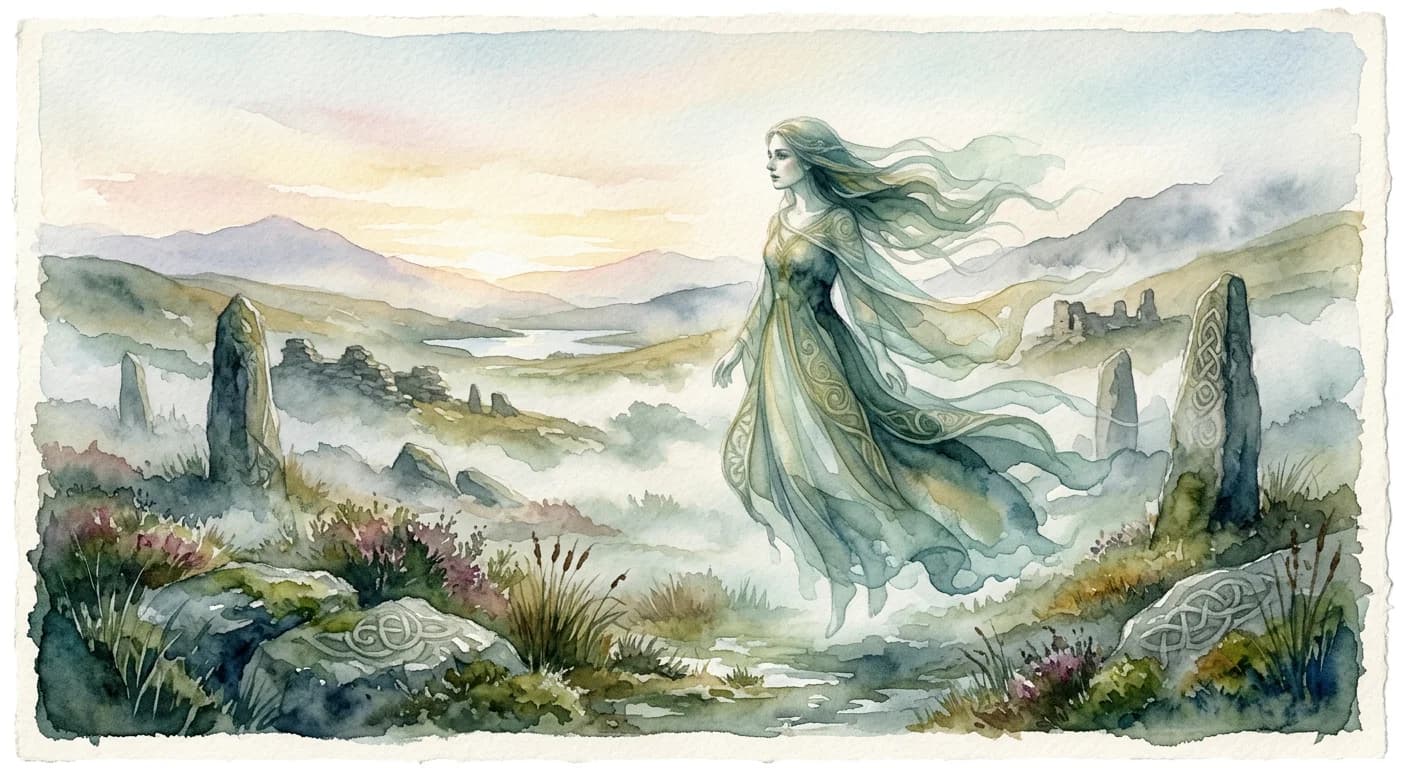
Aisling
/ASH-ling/
Meaning
An 'aisling' is a profound, often melancholic, visionary dream in Irish literature, where a beautiful woman, a 'spéirbhean' (sky-woman), appears to the poet, embodying the spirit of Ireland itself. This ethereal encounter transcends a mere nocturnal vision; it is a poignant lament for a subjugated nation's lost glory and a fervent yearning for its future resurgence and freedom. It weaves together deep national identity, historical sorrow, and an enduring, almost spiritual, hope for renewal, rooted deeply in the ancient soil of Irish folklore and its complex, often tragic, history.
Literal Translation
Dream, vision
The Story Behind the Word
The 'aisling' emerged as a significant poetic genre during the 17th and 18th centuries, a period of intense political and cultural suppression for the Irish people under English rule. With the erosion of the Gaelic order and the penal laws, poets used the aisling to subtly express their political dissent and nationalistic aspirations without direct confrontation, which could lead to severe punishment. The beautiful woman represented the beleaguered but enduring spirit of Ireland, often depicted in rags but with an inherent nobility, awaiting her true consort (the Stuart king or, later, an independent Ireland). This genre reveals a profound resilience and an imaginative way of preserving identity and hope in the face of oppression, demonstrating how art can become a vessel for national memory, resistance, and a collective dream of liberation. It reflects a culture that values spiritual depth, historical continuity, and the power of symbolic narrative.
Experience It
Poet's Midnight Vision
Lost in a restless sleep after a day of contemplating Ireland's fate, a poet awakens from an aisling. He saw a radiant woman, her eyes filled with ancient sorrow yet burning with an unyielding fire, lamenting the chains binding her green isle. He rises, compelled to write, his pen now a conduit for her voice, for Ireland's enduring spirit.
Whispers of the Past
Walking through the ancient ruins of a monastery, a young woman felt a profound sense of connection to the land and its history. It wasn't a literal dream, but an 'aisling' in the broader sense – a sudden, vivid understanding of the struggles and hopes of her ancestors, a melancholic vision of a past glory intertwined with a fierce hope for the future.
The Deeper Meaning
The 'aisling' reveals a core Irish philosophical stance: that national identity is not merely political or geographic, but deeply spiritual, emotional, and historically resonant. It suggests that hope, even in the darkest times, can be found in the collective memory, in visionary dreams, and in the enduring spirit of the land itself, personified as a divine feminine presence. It emphasizes resilience, the power of metaphorical expression, and the belief that the past holds keys to a future resurgence.
Did You Know?
During the Penal Laws, the 'spéirbhean' in aisling poetry often disguised political calls for a Stuart restoration as romantic longing, allowing poets to express seditious ideas under the guise of conventional love poetry.
How It's Used
Typically used to refer to a specific genre of Irish poetry or a dream-like, visionary experience, often with nationalistic or spiritual undertones.