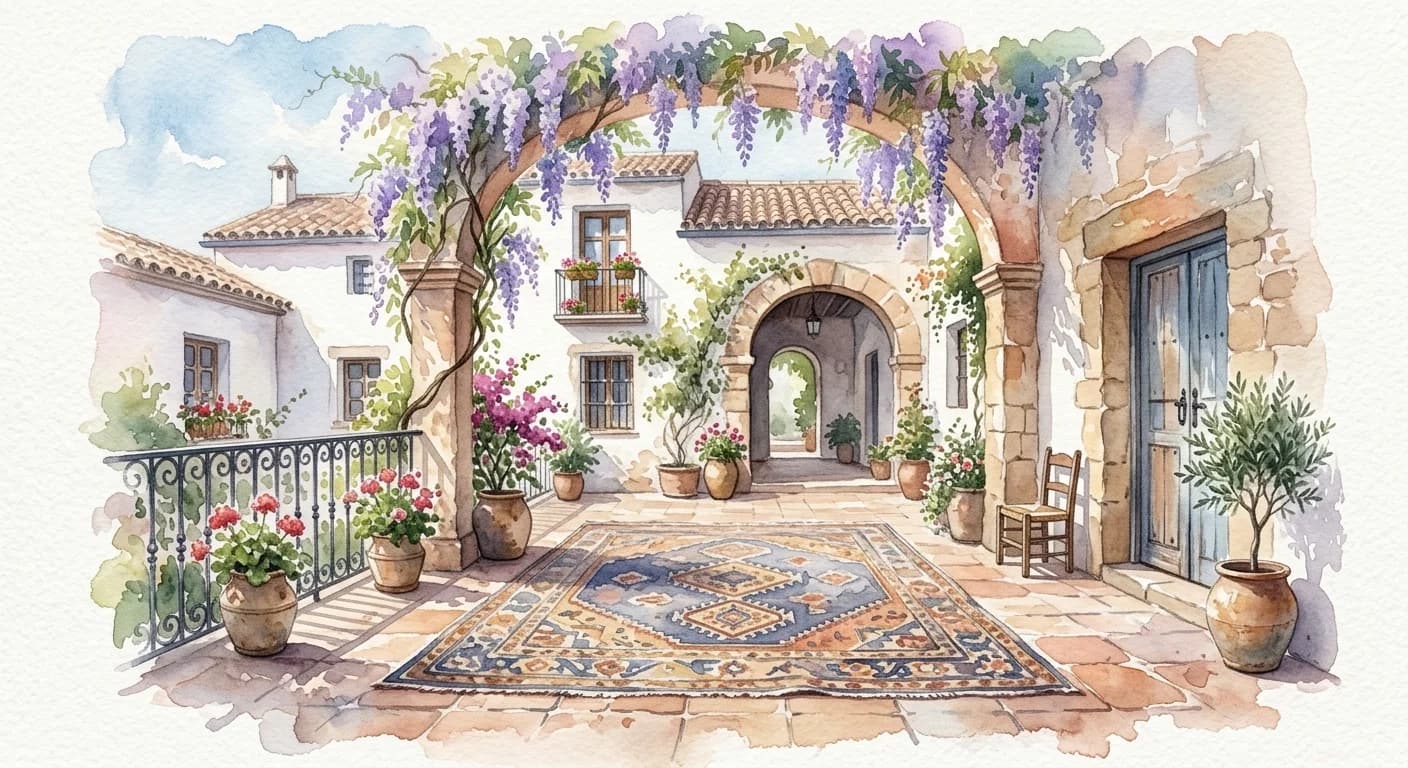
Alfombra
/al-FOM-brah/
Meaning
Beyond a mere floor covering, 'alfombra' in Spanish embodies a profound sense of warmth, comfort, and the very soul of a home. It conjures images of familial gatherings, children playing, or quiet moments of repose, transforming a simple space into a sanctuary. It's a tactile and visual cornerstone of domesticity, suggesting a lived-in elegance and an invitation to relax and connect. The word itself carries the gentle hum of everyday life and the aesthetic pleasure of a carefully adorned personal space.
Literal Translation
Rug/Carpet
The Story Behind the Word
The deep cultural resonance of 'alfombra' in Spain, and much of the Hispanic world, harks back to Moorish influences and the practical and aesthetic needs of a Mediterranean climate. Elaborate rugs were not just insulation; they were artistic expressions, status symbols, and central to the comfort of a home where much of life happened on the floor or low seating. This tradition fostered a cultural appreciation for textiles that soften and define living spaces, making an 'alfombra' more than functional—it's a piece of art, a layer of history, and an integral part of creating a welcoming, inviting atmosphere. It speaks to a culture that values hospitality and the creation of intimate, comfortable environments for social interaction and family life.
Experience It
Family Gathering Warmth
Abuela carefully unrolls the antique 'alfombra' in the living room, its intricate patterns coming to life. Soon, grandchildren are sprawled across its soft surface, playing board games and sharing laughter, enveloped in the cozy embrace of family.
Cozy Reading Nook
In a sunlit corner, a plush, colorful 'alfombra' defines a reading nook. A young woman curls up with a book and a cup of tea, finding solace and peace on its soft fibers, a perfect escape from the day's hustle.
The Deeper Meaning
The word 'alfombra' subtly reveals a cultural philosophy centered on creating 'hogar' (home) as a haven of comfort, beauty, and human connection. It speaks to the belief that physical surroundings profoundly influence emotional well-being, emphasizing the importance of material softness, aesthetic pleasure, and the art of crafting spaces that nurture the soul and facilitate social bonds.
Did You Know?
The Spanish word 'alfombra' itself is derived from Arabic, 'al-ḥamrā', highlighting the significant Moorish influence on Spanish culture, particularly in domestic arts and architecture.
How It's Used
Used in everyday conversation to refer to rugs, carpets, or sometimes even elaborate tapestries.