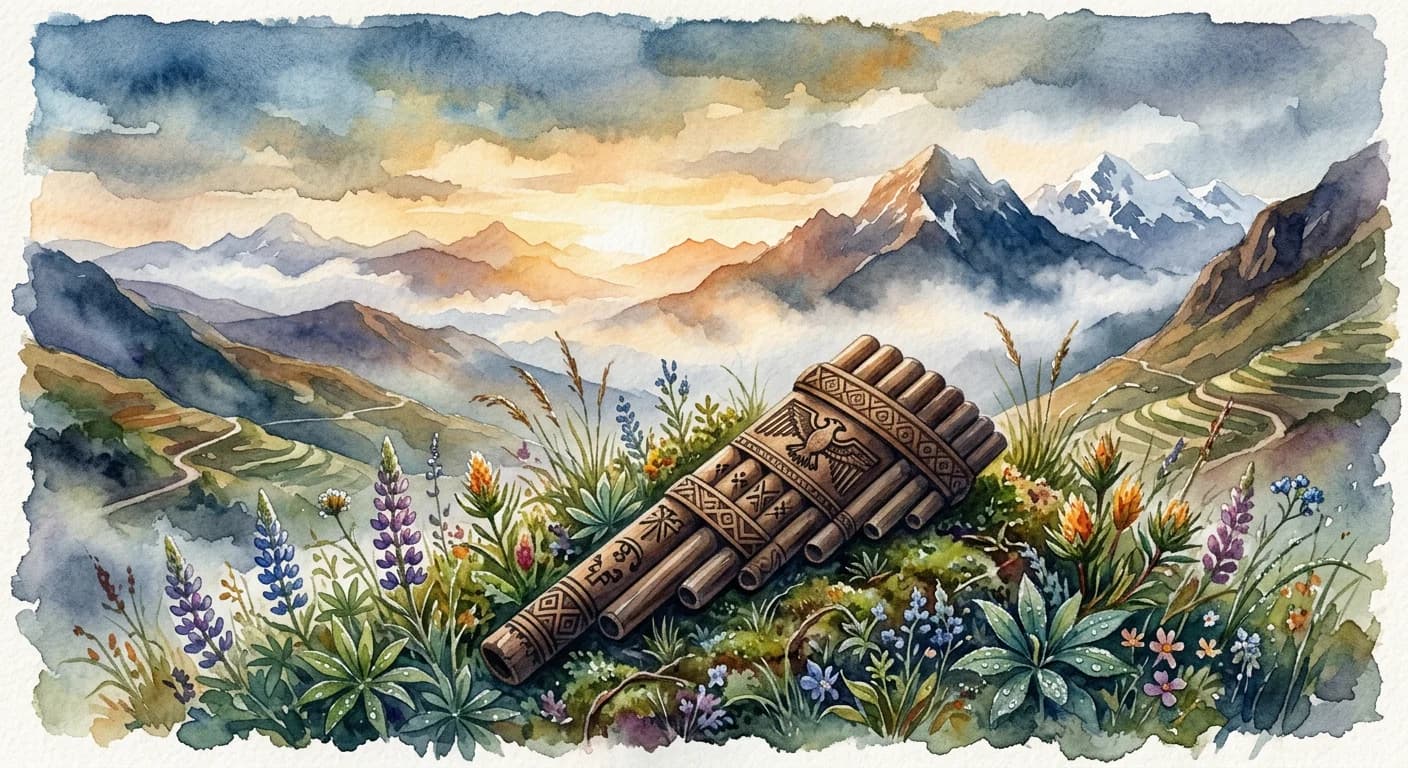
Antara
/ahn-TAH-rah/
Meaning
The antara is a soul-stirring Andean panpipe, meticulously crafted from reeds or bamboo, whose haunting melodies echo the vast, majestic landscapes of the highlands. Far more than a mere instrument, it embodies the spiritual heartbeat of the Quechua people, weaving together ancient rituals, communal celebrations, and the profound connection to Pachamama (Mother Earth). Its sound evokes a timeless sense of belonging, memory, and an intimate dialogue with the ancestors, bridging the earthly and the sacred.
Literal Translation
panpipe
The Story Behind the Word
The antara's existence is deeply rooted in the Andean cosmovision, where music is not just entertainment but a vital form of communication with the spiritual world and a means of maintaining cosmic balance. It predates the Inca Empire, with archaeological evidence suggesting its use for millennia in ceremonial contexts, agricultural rites, and as accompaniment for dances. The antara reveals a culture that sees itself in continuous dialogue with nature and the divine; its breath-driven sound symbolizes the very life force, connecting the musician to the wind (Wayra) and the mountains (Apus). The instrument's construction from natural materials further emphasizes this deep ecological reverence and the belief that the earth provides not just sustenance, but also the means for spiritual expression.
Experience It
Festival of the Sun
During Inti Raymi, the vibrant Festival of the Sun, the rhythmic, high-pitched notes of the antara filled the Cusco plaza. Its ancient melody guided the ceremonial dancers, evoking the power of Inti and the enduring spirit of the Andean people, connecting them to centuries of tradition and collective memory.
Shepherd's Solace
High in the puna, a solitary shepherd paused, his breath forming a mournful yet beautiful tune on his small antara. The melody drifted across the vast, empty landscape, a personal conversation with the wind and the mountains, a testament to his solitude and his deep bond with the land.
The Deeper Meaning
The antara embodies a philosophy of interconnectedness and cyclical existence. Its breath-driven sound symbolizes the vital life force, while its communal playing reflects the Andean value of 'ayni' (reciprocity) and 'minka' (communal work). It reveals a worldview where harmony, both musical and social, is achieved through collaboration and a deep reverence for the natural world and ancestral wisdom.
Did You Know?
Unlike many Western instruments, the antara is often played in ensembles where each musician plays a specific set of notes, requiring intricate coordination and a profound sense of communal harmony to create a complete melody.
How It's Used
Used to refer to the musical instrument itself, and by extension, the music played on it, often in cultural festivals, ceremonies, and everyday life in the Andean regions.