Arriero
/ah-ree-EH-roh/
Meaning
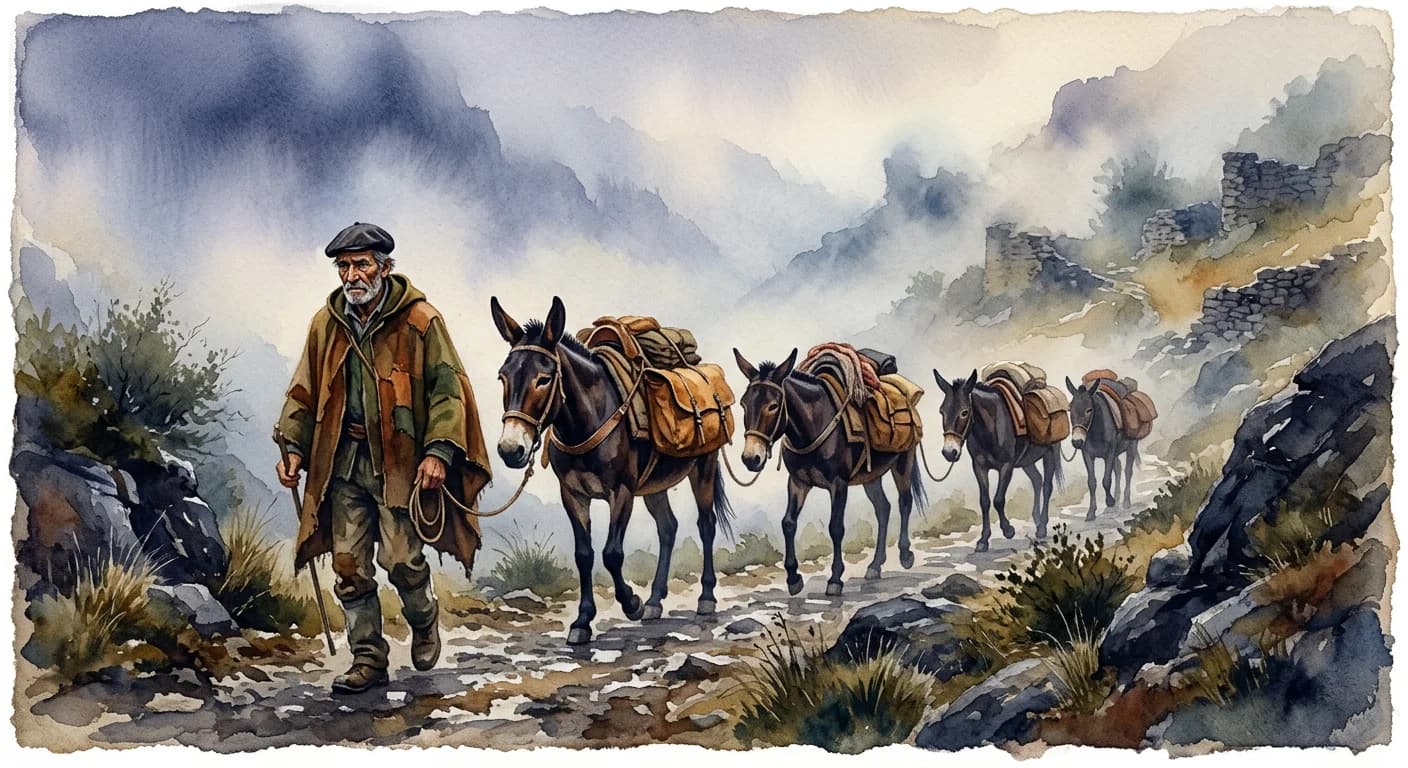
An 'arriero' is much more than a mere muleteer; they are the living embodiment of a vanished era, a master of rugged landscapes and animal husbandry. This term conjures images of solitary figures guiding long trains of pack animals through treacherous mountain passes, their weathered faces reflecting a deep connection to the earth and their beasts. It speaks of an intimate knowledge of trails, weather, and the unique personalities of each mule, signifying resilience, self-reliance, and an enduring spirit crucial for sustaining remote communities and trade routes across the Iberian Peninsula and beyond.
Literal Translation
Muleteer, drover
The Story Behind the Word
The 'arriero' holds a foundational place in Spanish and Latin American history, predating modern infrastructure. For centuries, they were the arteries of commerce, connecting isolated villages to markets, facilitating cultural exchange, and even playing roles in wars and rebellions by transporting supplies and information. Their existence reveals a world where human and animal labor were paramount, where ingenuity and endurance conquered harsh geographies. The arriero's song, their distinctive attire (like the 'montera' hat), and their deep bond with their animals became iconic symbols of rural life and a particular kind of stoic, independent spirit. They were not just transporters but storytellers, carriers of news, and vital links in the social fabric, embodying a self-sufficient ethos that valued practical skill and an intimate understanding of nature's rhythms.
Experience It
Mountain Pass Journey
The old arriero, Mateo, pulled his poncho tighter against the biting wind as his lead mule, 'Rayo,' carefully found footing on the narrow, stone-strewn path. Days from the nearest town, the rhythmic clinking of the mules' bells was the only sound accompanying his silent vigil over the precious cargo of olive oil and cured hams.
Market Day Arrival
A hush fell over the bustling village market as the first arriero train appeared on the horizon, dust billowing behind them. Children ran to greet them, knowing that with these weary men and their laden animals came not just goods but also news and stories from the distant valleys.
The Deeper Meaning
The concept of the 'arriero' embodies a philosophy of harmonious coexistence with nature and a deep respect for the intrinsic value of labor. It suggests that true wealth lies not in material possessions but in resilience, resourcefulness, and the ability to navigate life's challenges with unwavering determination, relying on one's own strength and the companionship of trusted allies, be they human or animal.
Did You Know?
The traditional songs of arrieros, known as 'canciones arrieras,' often spoke of loneliness, the beauty of the mountains, and the loyalty of their mules, serving as both entertainment and a way to communicate across vast distances.
How It's Used
Used to refer to a person who works with pack animals for transport, particularly in rural or historical contexts.