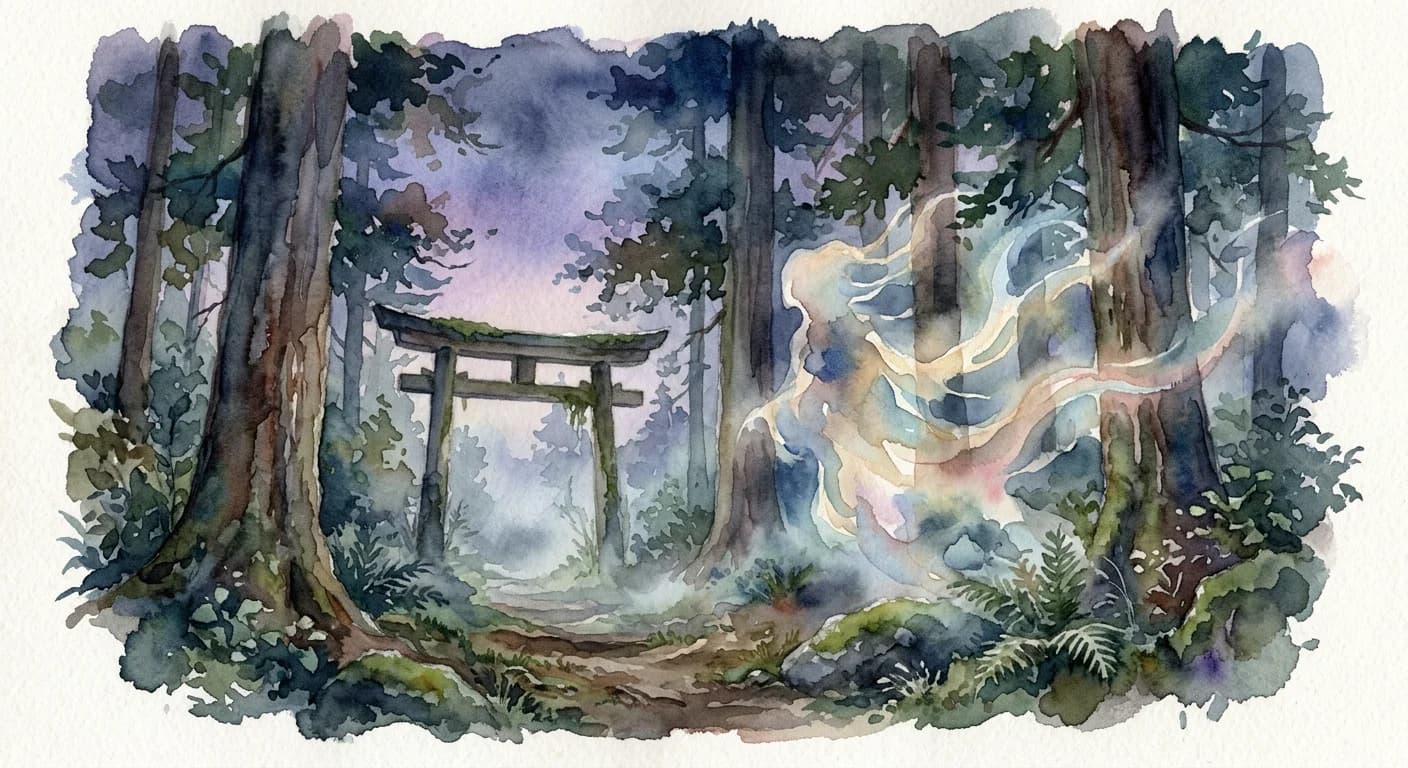
Bakemono
/BAH-keh-moh-noh/
Meaning
Bakemono signifies a broad and amorphous category of supernatural entities in Japanese folklore, encompassing everything from mischievous shape-shifters to terrifying ghouls and spectral apparitions. Unlike the more specific 'yokai,' bakemono serves as an umbrella term for any 'thing that changes' or 'thing that transforms,' highlighting their fluid, often unsettling nature. These beings frequently blur the boundaries between the mundane and the otherworldly, manifesting as physical threats, psychological torments, or even benevolent, albeit bizarre, presences. They are manifestations of the unknown, embodying primal fears, cultural anxieties, and the profound respect for nature's mysterious power inherent in Japanese spiritual traditions.
Literal Translation
monster; ghost; apparition
The Story Behind the Word
The concept of bakemono is deeply woven into the fabric of Japanese cultural history, reflecting an animistic worldview where spirits and transformative energies are believed to inhabit all things. From ancient Shinto beliefs, which venerate kami (deities/spirits) in natural phenomena, to later Buddhist influences on the impermanence of existence, the idea of 'transformation' (bake) is central. Bakemono often arise from objects, animals, or even humans that have lived an exceptionally long time, experienced profound emotional trauma, or been imbued with strong spiritual energy, thus gaining the ability to change form or exert supernatural influence. Their existence explains the inexplicable, reinforces moral codes (many bakemono punish wrongdoing), and provides a rich tapestry for storytelling, reflecting a cultural comfort with ambiguity and the liminal spaces between worlds. They are not merely monsters but often serve as cautionary tales, symbols of natural forces, or even reflections of human folly.
Experience It
The Old Fox's Trick
A traveler, lost in the mountains, accepts an offer of shelter from a charming old woman. As the night deepens, he notices her shadow seems to shift, and her eyes gleam with an unnatural light, realizing he might be in the presence of a kitsune bakemono.
Haunted House's Secret
Villagers whisper about the abandoned mansion on the hill, claiming strange noises and flickering lights emanate from within. They believe a vengeful bakemono, perhaps the spirit of a wronged former resident, now haunts its decaying halls, warning others to stay away.
The Deeper Meaning
Bakemono embodies a profound philosophical insight into the transient and interconnected nature of existence in Japanese thought. It reflects a worldview where boundaries between living and non-living, human and animal, real and imagined, are fluid and permeable. The 'bake' (transformation) suggests that everything is in a constant state of flux, and even the most mundane object or creature can, under certain conditions, transcend its ordinary form to become something extraordinary, mysterious, and often unsettling, challenging our perceptions of reality.
Did You Know?
Many household items, like worn-out umbrellas (Kasa-obake) or old sandals (Bake-zouri), can become bakemono after a century of existence, gaining a life and personality of their own!
How It's Used
Used in Japanese folklore, literature, manga, anime, and video games to describe a wide range of supernatural or monstrous beings.