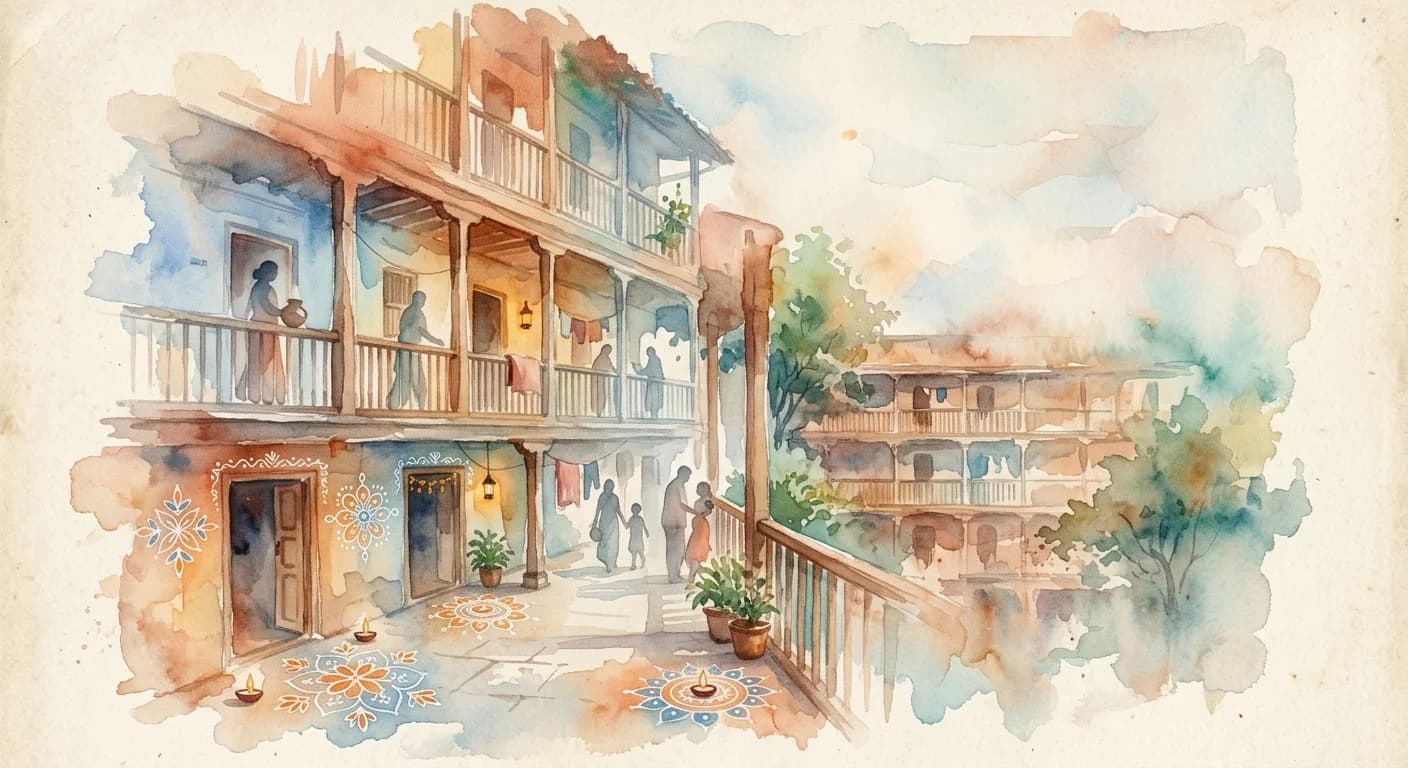
Chawl
/CHOWL/
Meaning
A "chawl" is more than just a dwelling; it's a vibrant, multi-family residential structure, typically found in the bustling urban centers of India, especially Mumbai. Characterized by its long, narrow rooms opening onto a common corridor, it encapsulates a unique socio-economic reality. While personal space is minimal, the chawl fosters an intense communal living experience, where resources, joys, and hardships are intimately shared, forging a distinct urban subculture of resilience and interdependence.
Literal Translation
Room/dwelling
The Story Behind the Word
The chawl emerged in the late 19th and early 20th centuries as a pragmatic solution to house the burgeoning migrant workforce drawn to Mumbai's mills and factories. It reflects a historical period of rapid industrialization and urbanization, where housing demand far outstripped supply. Culturally, the chawl embodies a philosophy of collective survival and mutual aid, where the boundaries between individual families blur. It reveals a worldview where community support often takes precedence over individual privacy, and where life's milestones, from births to festivals to funerals, are deeply integrated into the fabric of the shared space. This architectural form is intrinsically linked to the city's working-class identity and its enduring spirit of resilience.
Experience It
Evening in the Chawl
As dusk falls, the common corridor of the chawl buzzes with activity. Children play hopscotch, women exchange recipes and gossip while chopping vegetables, and the aroma of different family dinners mingles in the air. A neighbor calls out for a cup of sugar, confident it will be shared instantly.
Festival Preparations
During Diwali, the entire chawl transforms. Families pool resources to decorate the common areas with lanterns and rangoli. Everyone contributes to preparing sweets and snacks, and the celebrations spill out into the shared spaces, strengthening bonds that transcend individual households.
The Deeper Meaning
The chawl reveals a profound philosophical insight into human adaptability and the redefinition of 'home' in the face of scarcity. It suggests that while physical space might be limited, the human need for connection and belonging can transform constraint into a rich tapestry of communal life. It highlights how shared adversity can forge powerful bonds, creating a micro-society where mutual support becomes a cornerstone of existence.
Did You Know?
Many Bollywood films, especially those depicting Mumbai's working-class life, have famously used chawls as their iconic backdrop, making them instantly recognizable symbols of the city's vibrant, resilient spirit.
How It's Used
Used to describe a specific type of multi-family residential dwelling common in urban India.