Dambe
/DAHM-bay/
Meaning
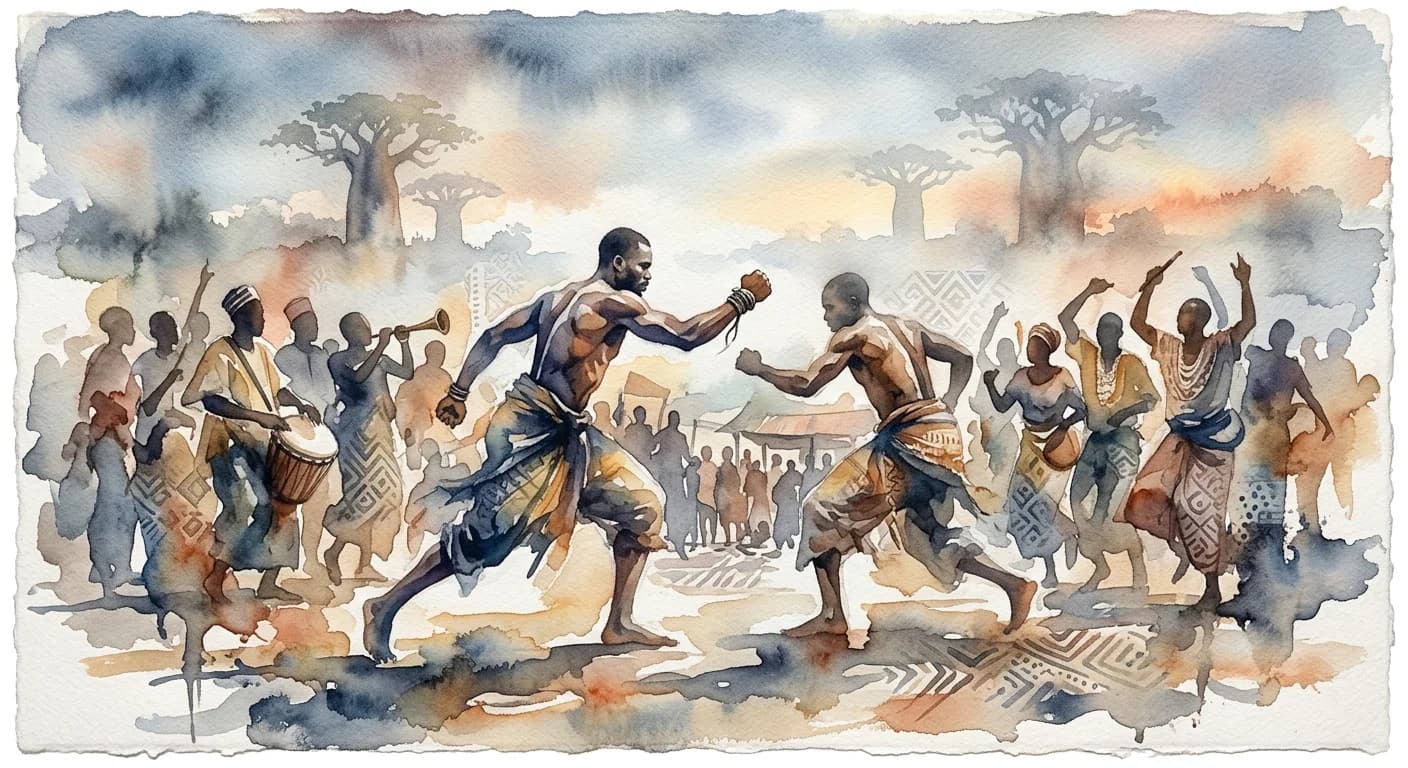
Dambe is a captivating, traditional West African boxing art form, deeply interwoven with Hausa culture in Nigeria, Niger, and Chad. More than a mere sport, it's a dynamic cultural spectacle, often gracing festivals and celebrations, energized by rhythmic drumming and communal chanting. Fighters, with one hand tightly bound in a cloth or leather 'spear' and the other serving as a 'shield,' engage in a powerful display of martial prowess, emphasizing skill, strength, and resilience. It embodies both an ancient fighting tradition and vibrant community entertainment.
Literal Translation
The exact literal meaning of 'Dambe' itself isn't a direct translation in the way a single word concept might be. It refers to the boxing practice.
The Story Behind the Word
Dambe's roots stretch back centuries, originating as a martial art practiced by Hausa butchers' guilds, who would challenge each other during annual harvest festivals or before embarking on long journeys. These contests served not only as entertainment but also as a means for young men to prove their courage, strength, and readiness for life's challenges, including warfare. The 'spear' hand (gombe) and 'shield' hand (kariya) symbolize a warrior's offense and defense, reflecting a worldview that values both assertive action and protective strategy. The accompanying music, especially the talking drums (kalangu), guides the fighters, narrates their exploits, and incites the crowd, making Dambe a holistic sensory experience that binds the community, reinforces shared identity, and perpetuates ancestral traditions of valor and communal celebration. It reveals a culture that sees physical prowess and community spectacle as integral to social cohesion and individual development.
Experience It
Festival Dambe Match
The air crackled with anticipation as drummers beat a furious rhythm. Two dambe fighters, their 'spear' hands wrapped tight, circled each other in the dusty ring. The crowd, a vibrant tapestry of colors, roared as one fighter landed a swift, decisive blow, sending his opponent to the ground, a testament to his skill and the raw energy of the moment.
Young Aspirant's Dream
Young Abubakar watched intently, mimicking the footwork of his hero from the edge of the Dambe arena. He dreamt of the day he too would don the wrapped hand, feeling the surge of the crowd and proving his strength and courage. For him, Dambe was not just a fight, but a path to respect and belonging in his community.
The Deeper Meaning
Dambe embodies a philosophy of disciplined aggression and resilient defense, reflecting a worldview where life demands both the courage to strike and the wisdom to protect. It teaches that true strength is not just about inflicting damage, but also about enduring hardship and maintaining honor. The communal aspect underscores the belief that individual prowess is best celebrated and honed within the supportive framework of community, fostering shared identity and collective spirit.
Did You Know?
Traditionally, Dambe fighters would wrap their 'spear' hand with rope, often soaked in resin and broken glass for added impact, though modern Dambe has largely moved to safer, less injurious wraps.
How It's Used
Dambe is primarily used to refer to the traditional Hausa boxing sport, its practitioners, and associated cultural events.