Diablada
/dee-ah-BLAH-dah/
Meaning
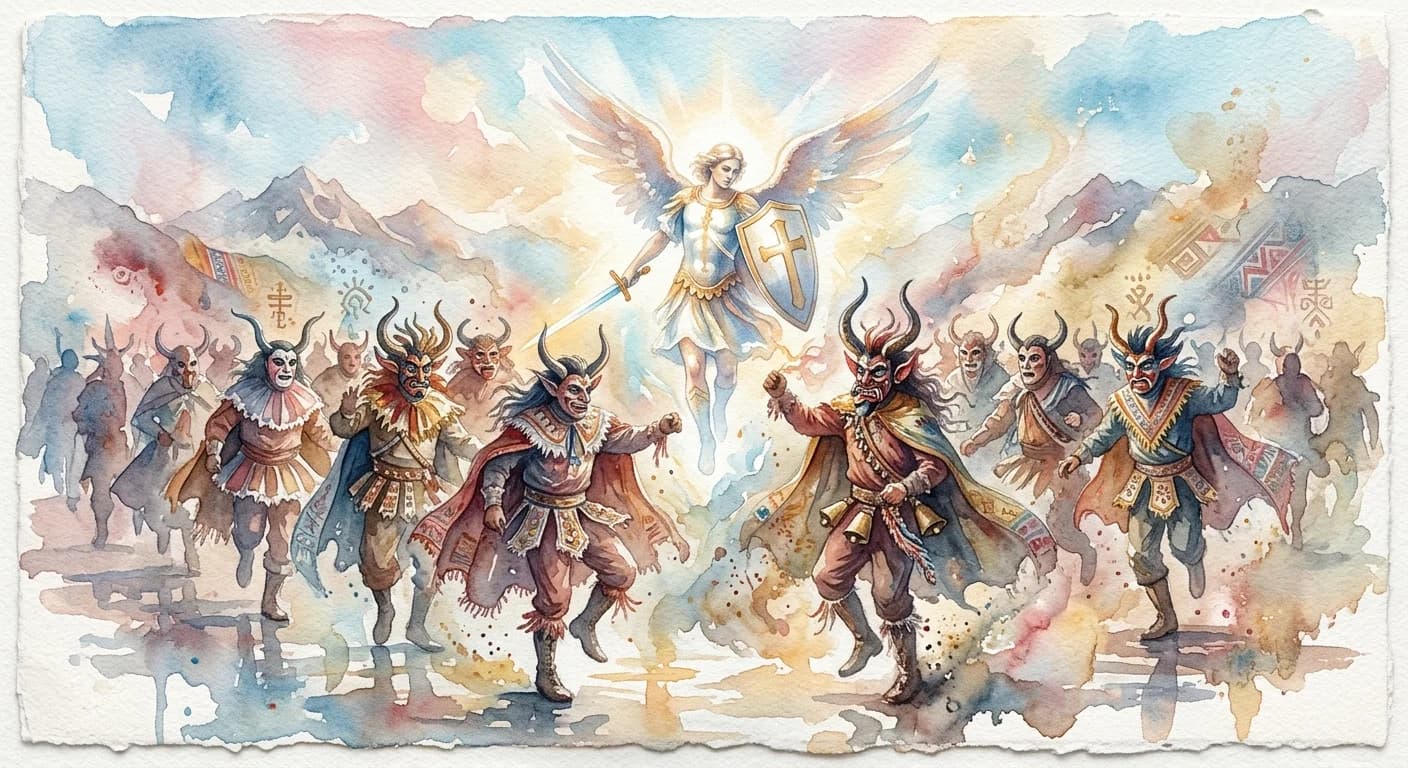
The Diablada is a breathtaking folkloric dance from the Andean altiplano, a vibrant spectacle where the Archangel Michael battles a host of elaborately costumed devils. It's a powerful and theatrical representation of the eternal struggle between good and evil, deeply woven into the fabric of Bolivian religious festivals. More than just a performance, it is a profound act of spiritual devotion and cultural syncretism, reflecting centuries of indigenous beliefs intertwined with Catholic traditions.
Literal Translation
Dance of the Devils
The Story Behind the Word
The Diablada is a cornerstone of Bolivian identity, born from the fusion of pre-Columbian Andean cosmology and Spanish Catholic evangelization. Indigenous traditions, particularly the veneration of Supay (an ambiguous deity of the underworld, sometimes equated with the devil but also a protector of miners), found a new expression through the Catholic narrative of good versus evil. This dance reveals a worldview where spiritual forces are ever-present and often ambivalent, not purely good or evil, and where negotiation and respect for these powers are crucial for survival and prosperity, especially in the harsh mining regions. It's a communal ritual that reaffirms cultural heritage, social cohesion, and a unique spiritual understanding of the cosmos.
Experience It
Oruro Carnival Spectacle
The air thrums with drumbeats as the first Diablada troupe enters the main avenue of Oruro. Hundreds of dancers, their monstrous masks glinting in the sun, move with synchronized power, embodying the struggle. Spectators cheer, feeling the weight of tradition and the thrill of the spiritual drama unfold before them.
Mining Town Festival
In a small mining town, a Diablada is performed not just for entertainment, but as an offering to Pachamama (Mother Earth) and Supay. The miners believe that by honoring these spirits through the dance, they will be protected from accidents and blessed with rich veins of ore. It's a plea and a celebration, deeply personal and communal.
The Deeper Meaning
The Diablada embodies a profound philosophical insight into the nature of good and evil: not as separate, absolute entities, but as intertwined forces within the human experience and the cosmos. It suggests that acknowledging and even ritually engaging with the 'dark' aspects, rather than simply repressing them, is essential for spiritual balance and understanding. This dance is a testament to the resilience of cultural identity and the profound human need to reconcile differing spiritual narratives.
Did You Know?
The elaborate Diablada masks, often weighing several kilograms, are considered works of art, crafted with incredible detail from papier-mâché, metal, and glass, taking months to complete.
How It's Used
The Diablada is performed as a traditional folkloric dance during religious festivals and carnivals, most notably during the Oruro Carnival in Bolivia, which is a UNESCO Masterpiece of the Oral and Intangible Heritage of Humanity.