Encierro
/en-SYEH-rroh/
Meaning
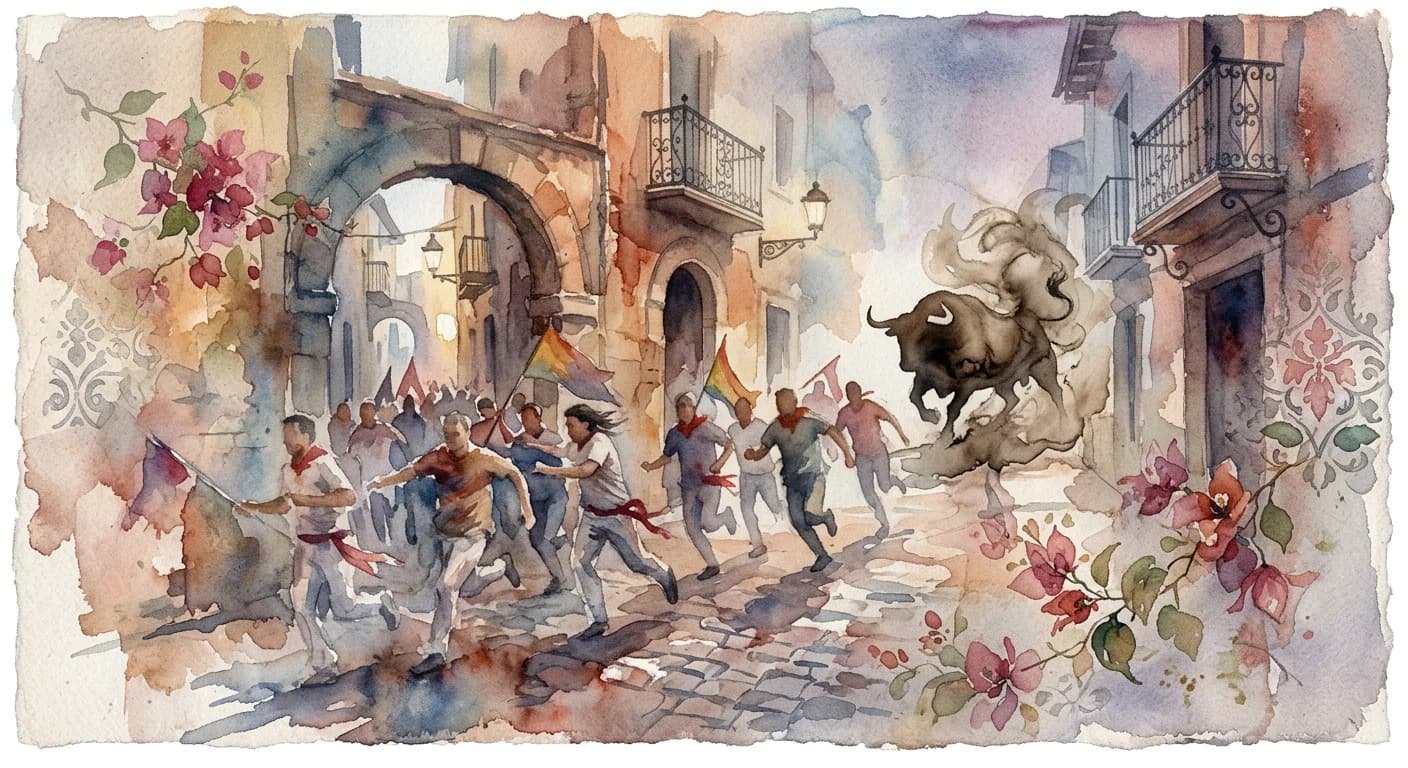
Encierro, while literally meaning 'enclosure,' transcends its dictionary definition to embody the electrifying spectacle of the running of the bulls in Spain. It describes the perilous dash through ancient, narrow streets as powerful, unbridled fighting bulls charge behind daring participants. More than a mere event, it's a visceral communion with primal fear and exhilarating courage, a ritual where life's fragility and the thrill of survival are acutely felt amidst a collective surge of adrenaline and tradition.
Literal Translation
enclosure, shutting in
The Story Behind the Word
The concept of the 'encierro' is deeply woven into the fabric of Spanish festivity, particularly in regions with a strong bullfighting tradition. Its origins are practical, dating back to when cattle herders would 'enclose' or drive bulls from the countryside into the town bullrings for market or bullfights. This practical necessity gradually evolved into a competitive and ritualistic display of bravery, especially during the medieval period. It reflects a cultural perspective that embraces a direct, often dangerous, engagement with nature and fate. The encierro is not just an adrenaline rush; it's a profound act of collective participation, a test of nerve, and a communal celebration that reinforces local identity and continuity with ancestral practices. It reveals a worldview where courage in the face of imminent danger is highly valued, and where life's intensity is often sought through confronting powerful, untamed forces.
Experience It
Pamplona Dawn
The pre-dawn chill in Pamplona was electric, a palpable tension humming through the crowd. As the rocket's blast shattered the silence, signaling the bulls' release, a collective gasp and surge of runners marked the beginning of another encierro, a blur of hooves and human daring.
Village Festival
In a small Castilian village, the annual encierro was a highlight, drawing families and friends from miles around. Children watched wide-eyed from balconies as their fathers and uncles, fueled by local wine, joined the chaotic dance with the formidable animals, proving their mettle for another year.
The Deeper Meaning
The encierro encapsulates a philosophy that confronts mortality and embraces the present moment with intense vigor. It's a ritualistic dance with danger that highlights the human desire to test limits, to feel truly alive by facing primal fear. This tradition underscores a cultural appreciation for bravery, collective experience, and the raw, untamed aspects of existence, suggesting that true living sometimes requires a deliberate step into the unknown and the perilous.
Did You Know?
The first official record of a running of the bulls, or encierro, dates back to 1385 in Pamplona, making it one of Europe's longest-standing and most dangerous traditions.
How It's Used
Used primarily in Spain to refer to the daily event of bulls being run through the town streets, usually in the early morning, as part of a festival leading up to bullfights.