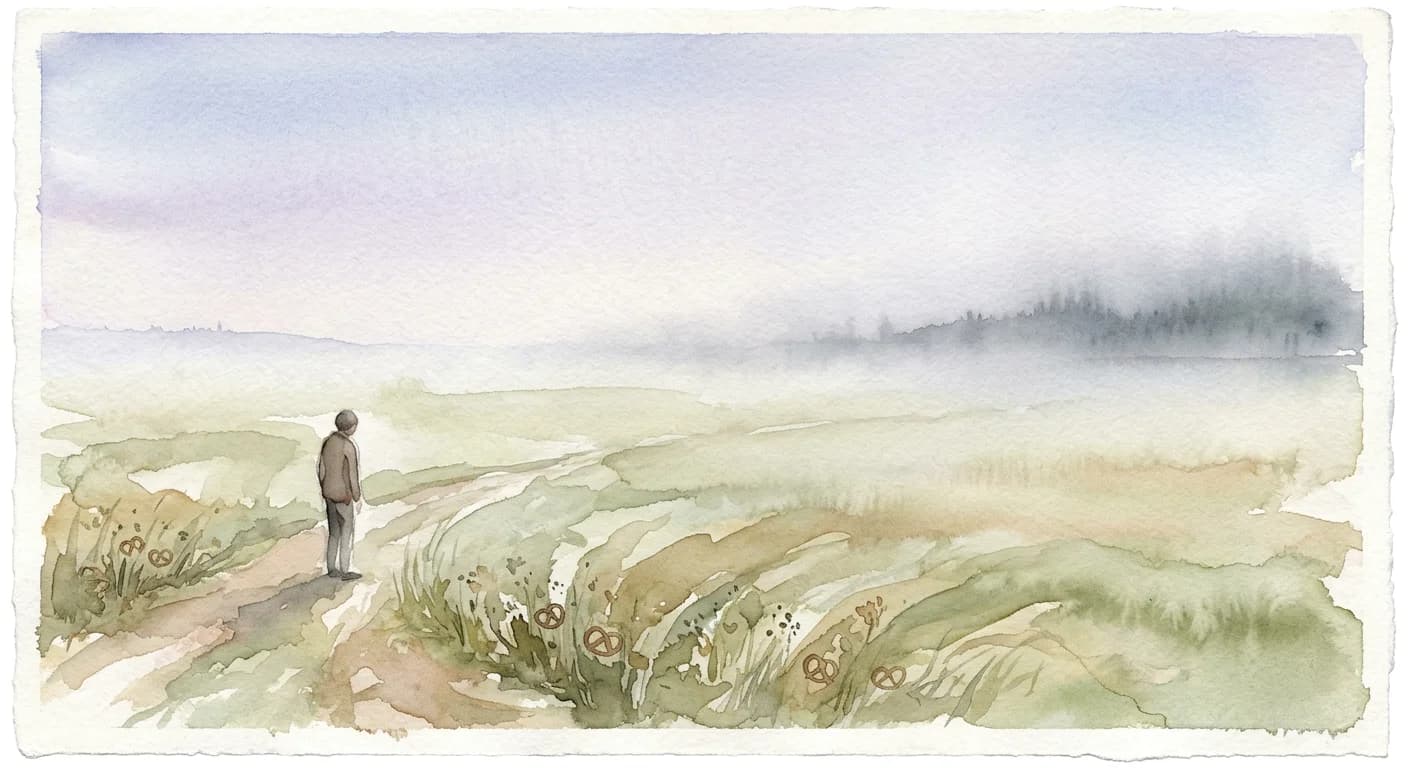
Platzangst
/PLAH-ts ahngst/
Meaning
Platzangst, literally 'place anxiety,' describes a profound psychological distress stemming from the fear of being trapped in vast, open spaces or crowded public environments without an immediate escape route. It's more than mere discomfort; it's an overwhelming sensation of vulnerability and loss of control, where the sheer expanse or density of a location triggers intense panic. This phobia manifests as a desperate longing for confined, predictable spaces, turning everyday activities like shopping or attending festivals into paralyzing ordeals. It embodies a deep-seated dread of exposure and the inability to retreat to safety.
Literal Translation
place anxiety
The Story Behind the Word
The existence of 'Platzangst' in German, alongside its counterpart 'Klaustrophobie' (claustrophobia), highlights a cultural precision in categorizing anxieties related to space. While 'Klaustrophobie' (fear of enclosed spaces) is a direct loanword, 'Platzangst' is a native German compound, suggesting a long-standing recognition of this specific spatial phobia within the culture. German language often forms highly descriptive compound nouns for nuanced concepts, reflecting a desire for exactitude in expression. This word reveals a society that acknowledges and articulates complex internal states, particularly those tied to environmental perceptions. The orderly and often structured nature of German public spaces might, paradoxically, make the experience of 'Platzangst' in overwhelming, unstructured environments even more pronounced for some, as it contrasts sharply with an expectation of control and predictability.
Experience It
Festival Overwhelm
Sarah felt her heart pound as she entered the sprawling festival grounds, a sea of people stretching endlessly before her. The vast, open space, coupled with the dense crowd, triggered an immediate wave of 'Platzangst,' making her feel exposed and utterly unable to find an escape, despite the wide-open sky.
Market Square Panic
Standing in the middle of the bustling market square, Michael suddenly felt a suffocating sensation. The wide-open expanse, surrounded by countless shoppers, made him feel incredibly vulnerable and trapped, a profound 'Platzangst' washing over him despite the ample space around.
The Deeper Meaning
The concept of 'Platzangst' subtly reflects a human need for perceived control and security within one's environment. It underscores how the absence of boundaries or a clear path to retreat can feel as threatening as confinement. This word reveals a philosophical undercurrent that views unboundedness not as freedom, but as a potential source of vulnerability, highlighting the psychological importance of defined spaces for maintaining composure and a sense of safety.
Did You Know?
While often confused, 'Platzangst' is the opposite of claustrophobia. One fears vast open spaces, the other fears confined ones, yet both involve a deep anxiety about spatial control.
How It's Used
Used to describe a specific phobia related to open or crowded spaces, often in psychological or personal contexts.