U.
HomeRegionsLanguagesEmotionsCollections
Find Your Word

“The limits of my language mean the limits of my world.”

— Ludwig Wittgenstein, Philosopher

Untranslatable

A curated collection of the world's most beautiful expressions—words that remind us language is humanity's greatest invention.

  • Home
  • Collections
  • Regions
  • Countries
  • Emotions
  • Tags
  • Contexts
  • Finder
  • Europe
  • Asia
  • Americas
  • Africa
  • Middle East
  • About
  • Contact
  • Privacy Policy
  • Terms of Service

2026 © Untranslatable. All rights reserved.

    /
    /
    1. Home
    2. /
    3. Europe
    4. /
    5. Stavkirke
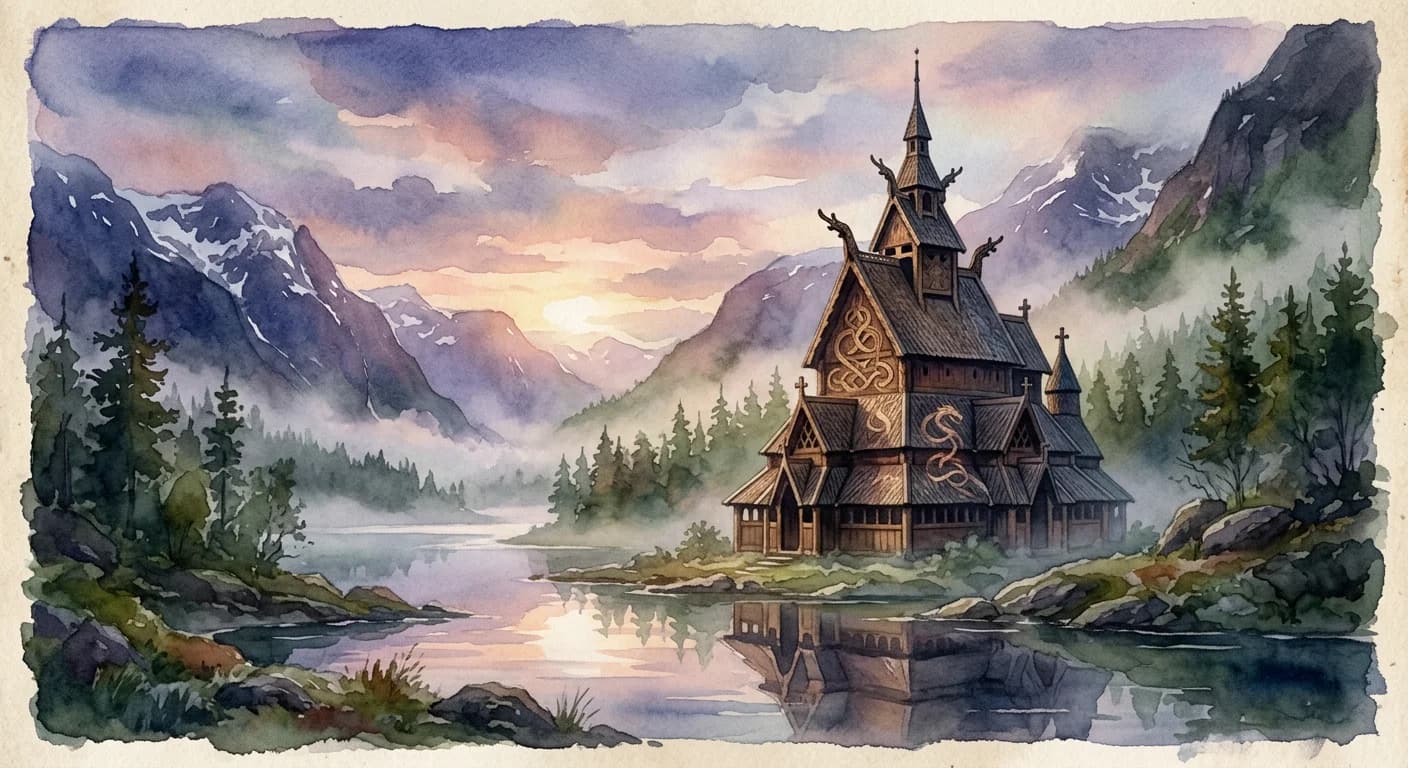
    Artistic representation of Stavkirke
    Norwegian•
    🇳🇴Norway

    Stavkirke

    /STOWV-keer-keh/

    Meaning

    A stavkirke, or stave church, is a breathtaking medieval wooden church, a testament to ancient craftsmanship that once dotted the landscapes of northwestern Europe. These architectural marvels are instantly recognizable by their distinctive post-and-lintel construction, often adorned with intricate carvings of mythical beasts and dragon-head motifs. Each church embodies a profound fusion of Norse pagan beliefs and nascent Christian symbolism, creating structures that feel deeply rooted in the rugged Norwegian earth and its ancestral past. They stand as enduring symbols of a bygone era, whispering tales of cultural heritage and the resilient spirit of a people.

    Literal Translation

    Stave church

    The Story Behind the Word

    The stavkirke exists as a powerful symbol of Norway's unique historical transition from paganism to Christianity. Its very architecture, with towering staves (posts) reaching skyward, reflects the reverence for wood in a land abundant with forests, a material imbued with spiritual significance in Norse mythology. The dragon heads and runic-like carvings adorning these churches are not mere decoration; they are protective wards, a subconscious continuation of pre-Christian beliefs integrated into the new faith. The word 'stavkirke' thus encapsulates a cultural negotiation, a way of embracing a new religion while honoring ancestral traditions and the natural world. It reveals a people who adapted, blending new spiritual narratives with deeply ingrained cultural practices and artistic expressions, creating something uniquely Norwegian.

    Experience It

    Visiting Urnes Stave Church

    As the tour group approached the ancient Urnes Stave Church, a hush fell over them. "Look at the intricate carvings on the portal," the guide whispered, "they tell stories of both Viking legends and Christian parables, a true stavkirke, a bridge between worlds."

    Preserving History

    The local community gathered, discussing the urgent need for repairs on their beloved Fantoft Stave Church. "We must ensure this stavkirke stands for generations," one elder declared, "it's more than just a building; it's our heritage, our connection to the past."

    The Deeper Meaning

    The stavkirke embodies a profound philosophical insight into cultural syncretism – the blending of disparate beliefs and practices. It showcases a worldview where new ideas are not simply adopted, but organically woven into the existing fabric of tradition. This reveals a pragmatic yet deeply spiritual approach to change, where the sacredness of the past is honored even as new spiritual paths are embraced, resulting in a rich, layered cultural identity.

    Did You Know?

    Many stavkirker feature 'dragon heads' on their gables, similar to those found on Viking longships, believed to ward off evil spirits and protect the sacred space within.

    How It's Used

    Used to refer to a specific type of medieval Norwegian wooden church architecture.

    Emotions
    belonging,nostalgia,wonder
    Contexts
    history,nature,travel
    🇳🇴Norway

    by Sofia Rossi·Written Mar 14, 2026·Updated Apr 3, 2026

    Related Words

    Explore more
    HyggeDanish

    Hygge is more than mere coziness; it's a holistic embrace of comfort, warmth, and belonging that nourishes the soul. It describes the intentional creation of an intimate atmosphere where simple pleasures, genuine connection, and mindful presence converge, fostering a profound sense of contentment and well-being. It's about finding joy and peace in the small, everyday moments, often shared with loved ones.

    SaudadePortuguese

    Saudade encapsulates a profound, melancholic longing for something or someone cherished that is absent, often with the bittersweet knowledge that it may never return. It's a deep emotional state tinged with nostalgia, evoking a sense of loss for past experiences, places, or people, yet also holding a tender appreciation for the beauty of what once was. This yearning is not merely sadness, but a complex tapestry of desire, memory, and a poignant acceptance of absence, holding the beloved in a warm, persistent embrace within the heart.

    GezelligDutch

    Gezellig encapsulates a profound sense of warmth, belonging, and convivial comfort, extending beyond mere coziness to embrace the social and emotional atmosphere. It's the feeling of being truly at ease, surrounded by good company, laughter, and a shared sense of contentment. This untranslatable term describes not just a physical space, but a holistic experience where time seems to slow down, fostering genuine connection and a deep sense of well-being.

    Dolce far nienteItalian

    Dolce far niente captures the profound joy and effortless pleasure derived from simply existing without obligation or purpose. It's the art of savoring moments of pure, unadulterated idleness – lying in the sun, watching the clouds drift, or enjoying a leisurely coffee – not as a break from work, but as a valuable state in itself. This 'sweetness of doing nothing' is a conscious embrace of stillness and contentment, allowing the soul to breathe and the senses to fully engage with the present.