Faamiti
/FAH-ah-MEE-tee/
Meaning
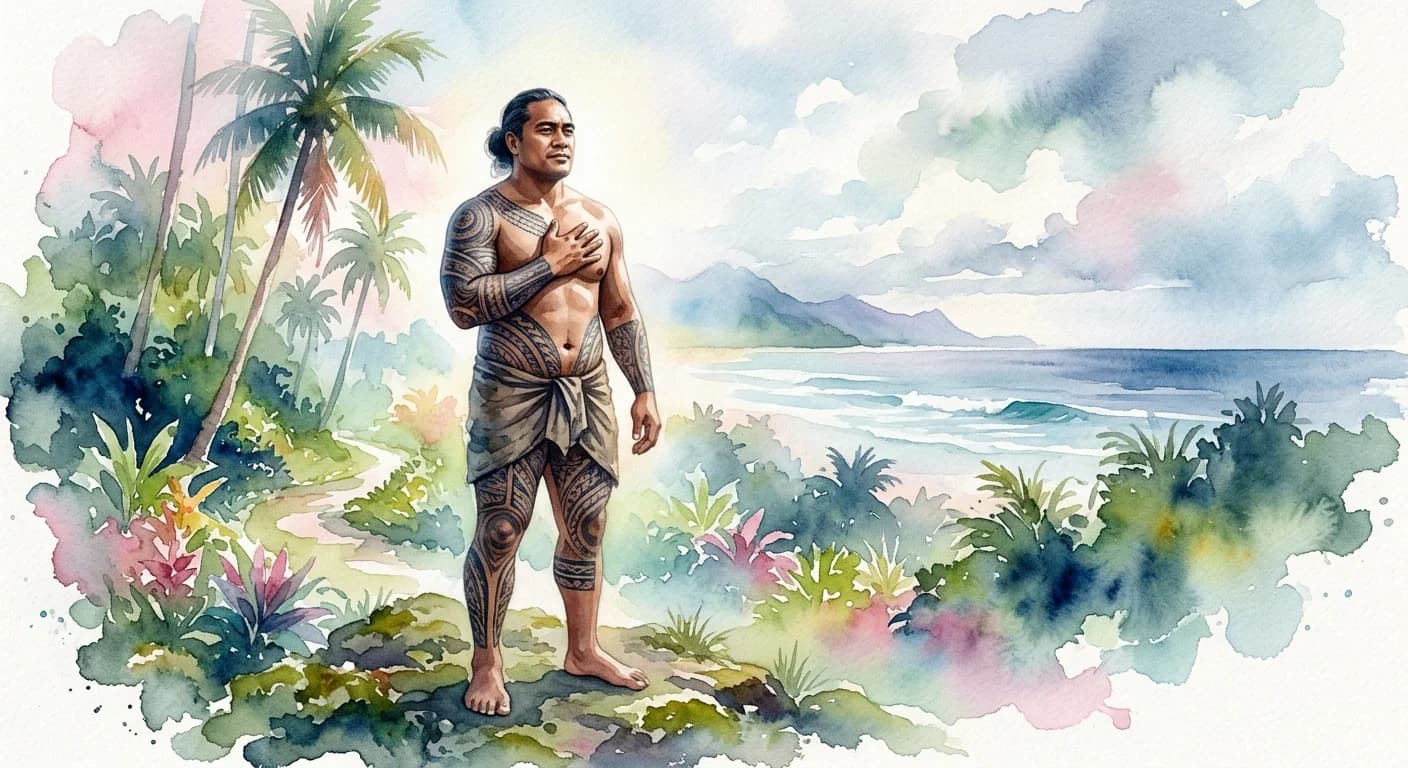
Faamiti, while often used interchangeably with 'pe'a' (the specific male body tattoo), represents the profound act and enduring symbol of traditional Samoan male tattooing. It is a meticulously crafted, full body adornment, stretching from the waist to the knees, that serves as a living testament to a man's courage, resilience, and unwavering commitment to his family and community. More than mere decoration, faamiti embodies a sacred covenant, a visible narrative of lineage, status, and the profound spiritual connection to ancestral heritage, etched into the skin through an arduous, transformative process.
Literal Translation
The word 'faamiti' itself doesn't have a direct literal translation that captures its full cultural weight; it is the name of the tattoo practice and the tattoo itself.
The Story Behind the Word
The existence of faamiti reveals a worldview where identity is not merely personal but deeply communal and ancestral. Historically, receiving a faamiti was a rite of passage, often performed as a young man approached maturity, signifying his readiness to assume adult responsibilities and leadership within the 'aiga (extended family) and village. The intense pain endured during the tattooing process, often lasting weeks or even months, was a crucial element, symbolizing the resilience and strength required of a Samoan man. Those who completed the faamiti were held in high esteem, recognized for their fortitude and dedication to their cultural heritage. To bear the faamiti was to carry the history of one's forebears and to uphold the honor of one's lineage, making it an indelible mark of belonging and cultural pride. It speaks to a deep respect for tradition and the belief that personal sacrifice can lead to profound spiritual and communal affirmation.
Experience It
A Chief's New Faamiti
The village gathered, silent and reverent, as the last intricate patterns of the faamiti were completed on the young chief's thighs. He stood tall, his eyes reflecting the pain endured, but also the immense pride of bearing the marks of his ancestors, ready to lead his people with the wisdom and strength his new faamiti symbolized.
Explaining the Faamiti
During a cultural exchange, a Samoan elder gently traced the patterns on his arm, explaining to a curious visitor, 'This is not just art; this is my faamiti. Each line, each motif, tells a story of my family, my village, and the journey that has shaped me. It is who I am.'
The Deeper Meaning
Faamiti encapsulates a philosophy where enduring pain and demonstrating commitment are pathways to profound identity and belonging. It underscores the belief that true selfhood is not isolated but forged within the crucible of community and ancestral tradition. The permanence of the faamiti reflects a worldview where one's actions and identity are indelibly linked to the past, present, and future of their people, emphasizing continuity and legacy over fleeting individualism.
Did You Know?
Traditionally, the tools used for faamiti were made from bone, turtle shell, and wood, tapped into the skin with a small mallet, making the process incredibly intricate and demanding.
How It's Used
Used to refer to the traditional Samoan male tattoo, particularly the 'pe'a'.