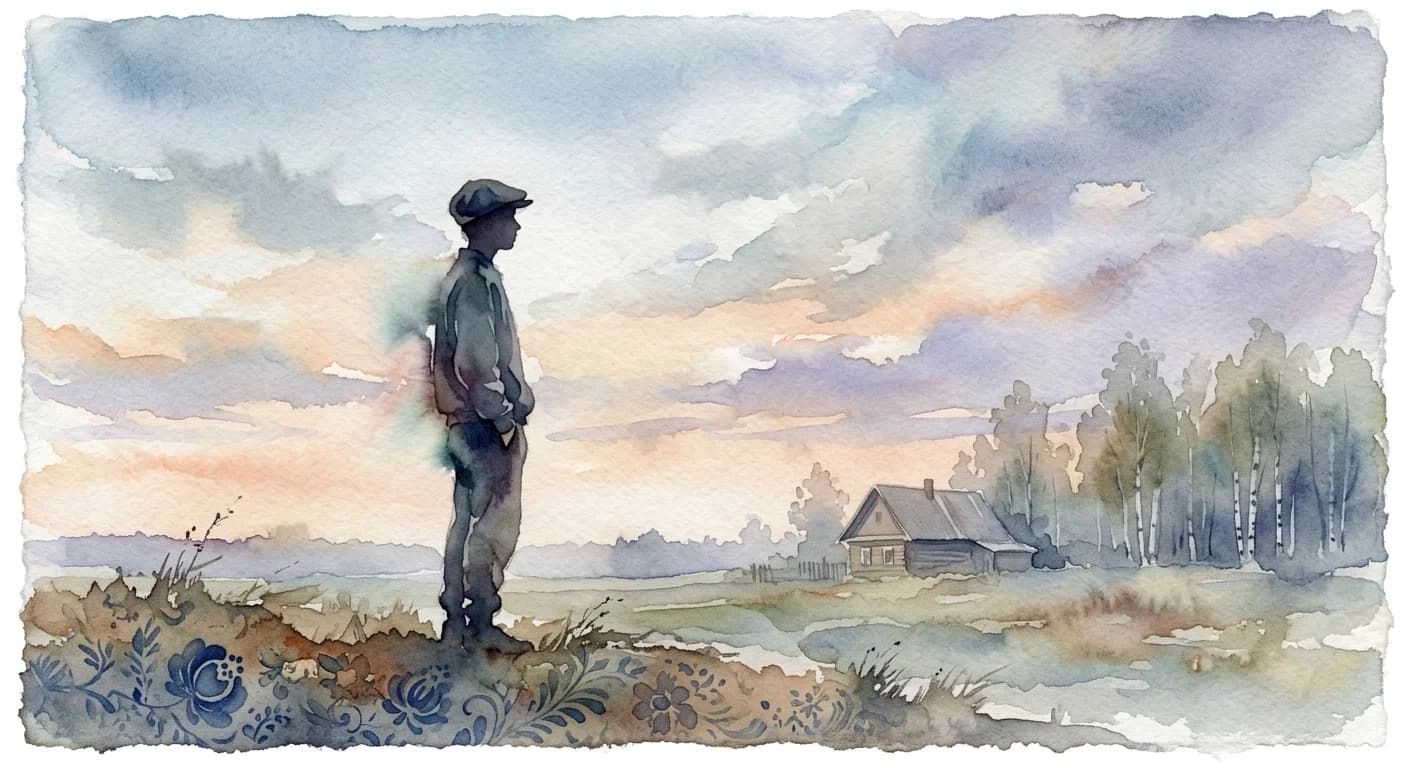
Gopnik
/GOP-nik/
Meaning
Gopnik vividly portrays a specific post-Soviet archetype: a young man, often from the working class, whose identity is deeply intertwined with street culture and a perceived lack of future prospects. Characterized by a distinctive uniform of tracksuits, flat caps, and cheap sneakers, he embodies a blend of petty delinquency, aggressive posturing, and a penchant for loitering in public spaces, fueled by cheap alcohol and hardbass music. This term encapsulates a complex societal phenomenon, blending social critique with a dark, often self-deprecating, humor about a certain segment of Russian youth.
Literal Translation
The precise etymology is debated, but it's often linked to the Ukrainian word 'gop' (to jump) or possibly a reference to the 'Gorky Park' or 'Gop' company, a criminal slang term for thief or robber.
The Story Behind the Word
The 'gopnik' phenomenon emerged prominently in the tumultuous post-Soviet 1990s, a period of immense economic and social upheaval in Russia. With the collapse of the Soviet Union, traditional social structures crumbled, leading to widespread unemployment, disillusionment, and a vacuum of moral authority. For many working-class youths, opportunities dwindled, and the streets became their primary training ground. The gopnik embodies the anxieties of a society grappling with rapid change, the rise of a new, often predatory, capitalism, and the erosion of collective identity. The stereotype reflects a societal struggle with a generation perceived as lost or marginalized, simultaneously feared and mocked, encapsulating a blend of resentment towards the 'new rich' and a nostalgic longing for a more ordered (if authoritarian) past. It reveals a cultural awareness of social stratification and the challenging realities faced by those on the margins of economic progress.
Experience It
Courtyard Encounter
As dusk settled, a group of young men in tracksuits occupied the playground swings, passing a bottle of beer. One, with a flat cap pulled low, eyed passersby with an unreadable gaze. 'Typical gopniki,' muttered an elderly woman, pulling her grandchild closer as they hurried past.
Metro Station Loiterers
Three figures leaned against the metro station wall, tracksuits glinting under the fluorescent lights, their laughter echoing a little too loudly. One was squatting, smoking, while the others casually blocked the pathway. Their presence radiated a low-level menace, a common sight that many commuters learned to navigate around quickly.
The Deeper Meaning
The 'gopnik' reflects a societal struggle with identity in the face of rapid modernization and economic disparity. It speaks to the human tendency to form subcultures when traditional paths to success are blocked, highlighting the search for belonging and status within an alternative social hierarchy. It also implicitly questions the promise of progress, revealing a cynical undercurrent about who benefits from societal changes and who is left behind.
Did You Know?
The iconic 'squatting' pose of a gopnik, known as the 'Adidas squat,' is often seen as a symbol of their street-wise defiance and casual disregard for formal etiquette.
How It's Used
Used to describe a young man belonging to a specific socio-economic subculture in Russia and other post-Soviet countries, often associated with street culture, petty crime, and a distinctive style of dress and behavior.