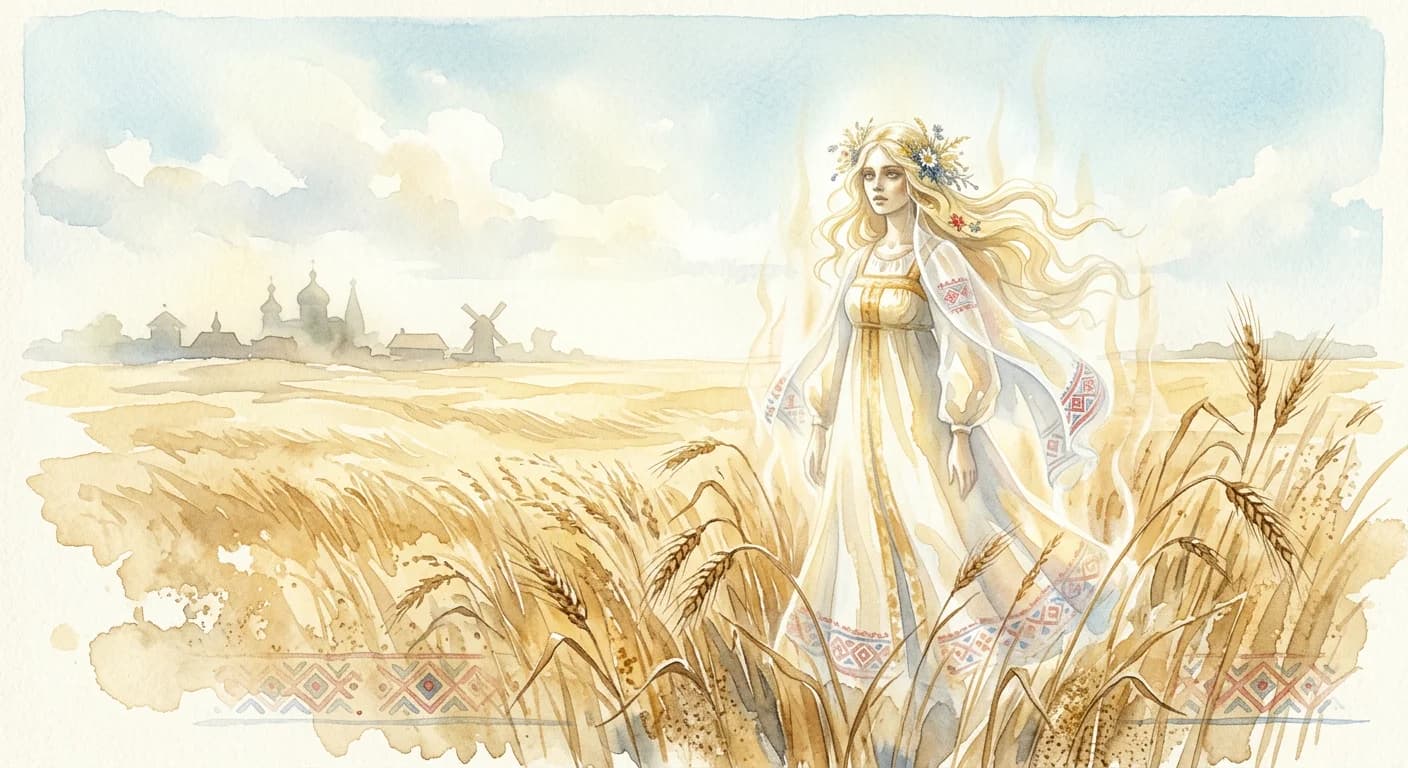
Poludnitsa
/pol-YOOD-neet-sah/
Meaning
Poludnitsa, or 'noon woman,' is a spectral female entity from Slavic folklore, manifesting in fields during the scorching midday sun. She embodies the perilous intensity of nature and the sun's unforgiving power, serving as a stark warning against working during the day's hottest hours. Encountering her could bring on a range of misfortunes, from disorienting heatstroke and madness to paralysis or even death, particularly for those found sleeping or idle in the fields. She is a potent symbol of the ancient agricultural community's respect and fear for the elements.
Literal Translation
noon woman
The Story Behind the Word
The Poludnitsa embodies the deep connection between Slavic peasant life and the rhythms of nature. In an agrarian society where survival depended on successful harvests, the midday sun, while essential for growth, also posed a significant threat. This word exists as a personification of that danger, a cautionary tale to ensure workers, especially children, avoided the most intense heat, preventing sunstroke and ensuring productivity. It reveals a worldview where the natural world was alive with conscious, often mischievous or malevolent, spirits that demanded respect and adherence to unspoken rules. The Poludnitsa is not just a myth; she's a cultural mechanism for survival, reflecting the harsh realities of pre-industrial farming and the profound reverence, tinged with fear, for the forces beyond human control. She also highlights the liminality of midday, a time when the veil between worlds was considered thin.
Experience It
A Child's Warning
Little Ivan, tired from playing, started to wander towards the tall rye field at noon. His grandmother quickly pulled him back, whispering, 'Don't you dare go out there, Poludnitsa will snatch you for sleeping in her domain!' The fear in her voice was enough to keep him close to the shade.
The Dangers of Idleness
Old Mikhail, after a long morning of scything, decided to rest under a small bush in the middle of the field during the noon hour. He awoke disoriented, his head throbbing, convinced he'd seen a tall, white figure with a scythe asking him riddles. 'The Poludnitsa got to me,' he mumbled, shaking off the haze.
The Deeper Meaning
The Poludnitsa profoundly illustrates a worldview where the natural environment is not merely a resource but an animate, powerful entity demanding respect and ritualistic observance. It speaks to a philosophy of humility before nature's might, acknowledging human vulnerability to its extremes. This figure embodies the 'sacredness of danger,' transforming environmental hazards into moral or spiritual transgressions, thereby reinforcing community discipline and survival strategies through myth and fear.
Did You Know?
In some Slavic regions, Poludnitsa was believed to carry a scythe or shears, and would decapitate or cut the hair of those who dared to work during her midday domain.
How It's Used
The term 'Poludnitsa' is used in folklore, mythology, and literature to refer to a specific type of supernatural being in Slavic traditions. It is invoked when discussing beliefs about spirits inhabiting nature, particularly fields and agricultural landscapes, and the dangers associated with midday activities in these areas.