Ceilidh
/KAY-lee/
Meaning
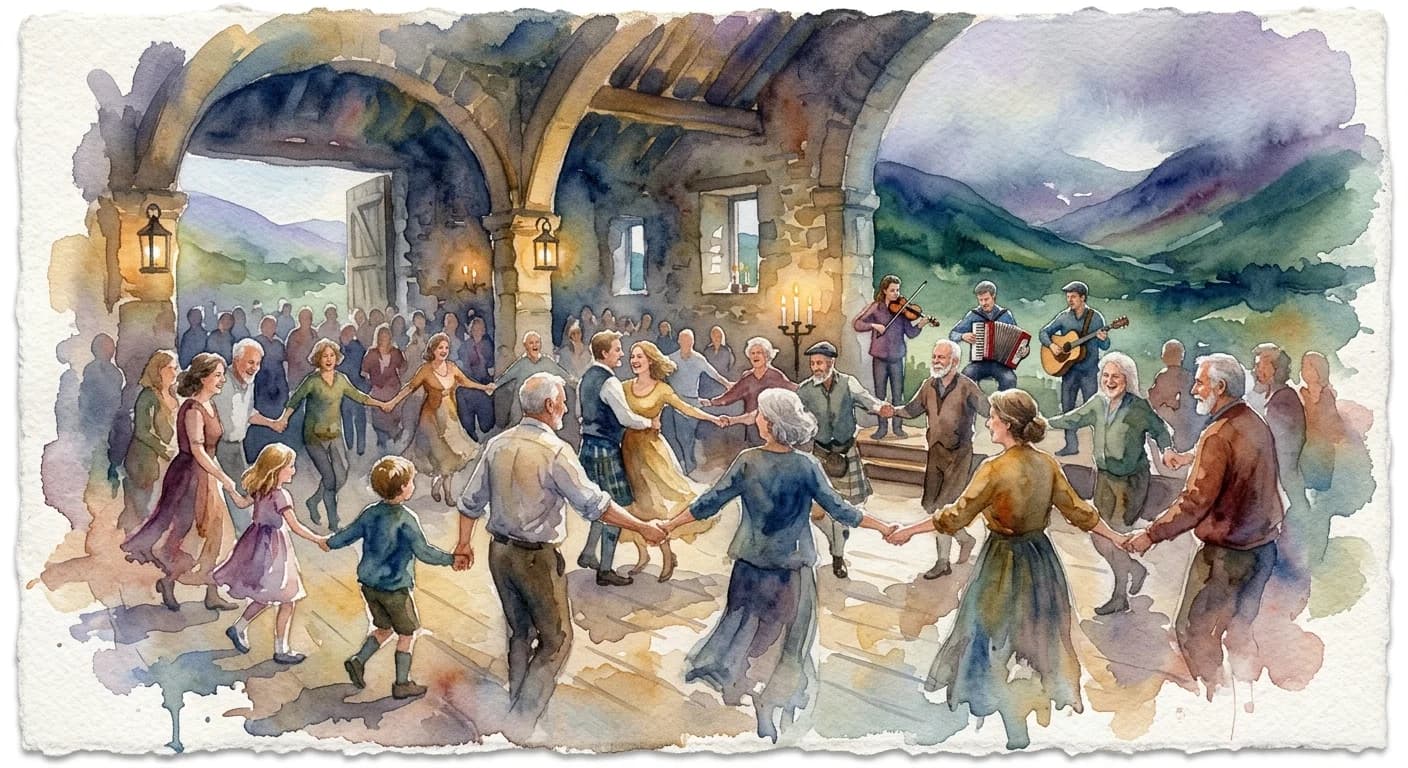
A ceilidh is a pulsating heart of Scottish and Irish social life, an exuberant gathering where centuries-old traditions burst forth in a symphony of live folk music, spirited dancing, and communal storytelling. It's an immersive, intergenerational celebration where the infectious rhythm guides feet in reels and jigs, fostering an immediate sense of belonging and shared heritage. More than an event, it's an active participation in cultural memory, knitting communities together through shared joy and lively interaction.
Literal Translation
gathering, visit
The Story Behind the Word
The ceilidh, originally meaning a 'visit' or 'gathering' in Gaelic, evolved from informal kitchen parties to structured community dances, particularly during times when public entertainment was scarce or restricted. It served as a vital social hub, a place for courtship, news exchange, and the preservation of oral traditions like storytelling, poetry, and song. Its enduring presence reflects a deep-seated cultural value placed on community cohesion, direct human interaction, and the active perpetuation of heritage. For Scots and Irish, the ceilidh is a living link to their ancestors, a vibrant affirmation of identity and resilience through shared experience and collective joy, embodying a philosophy that culture is not just observed, but lived and danced.
Experience It
Village Hall Celebration
The fiddles struck up a lively tune, and soon the village hall floor was a whirl of kilts and smiles. Grandparents guided their grandchildren through the steps of a 'Strip the Willow,' laughter echoing as newcomers tentatively joined in, swept up in the infectious energy of the ceilidh.
Wedding Ceilidh
After the wedding feast, the band called out the dances, and guests from all over the world found themselves linking arms for a 'Gay Gordons.' The bride and groom beamed, watching their diverse families and friends unite on the dance floor, celebrating their union with traditional Scottish revelry.
The Deeper Meaning
The ceilidh embodies a philosophy of active cultural participation, where heritage is not a static relic but a dynamic, living entity. It champions community over individualism, celebrating shared joy and collective memory through physical movement and oral tradition. It suggests that true connection and cultural vitality stem from direct, intergenerational engagement, fostering a sense of belonging that transcends transient entertainment.
Did You Know?
Historically, a ceilidh could involve storytelling and poetry recitations more than dancing, especially in remote areas where entertainment options were limited.
How It's Used
Typically used to refer to a traditional Scottish or Irish social gathering involving folk music and dancing. It can also refer to a performance by traditional musicians.