Charanga
/cha-RAHN-gah/
Meaning
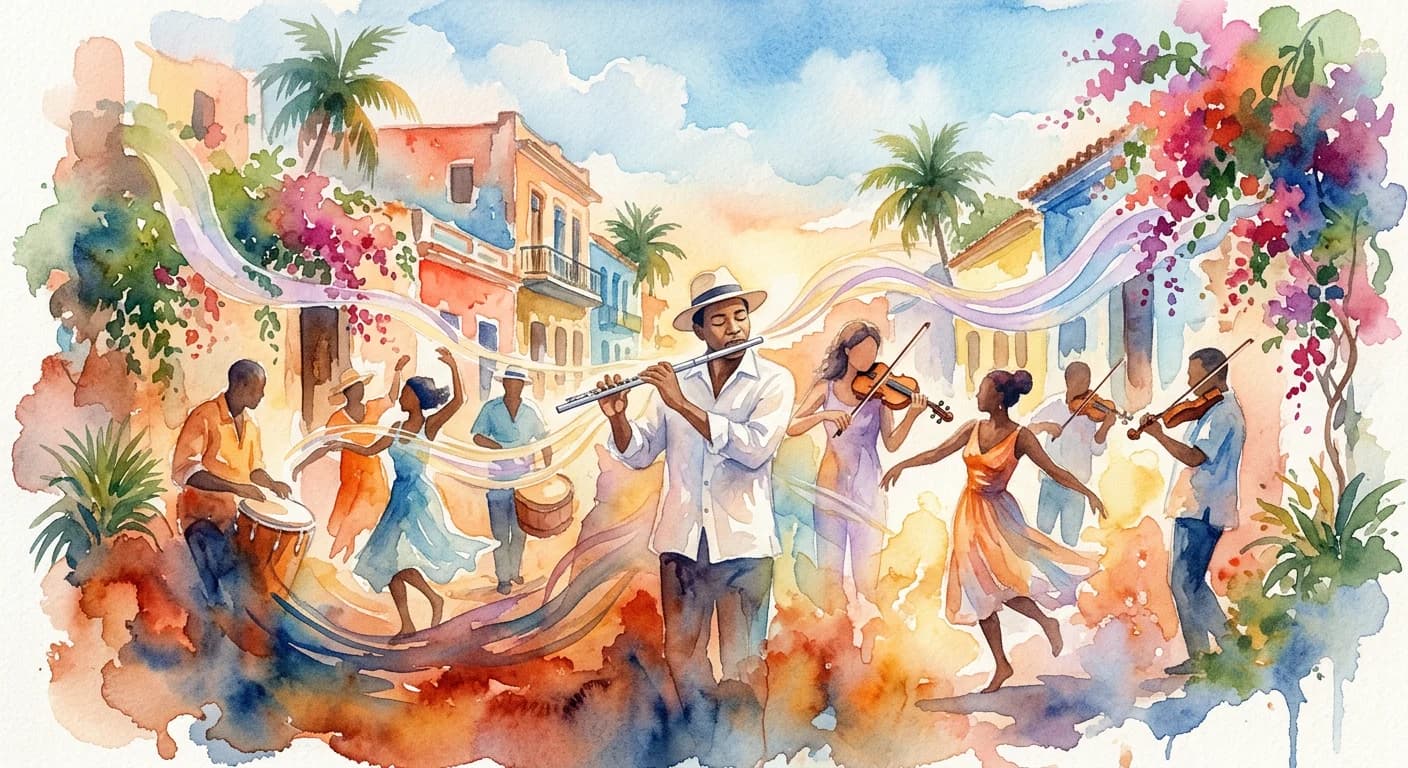
Charanga is a captivating genre of Cuban dance music, defined by its luminous melodies carried by flute and violins, intricately weaving through a pulsating rhythmic foundation of percussion. It instantly conjures a vibrant, celebratory atmosphere, embodying spontaneous joy and communal revelry. This music is the heartbeat of Cuban social gatherings and dance floors, encapsulating the effervescent spirit of Caribbean culture. Its intricate yet irresistibly danceable sound makes it an essential ingredient for spirited interaction and unforgettable celebrations.
Literal Translation
Likely derived from 'charanga,' meaning 'flute' or 'whistle,' referring to a key instrument in the ensemble.
The Story Behind the Word
The emergence of Charanga in 19th-century Cuba, evolving from contradanza and danzón, reflects a uniquely Cuban synthesis of European orchestral traditions with African rhythmic sensibilities. It became the sophisticated sound of Havana's elite, but its infectious rhythms quickly permeated all social strata, offering a space for collective expression and release. The charanga ensemble, with its distinctive instrumentation, symbolized a period of cultural innovation and national identity formation. It embodies a philosophy where music is not merely entertainment but a vital, interactive force that binds communities, celebrates life's moments, and provides an escape from hardship through movement and shared joy. This word reveals how Cubans perceive life as something to be lived vibrantly, often in collective celebration, where even formal structures can be imbued with spontaneous, soulful energy.
Experience It
A Lively Cuban Fiesta
The barrio buzzed with anticipation as the sun dipped below the horizon. Suddenly, the unmistakable sound of a charanga band erupted from the plaza, flutes trilling and violins soaring, pulling everyone onto the makeshift dance floor. Grandmothers swayed with teenagers, their faces alight with the infectious rhythm.
Sunday Afternoon Dance
At the community center, a group of friends gathered for their weekly dance session. 'Let's put on some charanga!' someone exclaimed, and soon the room was filled with the elegant yet energetic sounds, their feet effortlessly gliding to the interlocking rhythms of the timbales and guiro.
The Deeper Meaning
Charanga embodies a deep Cuban philosophy that life, despite its challenges, demands to be celebrated with joy and collective spirit. It suggests that true happiness often arises from spontaneous communal experiences and the shared language of music and dance. The genre’s elegant yet earthy sound reflects a worldview where sophistication and raw passion coexist harmoniously, creating a unique cultural tapestry that values both tradition and vibrant innovation.
Did You Know?
Did you know that the charanga ensemble's signature flute, typically a wooden five-key instrument, was often played by classically trained musicians who brought a refined, European melodic sensibility to the African-influenced rhythms?
How It's Used
Used to refer to the musical genre itself, as well as the ensemble that plays it, and sometimes the party or dance where this music is played.