U.
HomeRegionsLanguagesEmotionsCollections
Find Your Word

“The limits of my language mean the limits of my world.”

— Ludwig Wittgenstein, Philosopher

Untranslatable

A curated collection of the world's most beautiful expressions—words that remind us language is humanity's greatest invention.

  • Home
  • Collections
  • Regions
  • Countries
  • Emotions
  • Tags
  • Contexts
  • Finder
  • Europe
  • Asia
  • Americas
  • Africa
  • Middle East
  • About
  • Contact
  • Privacy Policy
  • Terms of Service

2026 © Untranslatable. All rights reserved.

    /
    /
    1. Home
    2. /
    3. Europe
    4. /
    5. Crannóg
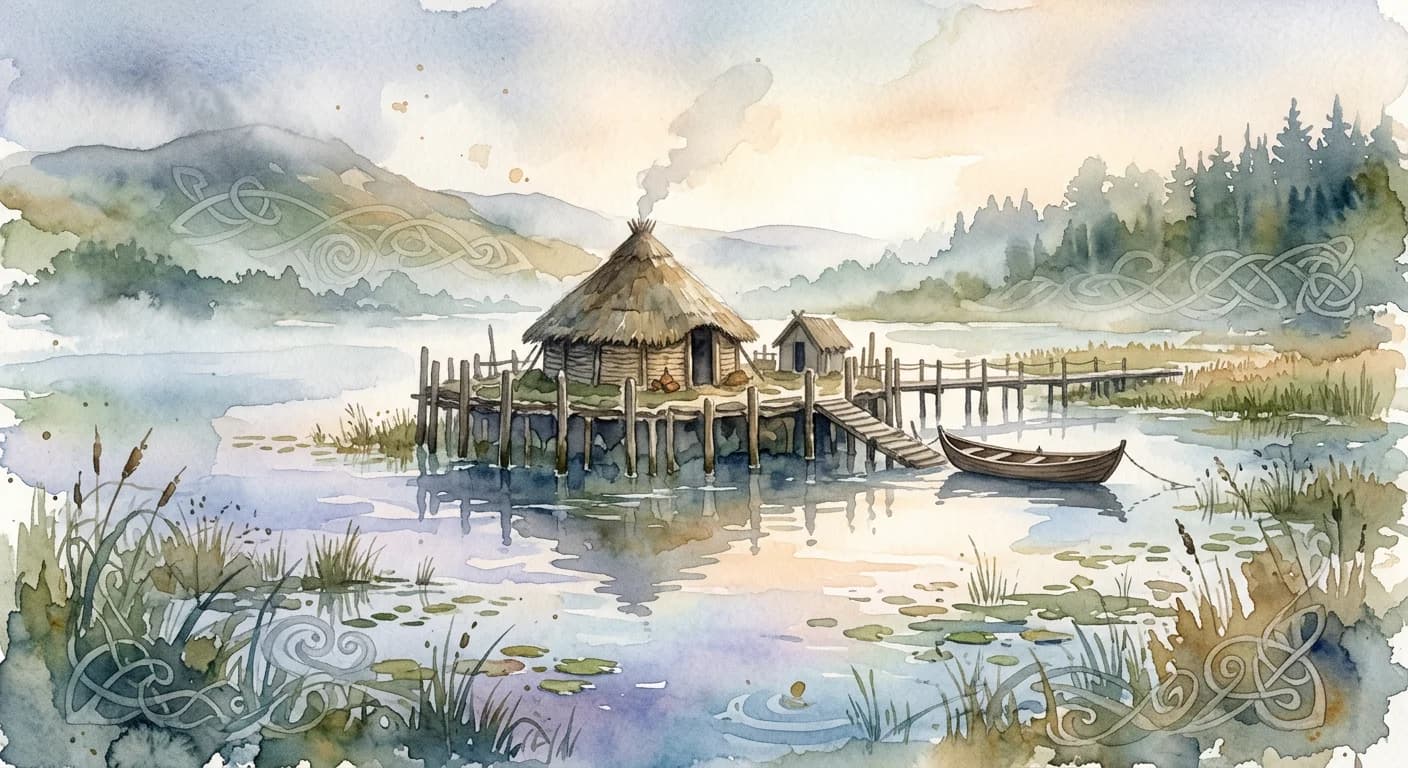
    Artistic representation of Crannóg
    Irish•
    🇮🇪Ireland

    Crannóg

    /KRAN-og/

    Meaning

    A crannóg is an ancient artificial island, meticulously constructed from timber, stone, and earth, often in the shallow waters of a loch or river, serving as both a dwelling and a formidable defensive stronghold. These ingenious structures, unique to Ireland and Scotland, represent a remarkable testament to early Celtic engineering and their deep connection to the aquatic landscape. They evoke a sense of a resourceful people who adapted their environment to create secure, self-sufficient communities, literally rising from the water.

    Literal Translation

    Tree-bag (from 'crann' meaning tree and 'óc' possibly meaning bag or enclosure)

    The Story Behind the Word

    The crannóg embodies the ingenuity and resilience of early Irish and Scottish societies, reflecting a practical response to both security needs and resource management. Its existence speaks to a landscape where water was not merely a barrier but a strategic ally, offering natural defenses and access to sustenance. The construction of a crannóg was a communal endeavor, requiring significant planning and labor, thus fostering strong social bonds and a shared sense of place. It reveals a worldview where the natural environment was actively shaped and utilized for survival and prosperity, intertwining human habitation with the very fabric of the waterways. These structures were centers of community, trade, and defense, enduring through centuries of changing political landscapes and technological advancements, leaving an indelible mark on the archaeological and cultural memory of the Celtic Isles.

    Experience It

    Ancient Island Home

    A family huddles around a peat fire within their crannóg, the lapping water just beyond the palisade offering a sense of security against the encroaching night. The sounds of the loch are their lullaby, their home a bastion of warmth and safety amidst the wild landscape.

    Archaeological Discovery

    Divers carefully explore the murky depths of a Scottish loch, uncovering well-preserved oak timbers and pottery shards that once formed part of a crannóg. Each artifact provides a tantalizing glimpse into the daily lives of its ancient inhabitants, frozen in time beneath the water.

    The Deeper Meaning

    The crannóg reflects a profound philosophy of adaptation and self-reliance, highlighting a symbiotic relationship between humans and their environment. It signifies a worldview where security and community are actively forged from the landscape, rather than merely found within it. This architectural choice underscores a deep understanding of natural resources and a communal spirit necessary for such ambitious undertakings, suggesting a society that valued both ingenuity and collective effort.

    Did You Know?

    Some crannógs were continuously occupied for over a thousand years, demonstrating incredible longevity and adaptability as homes and defensive sites.

    How It's Used

    Used to refer to the archaeological remains or historical concept of these artificial islands.

    Emotions
    belonging,nostalgia,wonder
    Contexts
    daily life,history,nature
    🇮🇪Ireland

    by Annelise Dubois·Written Mar 14, 2026·Updated Apr 3, 2026

    Related Words

    Explore more
    HyggeDanish

    Hygge is more than mere coziness; it's a holistic embrace of comfort, warmth, and belonging that nourishes the soul. It describes the intentional creation of an intimate atmosphere where simple pleasures, genuine connection, and mindful presence converge, fostering a profound sense of contentment and well-being. It's about finding joy and peace in the small, everyday moments, often shared with loved ones.

    SaudadePortuguese

    Saudade encapsulates a profound, melancholic longing for something or someone cherished that is absent, often with the bittersweet knowledge that it may never return. It's a deep emotional state tinged with nostalgia, evoking a sense of loss for past experiences, places, or people, yet also holding a tender appreciation for the beauty of what once was. This yearning is not merely sadness, but a complex tapestry of desire, memory, and a poignant acceptance of absence, holding the beloved in a warm, persistent embrace within the heart.

    GezelligDutch

    Gezellig encapsulates a profound sense of warmth, belonging, and convivial comfort, extending beyond mere coziness to embrace the social and emotional atmosphere. It's the feeling of being truly at ease, surrounded by good company, laughter, and a shared sense of contentment. This untranslatable term describes not just a physical space, but a holistic experience where time seems to slow down, fostering genuine connection and a deep sense of well-being.

    Dolce far nienteItalian

    Dolce far niente captures the profound joy and effortless pleasure derived from simply existing without obligation or purpose. It's the art of savoring moments of pure, unadulterated idleness – lying in the sun, watching the clouds drift, or enjoying a leisurely coffee – not as a break from work, but as a valuable state in itself. This 'sweetness of doing nothing' is a conscious embrace of stillness and contentment, allowing the soul to breathe and the senses to fully engage with the present.