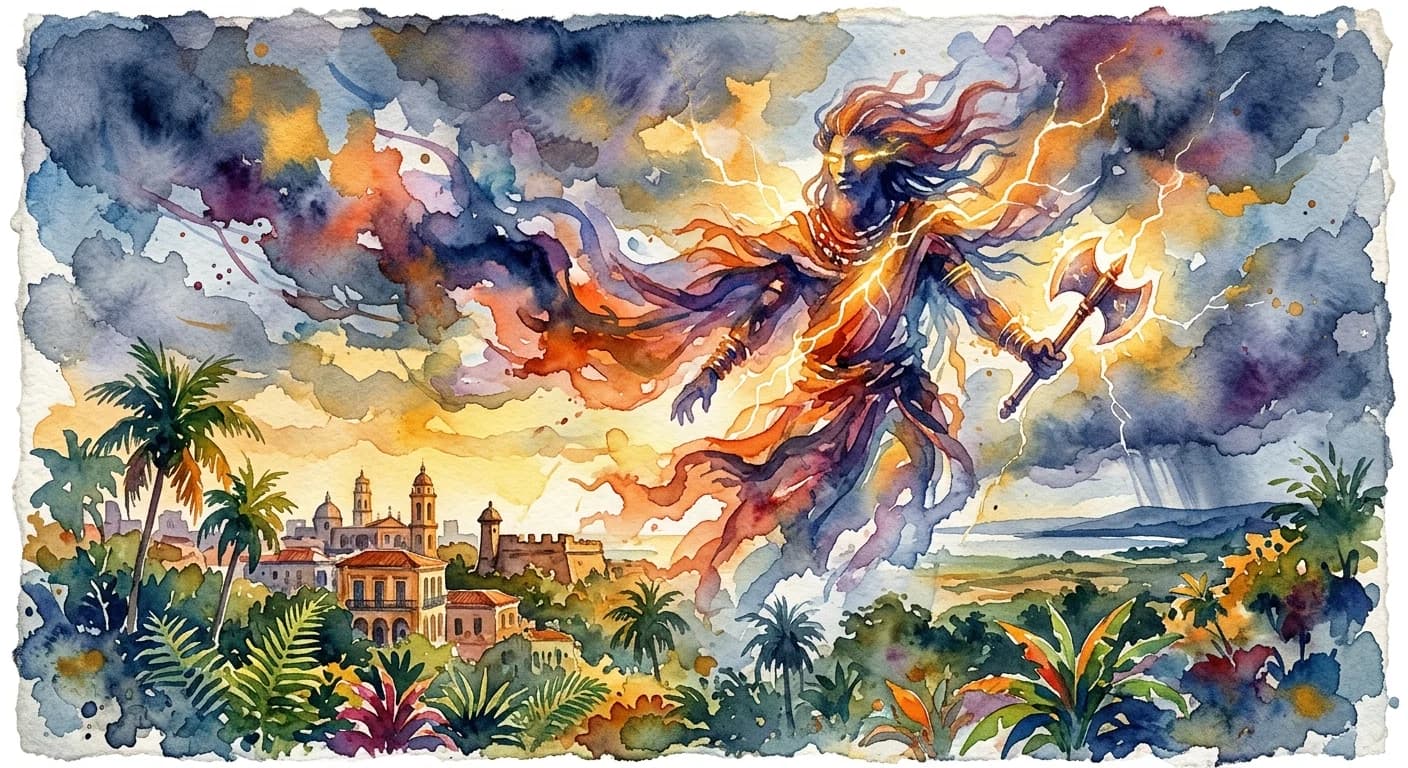
Changó
/CHAHN-goh/
Meaning
Changó is a formidable Orisha, embodying the raw, untamed power of thunder, lightning, and fire. He personifies justice, virility, and an indomitable spirit, celebrated for his passion, courage, and vibrant zest for life. Often depicted as a charismatic, yet sometimes tempestuous, figure, his actions can bring both cataclysmic destruction and vital creation, reflecting the dualities inherent in nature and human experience. His worship is a dynamic spectacle of drumming, dancing, and elaborate rituals, resonating with his lively and commanding presence in the spiritual realm.
Literal Translation
The name Changó is of Yoruba origin.
The Story Behind the Word
The existence of Changó reveals a Yoruba worldview that embraces the dynamic, often unpredictable, forces of nature as extensions of the divine. He is not merely a god of natural phenomena but a profound representation of human passion, justice, and the cyclical nature of destruction and renewal. In Cuban Santería, his veneration became a powerful act of cultural preservation and resistance, as enslaved Africans secretly maintained their spiritual traditions by syncretizing Orishas with Catholic saints. Changó's fiery spirit resonated with the struggles for freedom and dignity, making him a symbol of resilience and the enduring power of ancestral heritage. His stories and rituals teach balance, the consequences of unchecked power, and the importance of living with passionate integrity.
Experience It
Invoking Protection
During a particularly intense thunderstorm, Maria lit a red candle and offered a cigar, whispering, 'Changó, protect my home and family from this fury.' She felt a sense of peace, believing the Orisha of thunder would safeguard her loved ones.
Seeking Justice
After a grave injustice, Carlos went to the babalawo seeking guidance. The priest advised him to make an offering to Changó, symbolizing his appeal for divine justice to prevail and wrongdoings to be rectified.
The Deeper Meaning
Changó embodies a philosophy that recognizes the inherent duality of existence: creation born from destruction, passion intertwined with temper, and justice demanding both order and upheaval. He teaches that true power lies not in suppression, but in the controlled channeling of intense forces, both within oneself and in the world. His narratives highlight the importance of courage, integrity, and the understanding that life's most vibrant experiences often come with inherent risks and challenges.
Did You Know?
Changó is famously associated with the colors red and white, the double-headed axe (oshe), and often depicted as a powerful warrior or a king, reflecting his regal and martial aspects.
How It's Used
Used primarily in religious contexts within the Yoruba faith and its diaspora, particularly in Santería. It refers to the deity himself, as well as invoking his power or presence during ceremonies.