Charango
/chah-RAHN-goh/
Meaning
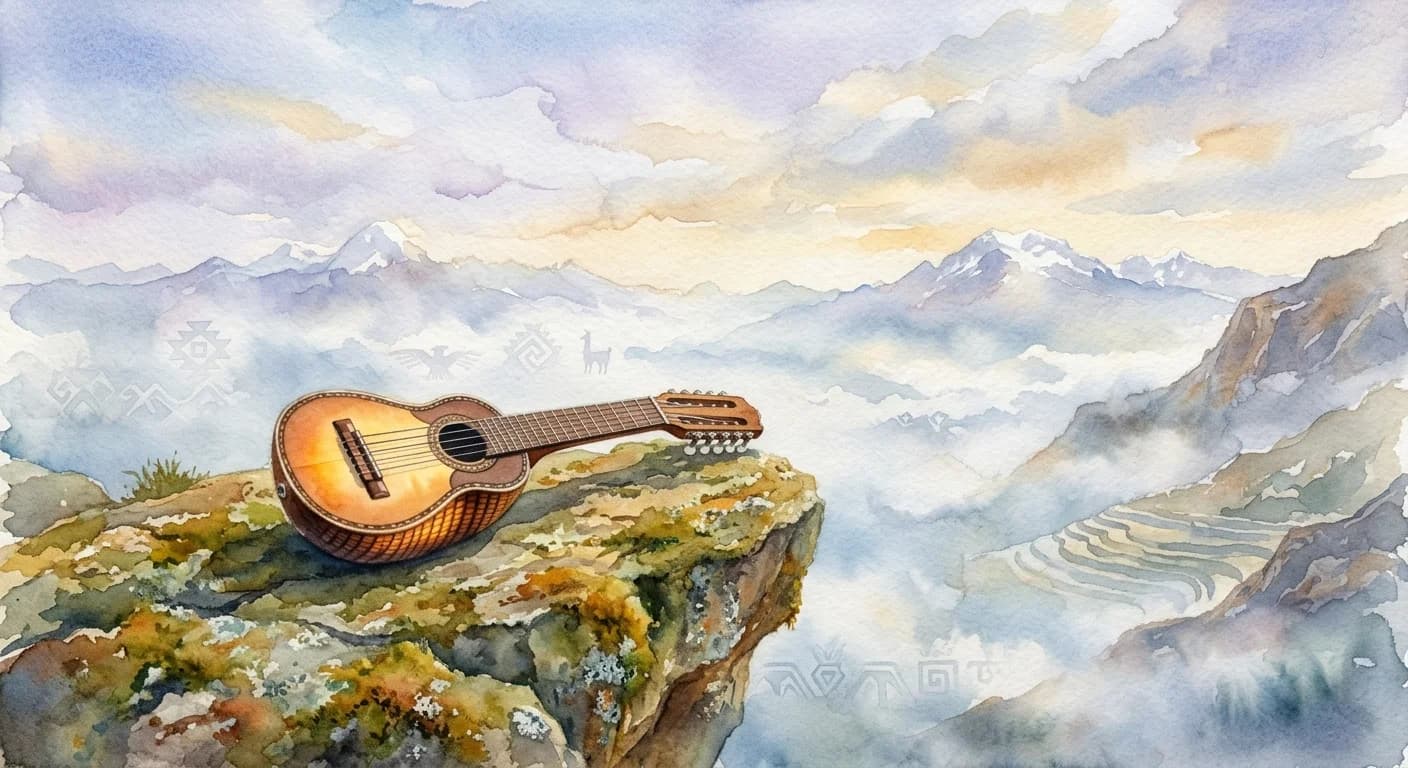
The charango is a vibrant, small Andean stringed instrument, whose bright, piercing voice resonates through the high mountains and valleys. Traditionally crafted with a distinctive armadillo shell soundbox, its unique, almost buzzing timbre enchants listeners and dancers alike. More than a mere instrument, the charango embodies the joyful, melancholic, and resilient spirit of Andean folk music, weaving narratives of community, celebration, and ancestral connection, passed down through generations of Quechua and Aymara peoples.
Literal Translation
The etymology is debated, but likely refers to a small lute or guitar-like instrument, with 'charango' potentially deriving from a Quechua or Spanish diminutive.
The Story Behind the Word
The charango is a profound sonic representation of Andean identity and resistance. Its origins are debated, but it emerged during the colonial era, possibly as a local adaptation of the Spanish vihuela or guitar. The use of an armadillo shell (quirquincho) wasn't just practical; it imbued the instrument with a connection to the natural world and the Andean cosmovision. For the Quechua and Aymara, the charango is a companion in both joy and sorrow – it narrates epic tales, accompanies spirited dances during festivals like Carnival, and offers solace in solitude. Its music is often seen as a direct link to the land (Pachamama) and the ancestors, reflecting a worldview where music is integral to spiritual and social life, a testament to cultural survival and artistic ingenuity in the face of historical oppression.
Experience It
Festival in the Plaza
The central plaza of Cusco pulsed with energy as a charanguista, perched on a stone bench, launched into a rapid huayno. His fingers danced across the strings, and the bright, percussive sound of his charango cut through the chatter, drawing a crowd that soon began to sway and stomp to the infectious rhythm, celebrating the harvest.
Mountain Serenade
Under the vast, starlit Andean sky, a young man sat by a flickering fire, his charango cradled against him. He played a melancholic, yearning melody, the notes echoing softly against the towering peaks. Each strum seemed to speak of longing, of love, and of the enduring spirit of the mountains themselves.
The Deeper Meaning
The charango reveals an Andean philosophy where art is inseparable from life, community, and the natural world. It embodies a resilience that transforms humble materials into powerful expressions of identity and emotion. Its music often reflects a cyclical view of time and a deep reverence for ancestral traditions, demonstrating how cultural heritage is actively lived and celebrated through sound.
Did You Know?
Traditionally, the charango's soundbox was often made from the dried carapace of an armadillo (quirquincho), giving it a unique resonance and a distinct visual character that symbolizes its deep connection to Andean nature.
How It's Used
Refers to the musical instrument itself, the music played on it, and by extension, can evoke the cultural context of Andean folk music.