Droog
/DROKH/
Meaning
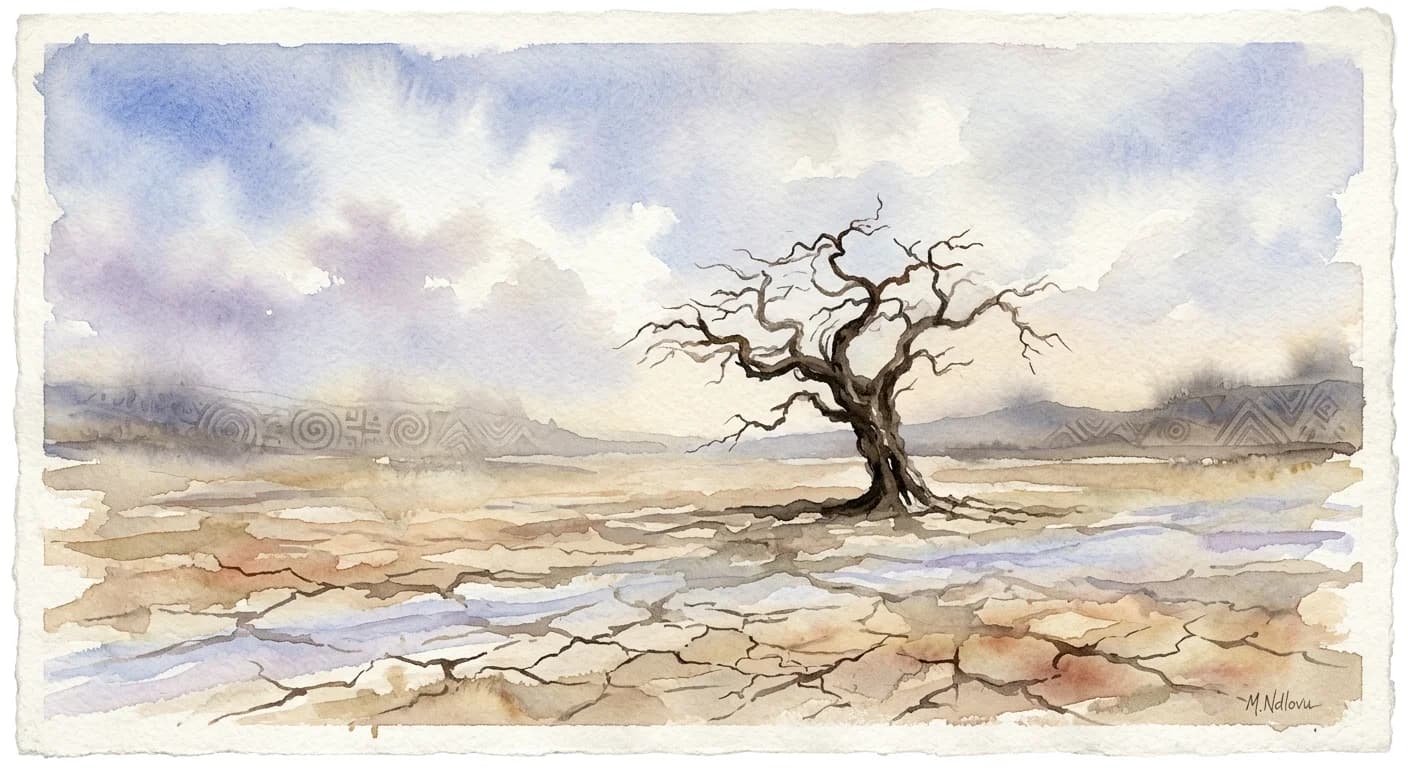
"Droog" in Afrikaans transcends a mere meteorological term; it signifies a severe, prolonged drought that grips the land, transforming vibrant landscapes into parched, cracked earth. It evokes a profound sense of existential crisis, where the very essence of life – water – becomes a desperate scarcity. This isn't just a dry spell; it's a visceral, collective experience of desolation, hardship, and the relentless struggle for survival that impacts communities, livestock, and the natural environment, deeply ingrained in the South African psyche.
Literal Translation
Dry
The Story Behind the Word
The existence and emotional weight of "Droog" are deeply rooted in South Africa's geography and history. Much of the country's interior is semi-arid, making water a precious, often unreliable resource. For generations of farmers, particularly the Afrikaner community with its strong agricultural heritage, the rhythm of life, prosperity, and even survival has been dictated by rainfall. A "droogte" (drought) is not just an event; it's a recurring, formidable adversary that tests resilience, faith, and community bonds. The word embodies the collective memory of past famines, the constant awareness of vulnerability to nature's whims, and the deep respect for water as a life-giver. It reflects a worldview shaped by a harsh yet beautiful land, where perseverance in the face of natural adversity is a core virtue, and the land's generosity is never taken for granted, fostering both hardship and a profound connection to the earth.
Experience It
The Farmer's Plea
Oom Piet stared at his cracked maize fields, dust devils dancing in the distance. "Die droog is erg hierdie jaar," he sighed, his voice heavy with despair, knowing his livestock were dwindling and the borehole was nearly dry. The children had started carrying water from the distant river, a daily, arduous trek under the relentless sun.
A Town's Despair
The town's reservoir was at 10%, its once-full banks now a barren wasteland. Local news anchors spoke solemnly of the unprecedented "droog" gripping the region, showing images of withered trees and desperate animals. Community meetings focused on water rationing, a stark reminder of their collective vulnerability.
What Gets Lost in Translation
English speakers might simply translate "droog" as 'dry' or 'drought,' missing its profound emotional and cultural resonance. It's not just a lack of rain; it embodies a lived experience of hardship, a deep-seated fear for survival, and the memory of past struggles. The word carries a heavier, more visceral weight than a purely scientific definition of drought.
Across Cultures
Similar concepts exist in other cultures heavily reliant on agriculture in arid regions. The Spanish word 'sequía' also denotes drought, carrying similar implications of hardship. In indigenous Australian languages, there are often complex terms describing different types of dry seasons and their impacts, reflecting a deep ecological knowledge and respect for water scarcity. The Arabic word 'jafaf' also translates to drought and is deeply understood in regions often facing water stress.
The Deeper Meaning
"Droog" encapsulates a worldview shaped by an acute awareness of humanity's dependence on nature's cycles and its inherent fragility. It reveals a philosophy of resilience, resourcefulness, and community solidarity forged in the face of environmental adversity. The word underscores the profound respect for water as the ultimate life-giver and the acceptance of nature's formidable power, reminding people of their place within a larger, often unforgiving, ecosystem.
Did You Know?
While "droog" specifically refers to severe drought, the Afrikaans word for 'dry' in general is also 'droog.' The context and intensity of usage are what elevate it to signify a crisis, demonstrating how a simple descriptor can carry immense cultural weight.
How It's Used
Used to describe extreme dry conditions, a severe lack of water, and the resulting hardship.