Entresuelo
/en-treh-SWAY-loh/
Meaning
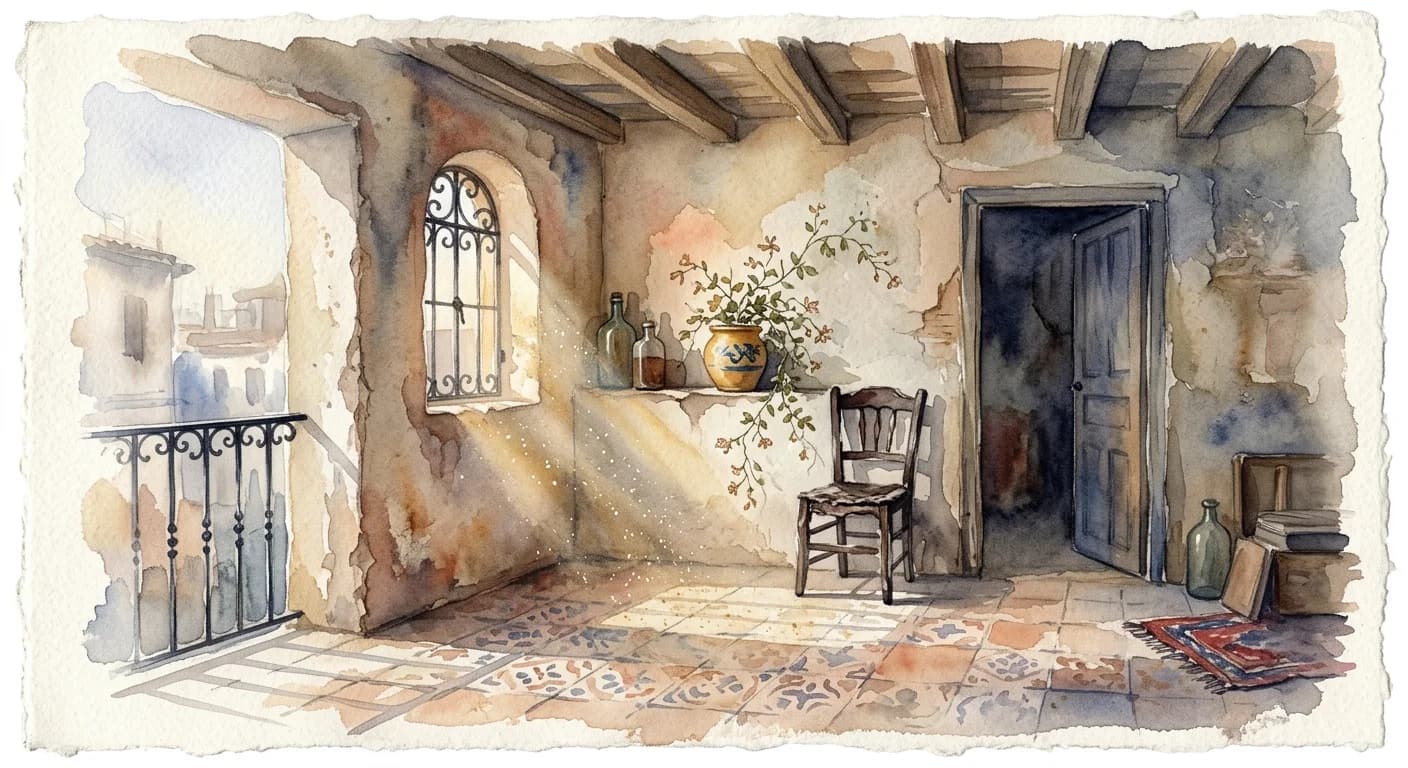
The 'entresuelo' is more than just a physical mezzanine; it's a liminal architectural space nestled between the ground floor and the first floor, often characterized by lower ceilings and a sense of being neither fully public nor entirely private. It evokes a feeling of transition, a quiet interstitial zone that once served as the backdrop for the unseen lives of servants or the storage of forgotten treasures. This unique Spanish architectural feature encapsulates a subtle social stratification and whispers of historical domestic arrangements, offering a distinct blend of practicality and spectral resonance.
Literal Translation
between-floor
The Story Behind the Word
The 'entresuelo' is deeply embedded in the historical urban fabric of Spain, particularly in older city centers. Its existence speaks to a period when buildings were designed with a more nuanced understanding of space and social hierarchy. Originally, these spaces were often utilitarian – housing servants who needed to be close for service but not directly in the family's main living areas, or serving as storage for goods. This reflects a society where domestic life was stratified, and every inch of urban property was maximized. The 'entresuelo' allows for an efficient use of vertical space while maintaining a distinction between the street-level commercial or public sphere, the 'noble' first floor (principal) where the wealthier families resided, and the more humble, often rented, upper floors. It reveals a cultural value placed on maximizing utility and subtly delineating social boundaries within a single structure, a testament to centuries of urban development and social evolution.
Experience It
A Secret Rendezvous
María peered down from the 'entresuelo' window, a clandestine smile playing on her lips. From this hidden vantage point, neither fully visible from the street nor from the main apartments above, she could observe the bustling plaza below, her presence a delightful secret.
The Artist's Haven
The young painter found his perfect studio in an 'entresuelo' – its slightly lower rent and discreet entrance offered a sanctuary away from the street's clamor, yet still connected to the city's pulse. The unique light filtering through its windows inspired his most introspective works.
The Deeper Meaning
The 'entresuelo' embodies a philosophy of liminality and transition, reflecting a cultural comfort with spaces that are 'in-between.' It suggests an awareness of the nuanced boundaries between public and private, work and rest, and different social strata. This architectural feature underscores a worldview where reality is not always clearly defined, and value can be found in interstitial zones, hinting at the complex tapestry of life within Spanish urban centers.
Did You Know?
In some historic Spanish buildings, the 'entresuelo' might have windows that appear to be at street level from the outside, but are actually a full floor above the actual ground floor shop, creating a clever illusion.
How It's Used
Used to describe a specific architectural feature in buildings, particularly in Spain and Latin America.