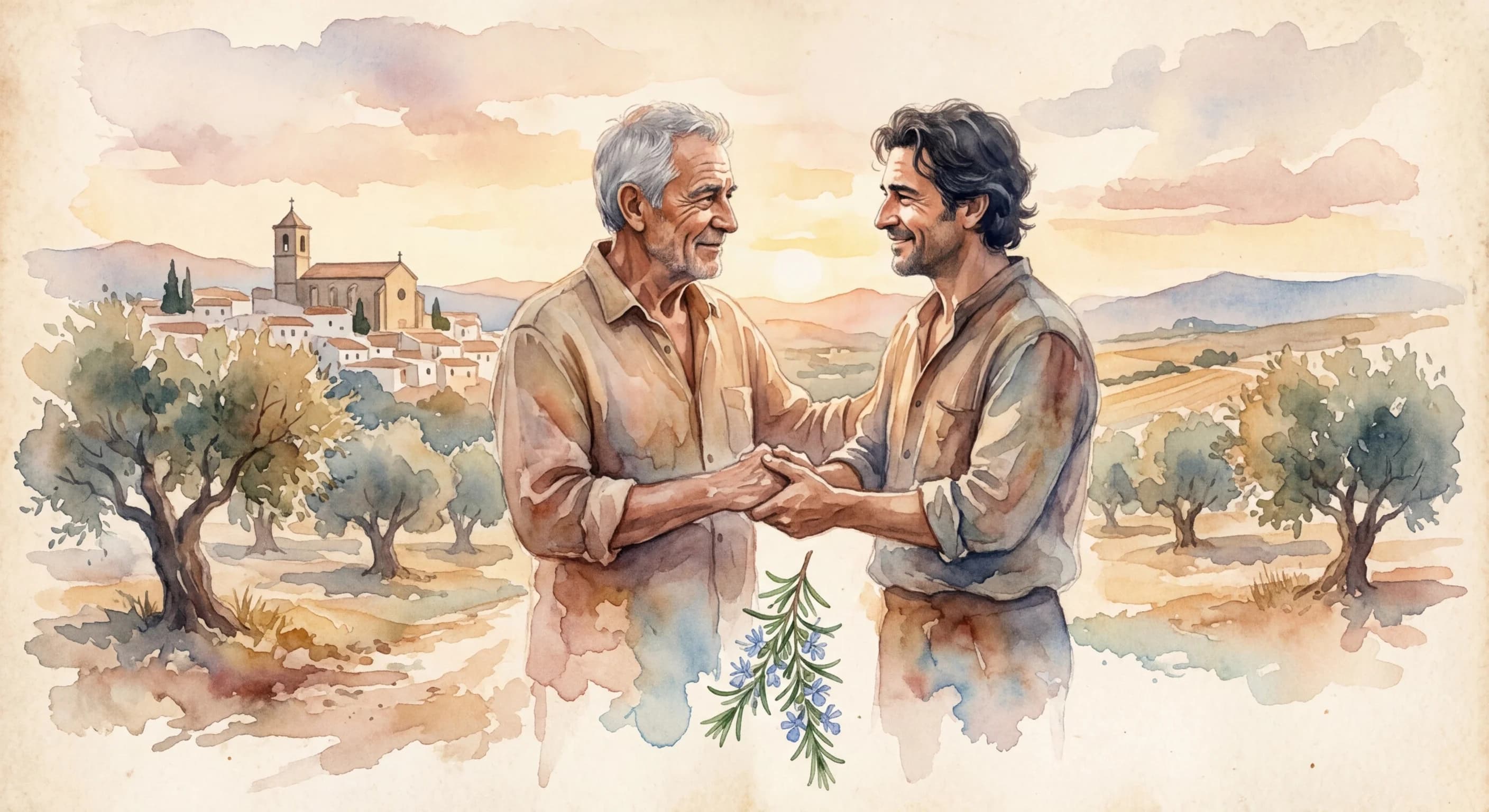
Compadre
/kom-PAH-dray/
Meaning
More than just a friend or a relative, 'compadre' signifies a profound, almost sacred bond, often formed between the fathers of a child through a baptismal rite. It implies a shared responsibility for the child's upbringing, mutual respect, and unwavering loyalty that extends beyond immediate family, encompassing a spiritual connection. This term captures a unique form of kinship and solidarity, carrying more weight and expectation than a simple friendship, representing a lifelong commitment and an extended family network.
Literal Translation
Co-father
The Story Behind the Word
The word 'compadre' is deeply rooted in the Catholic tradition of baptism, which historically created spiritual kinship ties. In Spanish culture, where family and community are paramount, the role of 'padrinos' (godparents) extends beyond religious ceremony to a social contract of lifelong support and mentorship for the child, and a powerful bond between the parents and godparents. This practice strengthens community ties, creating an intricate web of reciprocal obligations and support systems. It reflects a worldview where individual well-being is intrinsically linked to the strength and breadth of one's kinship network, emphasizing collective responsibility and enduring loyalty.
Experience It
A Shared Burden
When Juan's business faced unexpected financial hardship, his compadre, Miguel, was the first to offer help, not just with advice but with a loan, saying, 'Compadre, we face this together.' This wasn't merely friendship; it was an unspoken vow of mutual support, a testament to their deep bond forged through their children's baptism.
Lifelong Family Support
At his goddaughter's wedding, Ricardo, her 'padrino,' stood proudly next to his compadre, her father. He recounted stories from her childhood, a reminder of his enduring presence and commitment to her well-being, a shared journey that began decades ago when they became compadres.
The Deeper Meaning
The concept of 'compadre' underscores a philosophy of extended family and collective responsibility crucial in Spanish-speaking cultures. It reveals a worldview where kinship is not solely biological but can be intentionally created and spiritually cemented, offering a robust support system beyond the nuclear family. This emphasizes interdependence and a deep-seated belief in mutual aid as cornerstones of societal fabric.
Did You Know?
While traditionally formed through baptism, 'compadre' is also colloquially used as a term of endearment or close camaraderie among men, even without the religious context, signifying a trusted and loyal friend.
How It's Used
Used to address or refer to a close male friend, a relative, or specifically the father of one's godchild (godfather) or the godfather of one's child. It signifies a deep, familial-like bond.