Fandango
/fan-DAN-go/
Meaning
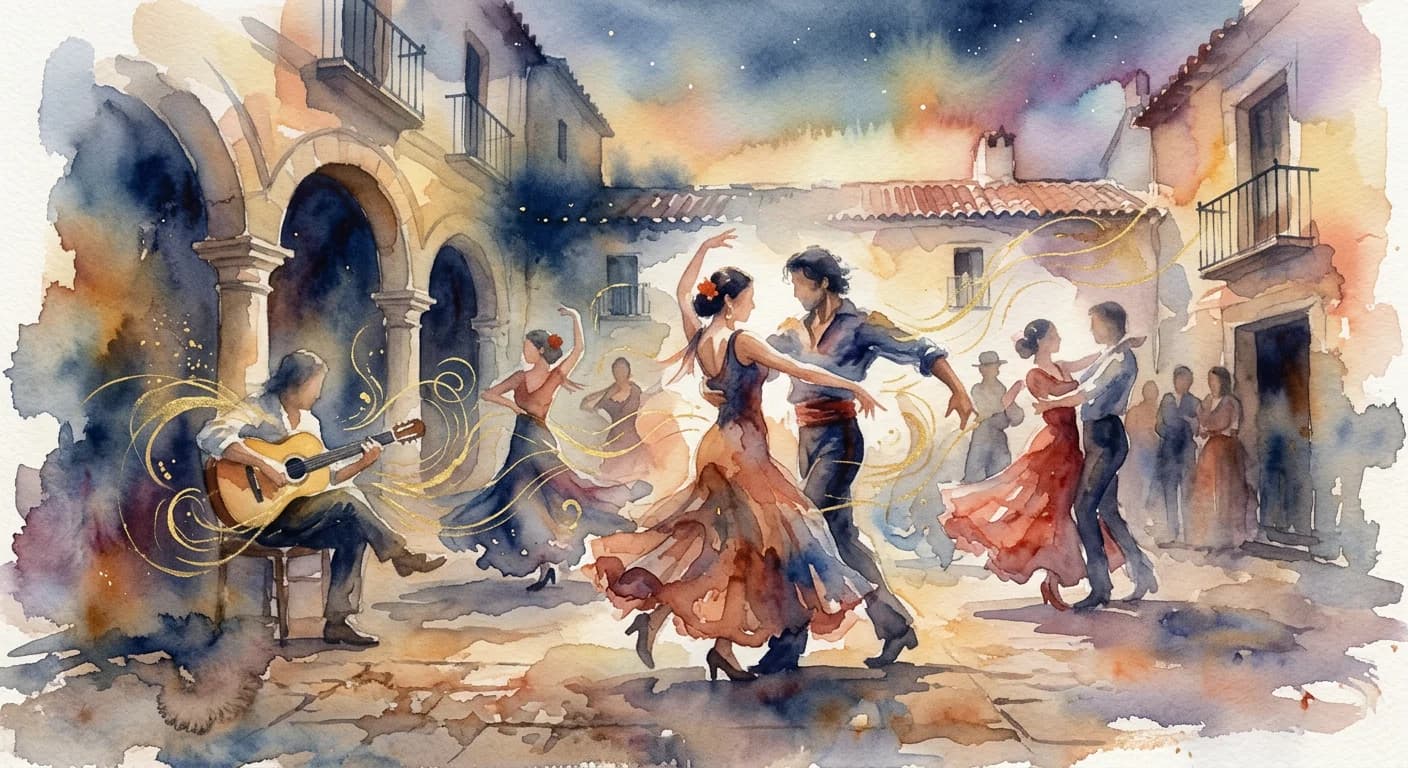
Fandango is more than just a dance; it embodies a spirited and often improvised performance, a passionate interplay between dancers and musicians, characterized by intricate footwork, castanets, and the soulful strumming of a Spanish guitar. It's a vibrant expression of joy, flirtation, and communal celebration, where the energy of the music and movement intertwines to create a boisterous, almost theatrical, social gathering. This lively spectacle captures a profound sense of cultural identity and uninhibited zest for life, making it a quintessential symbol of Spanish exuberance.
Literal Translation
Fandango
The Story Behind the Word
The fandango's roots stretch back to the 18th century, evolving from a dance of popular origin, likely influenced by Moorish and Gypsy traditions, before being adopted into more formal settings. Its enduring presence reflects a cultural appreciation for spontaneous expression, passionate display, and the intertwining of music, dance, and community. The fandango embodies the Spanish concept of "duende" – a heightened state of emotion, authenticity, and soul, often associated with flamenco, where the performance transcends mere technique to touch something primal and deeply human. It's a testament to a worldview that values vivid experience and shared effervescence.
Experience It
A Wedding Fandango
The wedding reception erupted. Suddenly, a group of guests formed a circle, and with a clap of hands and a spontaneous guitar riff, a couple launched into an impromptu fandango, their steps quick and their smiles wide, drawing everyone into their joyful energy.
Office Fandango
The project launch had been a chaotic fandango of last-minute changes and competing demands. Despite the initial disarray, the team pulled it off, celebrating their successful, albeit dramatic, endeavor with a collective sigh of relief and a toast.
What Gets Lost in Translation
English speakers often conflate "fandango" with any lively, chaotic event, losing the specific cultural resonance of the dance itself. While it can mean a dramatic affair, its primary meaning is a structured, albeit often improvised, dance and music form, imbued with specific rhythms and a deep sense of Spanish identity, not just general commotion.
Across Cultures
Similar concepts of lively, communal dance and music as a core social expression can be found in many cultures. The Irish jig or a lively Scottish reel share the communal energy, while Brazilian samba or Argentinian tango also convey a blend of passion, flirtation, and intricate partner dynamics, albeit with distinct stylistic differences.
The Deeper Meaning
The fandango reveals a philosophy that embraces life's inherent drama and joy with open arms. It's a worldview where emotion is not suppressed but celebrated, where the individual's passionate expression contributes to a collective effervescence. It underscores the belief that life's most profound moments are often found in shared, vibrant, and sometimes chaotic, human connection.
Did You Know?
Did you know that the fandango was once considered so scandalous and sexually suggestive by the Catholic Church that it was temporarily banned in some regions during the 18th century? Its fiery passion was deemed too provocative!
How It's Used
Used to refer to the specific Spanish dance and music genre, or more broadly to describe a lively commotion, a complicated or dramatic affair, or a boisterous party.