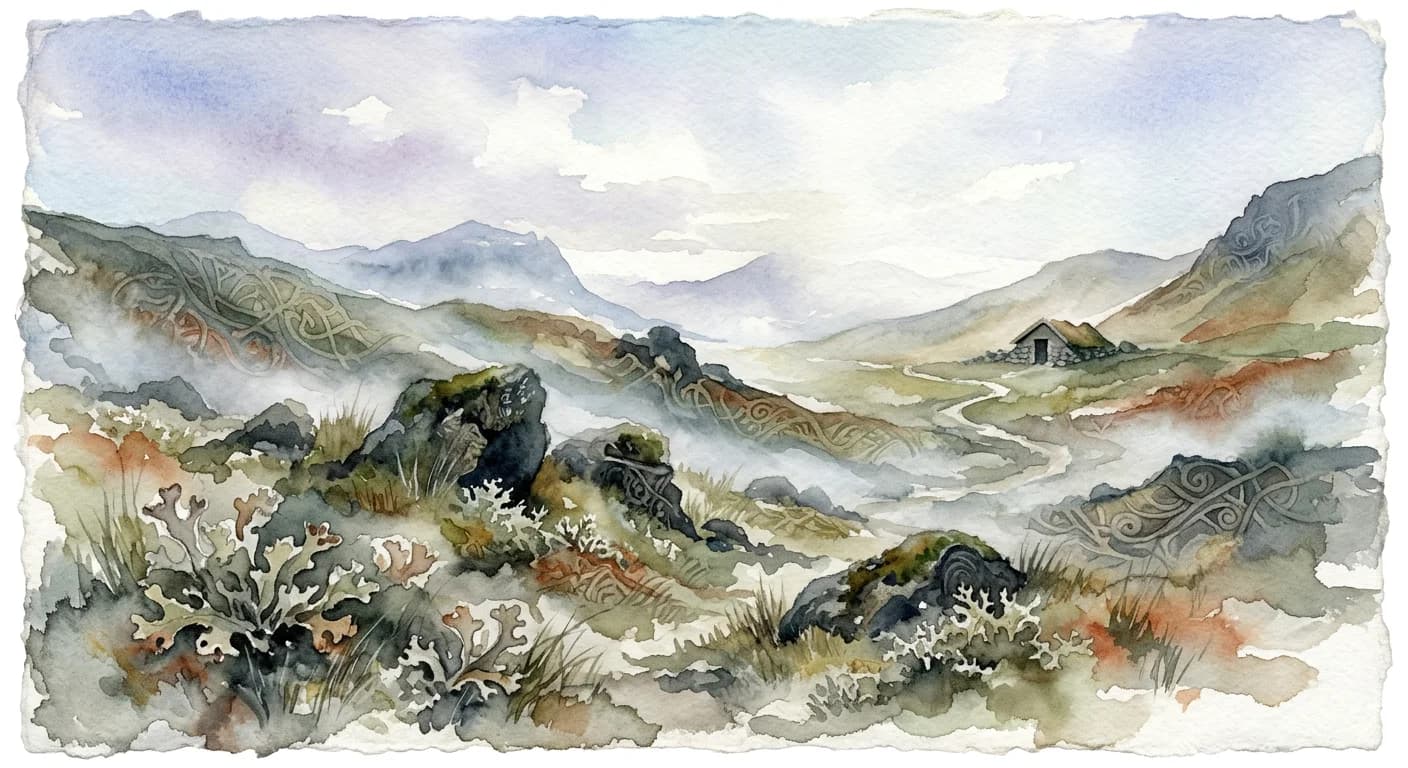
Fjallagrös
/FYAT-la-grohs/
Meaning
Fjallagrös, literally "mountain herbs," refers to Iceland Moss (Cetraria islandica), a vital lichen embodying resilience and resourcefulness in Iceland's stark landscape. It symbolizes the profound connection between the Icelandic people and their environment, representing nature's capacity to provide life-sustaining nourishment even in seemingly barren conditions. This term evokes deep respect for the land's bounty and the historical ingenuity of Icelanders in foraging for food and medicine, especially during periods of scarcity. It's more than just a plant; it's a testament to enduring hardship and finding sustenance where little else thrives.
Literal Translation
Mountain herbs
The Story Behind the Word
The existence and significance of "Fjallagrös" in Icelandic culture are deeply rooted in centuries of survival in a challenging, volcanic landscape. For Icelanders, this lichen was not merely a food source but a lifeline, particularly during famines and harsh winters when other provisions were scarce. Its preparation – boiling, drying, and grinding into flour for bread or porridge – speaks to a profound ancestral knowledge of the land and an innovative spirit born of necessity. The word encapsulates a philosophy of making do with what is available, fostering a deep respect for the natural world's provisions, and highlighting the intergenerational transfer of survival skills. It reveals a worldview where resilience and adaptability are paramount, and where the stark beauty of nature is also understood as a provider, albeit one that demands ingenuity.
Experience It
Winter Feast Preparation
Grandmother Guðrún carefully sorted the dried fjallagrös, her hands calloused from a lifetime of harvesting. 'This will make a hearty soup for the long winter nights,' she murmured, remembering her own grandmother teaching her how to clean and prepare the precious mountain herb.
A Child's Remedy
Little Elín coughed, her throat sore. Her mother brewed a warm tea from a small bag of fjallagrös, its earthy aroma filling the kitchen. 'Drink this, my dear,' she encouraged, 'it will soothe you, just as it has soothed our ancestors for generations.'
The Deeper Meaning
Fjallagrös embodies a profound philosophy of 'nema sér nægja,' or self-sufficiency, born from centuries of isolation and harsh climatic conditions. It reflects a deep-seated Icelandic appreciation for ingenuity, endurance, and the ability to extract sustenance and healing from a seemingly inhospitable environment. This word underscores a worldview where nature is respected not just for its beauty, but as a direct, albeit challenging, provider, shaping a people characterized by their resilience and practical wisdom.
Did You Know?
Despite its common name "Iceland Moss," fjallagrös is actually a lichen, a symbiotic organism combining fungi and algae. It's rich in unique polysaccharides that give it medicinal properties and a slightly bitter taste.
How It's Used
Used in Iceland to refer to the lichen Cetraria islandica, often in contexts discussing its use as food, medicine, or its significance in the Icelandic landscape and history.