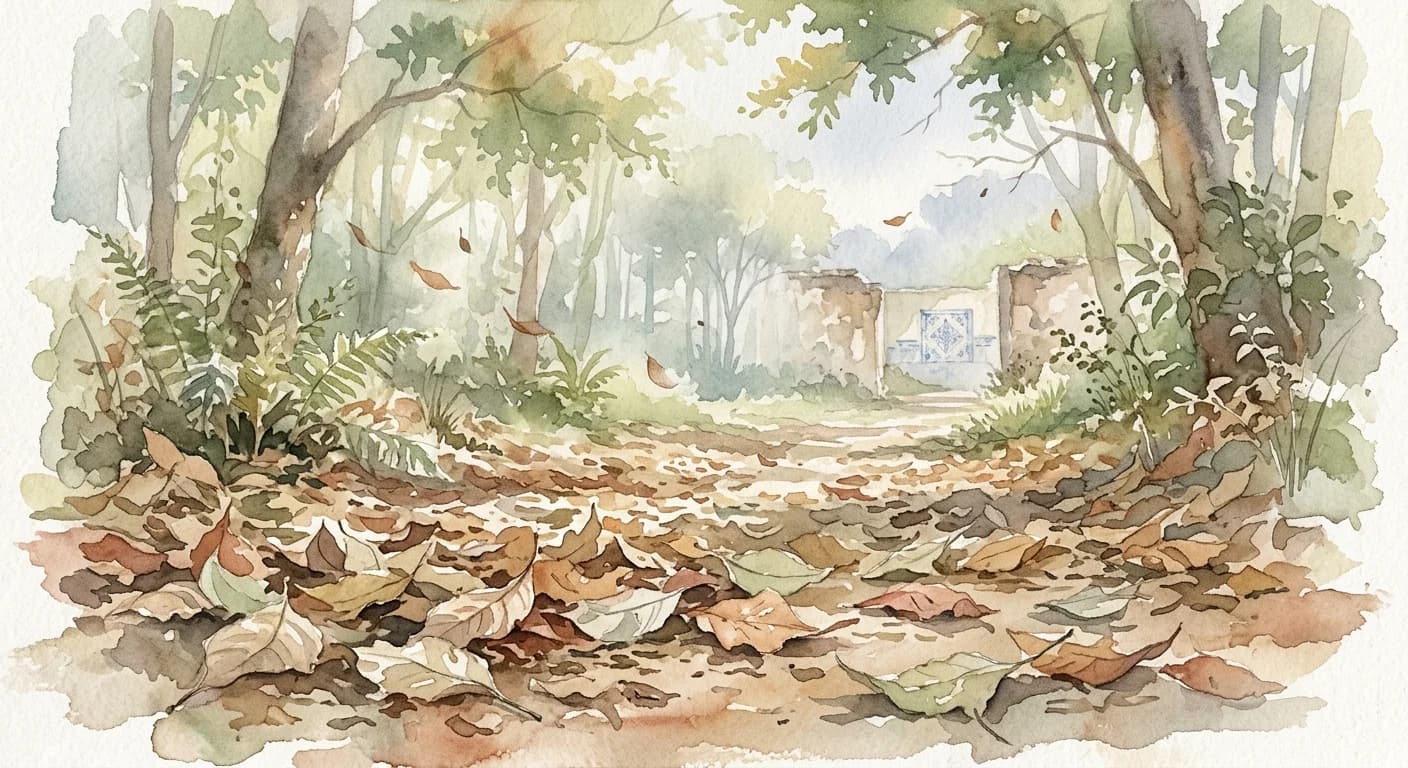
Folha seca
/FOH-lyah SEH-kah/
Meaning
Beyond its literal translation as "dry leaf," "folha seca" vividly encapsulates the distinct auditory and tactile experience of walking upon brittle, fallen foliage. It evokes the crisp, rustling symphony underfoot, a sound intrinsically linked to the changing seasons, particularly the dry season in Brazil or the brief, yet poignant, autumn in southern regions. This phrase captures a sensory memory that is both common and deeply resonant, symbolizing a gentle transition, a melancholic beauty, and the quiet, almost ephemeral, passage of time in natural landscapes.
Literal Translation
Dry leaf
The Story Behind the Word
The existence of "folha seca" as a specific expression in Brazilian Portuguese speaks to a culture deeply connected to its natural environment and the subtle shifts within it. Brazil, with its vast and diverse biomes, experiences varied dry seasons rather than a universal autumn. This phrase allows Brazilians to articulate a shared sensory experience that transcends specific regional climates, whether it's the dry, parched leaves of the cerrado or the more temperate autumns of the South. It reflects an appreciation for the ephemeral beauty of nature's cycles, a quiet acknowledgment of decay as part of life's rhythm, and the way such simple, everyday sounds can become ingrained in collective memory and identity.
Experience It
Park Stroll
As Ana walked through Ibirapuera Park, the distinct sound of 'folha seca' accompanied her every step. Each crunch under her sneakers brought a quiet peace, a reminder of the dry season settling over the city.
Childhood Memory
He remembered his grandmother's backyard, filled with the soft 'folha seca' in late winter. The sound was a soundtrack to his endless games, a nostalgic echo of simpler times.
What Gets Lost in Translation
English speakers might misunderstand 'folha seca' as merely referring to a dry leaf, missing the crucial sensory and experiential dimension. The term isn't just a descriptor of an object but an evocation of a specific sound and feeling – the crunch, the rustle, the ephemeral quality of that moment. It's less about the leaf itself and more about the interaction with it, a nuance often lost when simply translated as 'dry leaf'.
Across Cultures
While many cultures experience fallen leaves, few have a single, widely recognized phrase that so specifically encapsulates the *sound and sensation* of walking on them. Japanese 'ochiba' (落ち葉) refers to fallen leaves, often associated with autumn aesthetics, but doesn't inherently carry the auditory component in its direct meaning. English 'rustling leaves' describes the sound, but 'folha seca' combines the object, its state, and the resultant sensory experience into one evocative term.
The Deeper Meaning
The phrase "folha seca" subtly reveals a philosophical inclination towards acknowledging impermanence and finding beauty in transition. It's not just about decay, but about the unique sensory experience that accompanies the end of a cycle, suggesting a cultural readiness to observe and even appreciate the quieter, more melancholic aspects of existence and nature's relentless flow.
Did You Know?
In Brazilian popular music, 'folha seca' is a recurring poetic motif, often used to symbolize melancholy, the passage of time, or a love that has withered, demonstrating its deep emotional resonance.
How It's Used
Used to describe the sound and sensation of walking on dry, fallen leaves, particularly during autumn or the dry season in Brazil. It can also be used metaphorically to describe something that is withered or brittle.