Forró
/foh-HOH/
Meaning
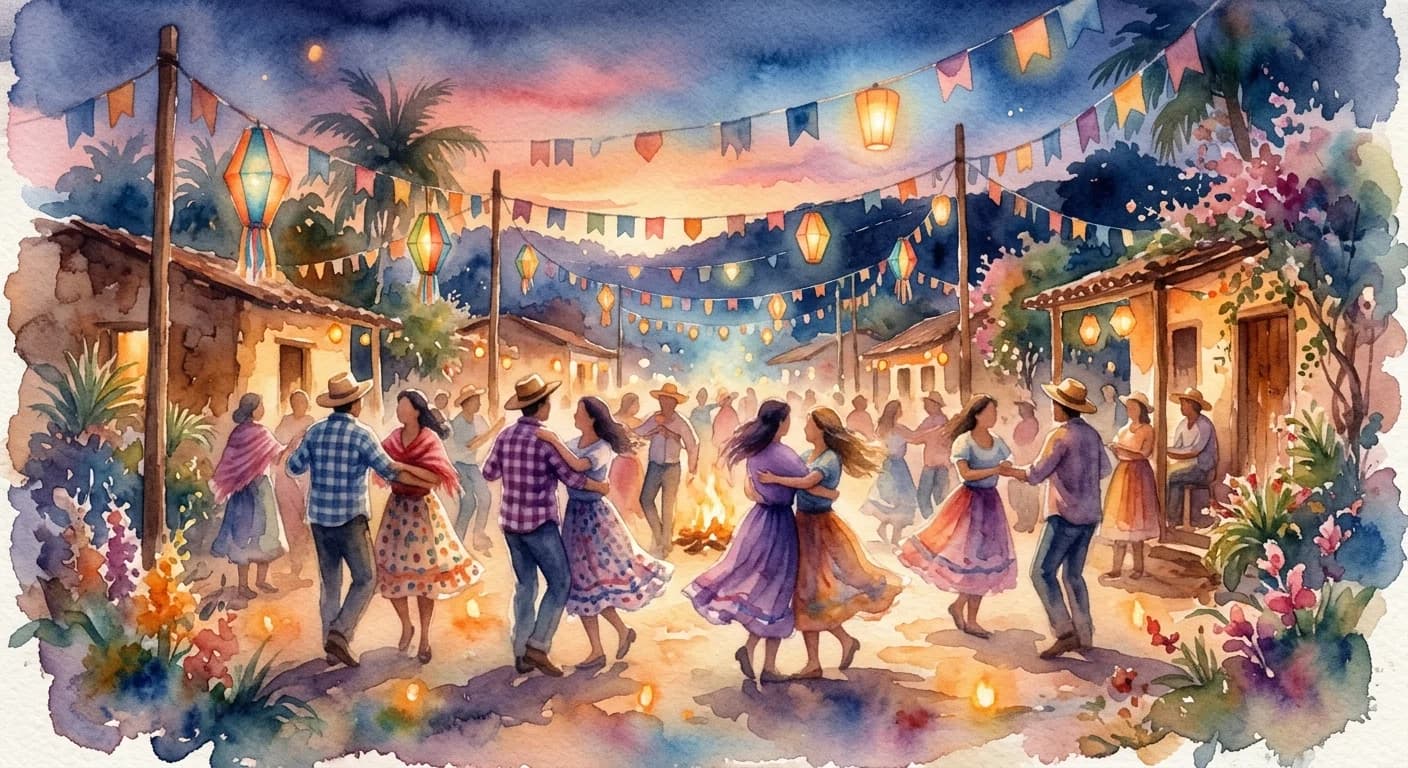
Forró is an immersive cultural phenomenon from Brazil's Northeast, transcending a mere music genre to encapsulate a vibrant dance, communal celebration, and a deep connection to rural traditions. It's the infectious rhythm that beckons all to the dance floor, a joyful invitation to shed inhibitions and embrace the collective spirit of festivity. More than just an event, Forró embodies an atmosphere of unadulterated passion and connection, particularly during the beloved Festas Juninas.
Literal Translation
The origin of the word 'forró' is debated, with some theories suggesting it comes from the English 'for all' (referring to public parties), while others link it to African languages or the Portuguese word 'forrobodó' (a ruckus or wild party).
The Story Behind the Word
Forró's roots are deeply entwined with the agrarian cycles and social fabric of the Brazilian Northeast, a region historically marked by hardship and resilience. Originating from the communal gatherings that brought people together for celebration after harvests or during religious feasts, Forró became a vital outlet for joy, courtship, and social cohesion. The music, often played with accordion (sanfona), zabumba (drum), and triangle, reflects the region's diverse influences, including Indigenous, African, and European sounds. It speaks to a worldview where collective happiness, simple pleasures, and the power of music and dance to unite communities are paramount. Forró reveals a culture that values connection, endurance, and the ability to find profound joy amidst life's challenges.
Experience It
June Festival Night
The village square pulsed with energy. João, a shy farmer, felt the infectious beat of the sanfona calling him to the dance floor. He grabbed Maria's hand, and soon they were swirling in unison with countless others, their laughter mingling with the lively Forró tunes under the starlit sky.
Sunday Afternoon Forró
A group of friends gathered in a backyard, the air thick with the aroma of grilled meat. Someone put on a classic Forró album, and almost instinctively, couples started to sway. Even the children were attempting the steps, caught in the joyous, easy rhythm of the Sunday afternoon.
The Deeper Meaning
Forró embodies a philosophy of shared human experience and resilience, where joy is not a luxury but a communal necessity. It speaks to the power of rhythm and movement to dissolve social barriers, fostering a sense of belonging and collective effervescence. This word reveals a cultural appreciation for the present moment, where happiness is found in simple, heartfelt connection and the uninhibited expression of life through dance.
Did You Know?
While debated, one popular theory suggests 'forró' comes from 'for all,' referring to parties hosted by British engineers in Pernambuco, open to everyone, creating a truly inclusive atmosphere.
How It's Used
Used to refer to the music genre, the dance style, and the parties or festivals where both are celebrated, particularly during Festas Juninas.