Güiro
/GWEER-oh/
Meaning
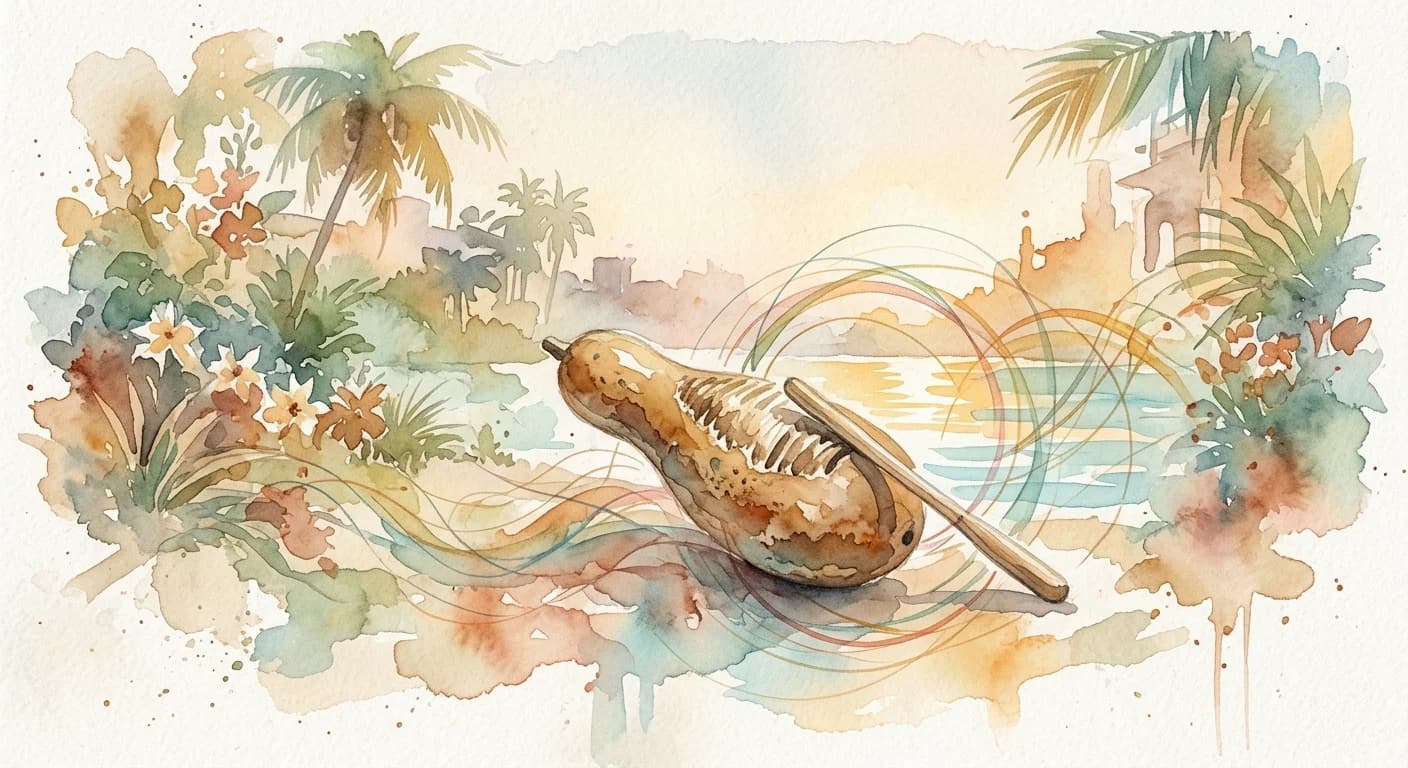
The güiro is more than just a percussion instrument; it's a vibrant voice within Afro-Caribbean and Latin American music, crafted from a dried, hollowed-out gourd or fruit. Its signature sound, a rhythmic rasp produced by scraping a stick or metal tine across its notched surface, is instantly recognizable. This distinctive timbre forms the lively backbone of genres like merengue, bachata, and salsa, infusing them with an infectious, earthy energy that compels movement and celebration.
Literal Translation
Gourd (referring to the material it's made from)
The Story Behind the Word
The güiro's existence is deeply intertwined with the resourcefulness and musicality inherent in Latin American and Caribbean cultures, particularly those influenced by African traditions. It embodies the spirit of making music from what is available – a simple gourd transformed into an instrument capable of driving complex rhythms. Its prevalence in folk and popular music reveals a cultural appreciation for organic sounds and percussive storytelling. The güiro is not merely a time-keeper; it's a storyteller, its rasping rhythm often mimicking natural sounds or providing a foundational 'call and response' element in musical dialogues. It reflects a worldview where joy, dance, and community are expressed through vibrant, accessible musical forms, often born from humble origins.
Experience It
Fiesta Rhythms
At the community fiesta, the güiro player, with a wide smile, became the heartbeat of the merengue band. His rhythmic scrapes cut through the air, energizing the dancers who spun and swayed with infectious abandon, each beat a call to celebration.
Backyard Jam
During a casual backyard gathering, someone grabbed a güiro, and suddenly, the impromptu jam session came alive. Its distinct sound provided a lively counterpoint to the guitar and bass, transforming simple melodies into a full-bodied, danceable tune.
The Deeper Meaning
The güiro embodies a philosophy of 'music from the earth,' showcasing how profound artistic expression can emerge from simple, natural materials. It underscores the value of rhythm as a fundamental human connection, a pulse that binds communities and invites spontaneous joy. The güiro's persistent presence in vibrant musical traditions speaks to a cultural preference for organic sounds and accessible artistry over manufactured complexity.
Did You Know?
While often made from gourds, some traditional güiros are crafted from the fruit of the higüero tree (Crescentia cujete), which has a hard, woody shell perfect for carving and notching.
How It's Used
The güiro is used as a percussion instrument in various Latin American and Caribbean musical genres, particularly in folk and popular music like merengue and bachata. It is played by scraping a stick or metal tine across its notched surface to create a rhythmic rasping sound.