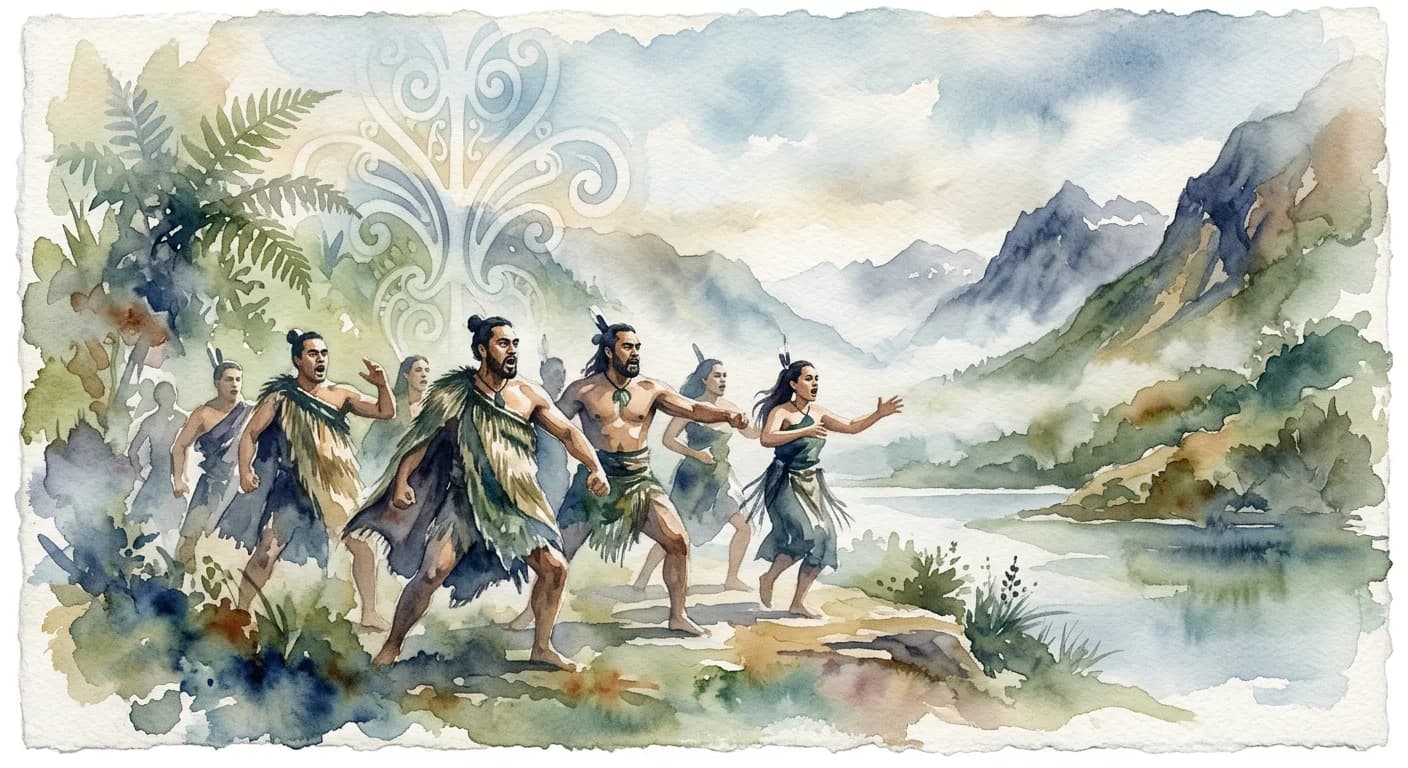
Haka
/HAH-kah/
Meaning
The Haka is a profound, dynamic indigenous performance from Aotearoa (New Zealand), far transcending mere dance. It's a full-bodied symphony of rhythmic foot-stomping, powerful chest-slapping, guttural shouts, and fierce facial expressions, often culminating in the protruding of the tongue and wide-eyed stare (pūkana). This ancient communal ritual is a vibrant declaration of identity, strength, unity, and a direct connection to ancestral lineage, serving varied purposes from welcome and celebration to challenge and remembrance.
Literal Translation
dance
The Story Behind the Word
The Haka is deeply ingrained in Māori whakapapa (genealogy) and history, serving as a living link to ancestors and a powerful expression of mana (prestige, spiritual power). It emerged from a warrior culture where physical prowess and intimidation were vital, but its scope expanded to encompass all aspects of life. The Haka reveals a worldview where communication is holistic, involving not just words but the entire being – body, voice, and spirit – to convey emotion, intention, and collective identity. It reinforces tribal bonds, instills discipline, and provides a structured outlet for intense emotions, reflecting a society that values communal strength, respect for heritage, and the power of collective declaration. Its continued prominence, particularly in the face of colonization, underscores its resilience as a cultural touchstone.
Experience It
Rugby Team's Challenge
Before the Rugby World Cup final, the All Blacks formed their iconic chevron, their eyes burning with ancestral fire. Each stomp and chant of the Ka Mate Haka sent shivers through the stadium, a primal challenge to their opponents and a powerful affirmation of their shared spirit and heritage, uniting fans and players alike.
Welcome to the Marae
As esteemed guests approached the marae (Māori meeting grounds), a local iwi (tribe) performed a stirring Haka Pōwhiri (welcome haka). The powerful synchronized movements and resonant calls were a profound gesture of welcome, clearing the air and establishing a respectful connection between hosts and visitors, signifying a shared space and mutual respect.
The Deeper Meaning
The Haka embodies a Māori philosophy where the physical and spiritual realms are intertwined, and collective identity supersedes individual expression. It demonstrates the profound power of ritualized performance to connect with heritage, instill discipline, and channel raw emotion into a unified, purposeful force. It's a testament to the belief that true strength comes from unity, history, and a deep, embodied connection to one's roots and community.
Did You Know?
The most famous Haka, 'Ka Mate,' was composed around 1820 by Te Rauparaha, a Ngāti Toa rangatira (chief), celebrating his escape from enemies by hiding in a kumara pit.
How It's Used
Performed by groups, often associated with Maori cultural events, sporting matches (especially by New Zealand teams), and significant ceremonies.