U.
HomeRegionsLanguagesEmotionsCollections
Find Your Word

“The limits of my language mean the limits of my world.”

— Ludwig Wittgenstein, Philosopher

Untranslatable

A curated collection of the world's most beautiful expressions—words that remind us language is humanity's greatest invention.

  • Home
  • Collections
  • Regions
  • Countries
  • Emotions
  • Tags
  • Contexts
  • Finder
  • Europe
  • Asia
  • Americas
  • Africa
  • Middle East
  • About
  • Contact
  • Privacy Policy
  • Terms of Service

2026 © Untranslatable. All rights reserved.

    /
    /
    1. Home
    2. /
    3. Americas
    4. /
    5. Heyoka
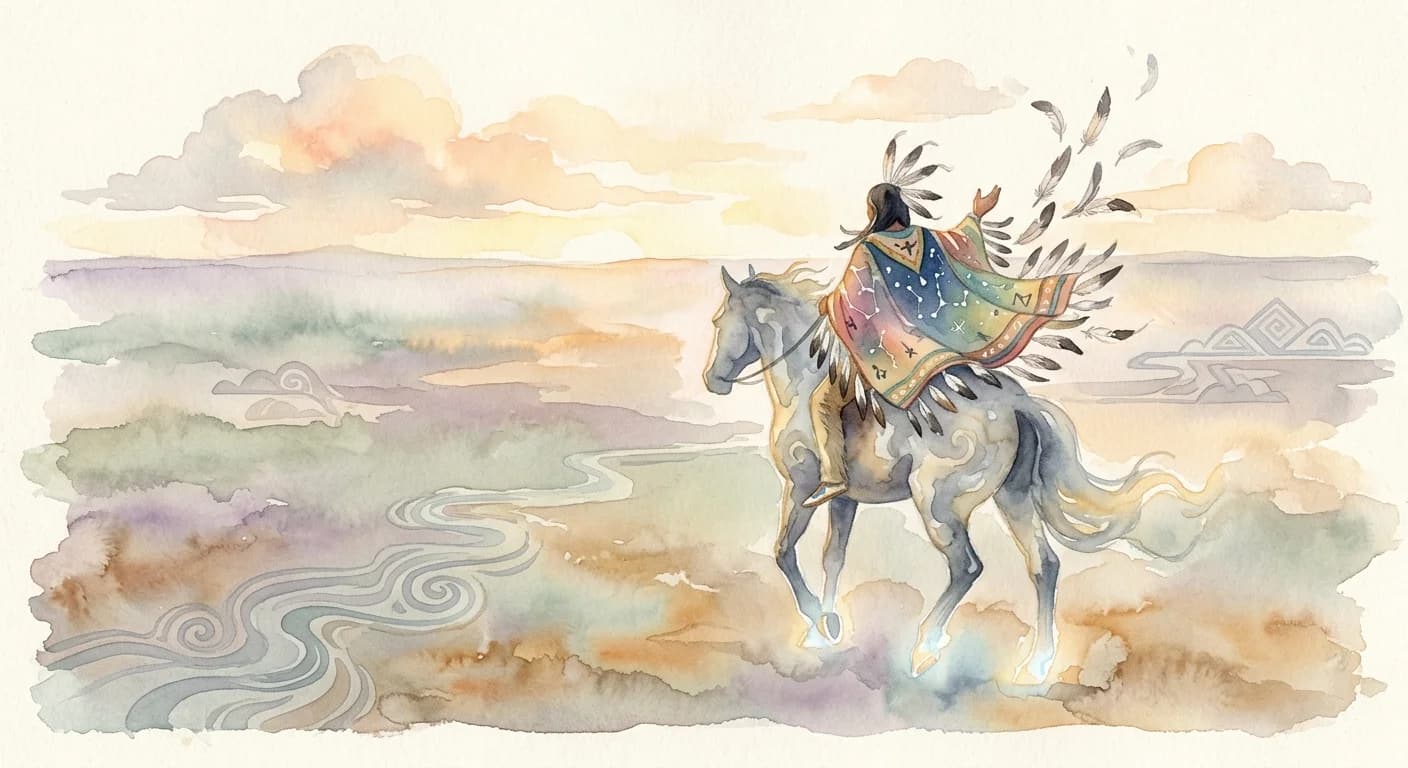
    Artistic representation of Heyoka
    Lakota•
    🇺🇸United States

    Heyoka

    /hey-OH-kah/

    Meaning

    The Heyoka is a profound and sacred figure in Lakota spirituality, embodying the cosmic jester who speaks truth through inversion and paradox. Clad in backwards clothing, riding a horse facing its tail, or performing actions contrary to expectation, they dismantle societal norms and challenge fixed perspectives. Their absurd antics are not mere entertainment but potent medicine, designed to shock the community into confronting uncomfortable truths, fostering healing, and restoring balance by highlighting the inherent contradictions of existence.

    Literal Translation

    Sacred clown or trickster

    The Story Behind the Word

    The Heyoka's existence is deeply rooted in Lakota cosmology and their understanding of balance, chaos, and the sacred. They are often individuals who have dreamt of the Thunder Beings (Wakinyan), powerful spirits associated with storms and transformation, and are thus called to this unique role. This spiritual calling grants them license to operate outside conventional rules, reflecting the Lakota belief that wisdom can emerge from unexpected places and that the mundane order is not the only truth. The Heyoka tradition reveals a culture that values self-reflection, humor, and the ability to see beyond surface appearances, recognizing that disruption can be a pathway to deeper understanding and communal well-being. Their role is vital for maintaining social equilibrium by providing a necessary outlet for challenging authority and questioning norms without causing permanent discord.

    Experience It

    Challenging Greed

    During a community feast, a Heyoka loudly complains about the small portions, then proceeds to eat only a single grain of corn, making exaggerated chewing motions. This absurd display subtly shames those who have taken too much, prompting reflection on generosity and communal sharing.

    Healing Through Laughter

    A young man is grieving profoundly. A Heyoka approaches him, offering comfort by speaking in gibberish and acting out a clumsy, comical dance. The unexpected humor breaks through the man's sorrow, allowing a moment of release and the first steps towards emotional healing.

    The Deeper Meaning

    The Heyoka embodies a profound philosophical insight: that truth is often found in paradox, and wisdom can emerge from chaos. They challenge the linear, dualistic thinking often prevalent in Western thought, suggesting that apparent contradictions are integral to a holistic understanding of the universe. Their existence underscores the Lakota belief in the interconnectedness of all things, where even disruption serves a sacred purpose in maintaining balance.

    Did You Know?

    Heyokas often do everything in reverse: saying 'hello' for 'goodbye,' shivering when it's hot, or dressing in winter clothes during summer. This inversion is central to their sacred purpose.

    How It's Used

    The term refers to a specific role within Lakota spiritual and ceremonial practices, often associated with specific individuals who embody this archetypal trickster figure.

    Emotions
    comfort,gratitude,wonder
    Contexts
    celebration,greeting,work
    🇺🇸United States

    by Anya Petrova·Written Mar 14, 2026·Updated Apr 3, 2026

    Related Words

    Explore more
    Pura vidaSpanish

    More than just 'pure life,' "Pura vida" encapsulates a profound philosophy of embracing the present moment with unwavering optimism and gratitude. It's a daily commitment to finding joy in simple pleasures, accepting life's challenges with a positive spirit, and prioritizing well-being over material possessions. This ubiquitous phrase reflects a national identity built on resilience, community, and an deep appreciation for nature's bounty.

    MamihlapinatapaiYaghan

    Mamihlapinatapai encapsulates that profound, unspoken moment when two individuals lock eyes, each silently acknowledging a mutual desire or intention, yet both hesitate to be the first to act upon it. It's a delicate dance of anticipation, a shared gaze brimming with common understanding and a quiet longing for the other to break the ice. This intricate look carries the weight of a shared, uninitiated potential, a silent conversation where both parties are perfectly aware of what could happen, but neither makes the first move.

    TingoPascuense

    Tingo describes the subtle, insidious process of progressively appropriating a neighbor's belongings by habitually requesting to borrow them, only to 'forget' their return. It's not outright theft, but a slow, deliberate erosion of another's possessions, often under the guise of neighborly exchange. This gradual accumulation, piece by piece, ultimately results in a significant transfer of goods without any direct confrontation or formal acknowledgment of the loss. It speaks to a passive-aggressive form of acquisition, where social niceties are weaponized.

    SamfundssindDanish

    Samfundssind is the profound, almost spiritual, commitment to the collective good that transcends individual desires. It's a deeply ingrained societal ethos where citizens instinctively understand their role in maintaining the health and harmony of the community, especially during challenges. This isn't just about following rules; it's an active, empathic engagement with society's needs, fostering a powerful sense of shared destiny and mutual care that underpins Danish social cohesion.