U.
HomeRegionsLanguagesEmotionsCollections
Find Your Word

“The limits of my language mean the limits of my world.”

— Ludwig Wittgenstein, Philosopher

Untranslatable

A curated collection of the world's most beautiful expressions—words that remind us language is humanity's greatest invention.

  • Home
  • Collections
  • Regions
  • Countries
  • Emotions
  • Tags
  • Contexts
  • Finder
  • Europe
  • Asia
  • Americas
  • Africa
  • Middle East
  • About
  • Contact
  • Privacy Policy
  • Terms of Service

2026 © Untranslatable. All rights reserved.

    /
    /
    1. Home
    2. /
    3. Americas
    4. /
    5. Hipil
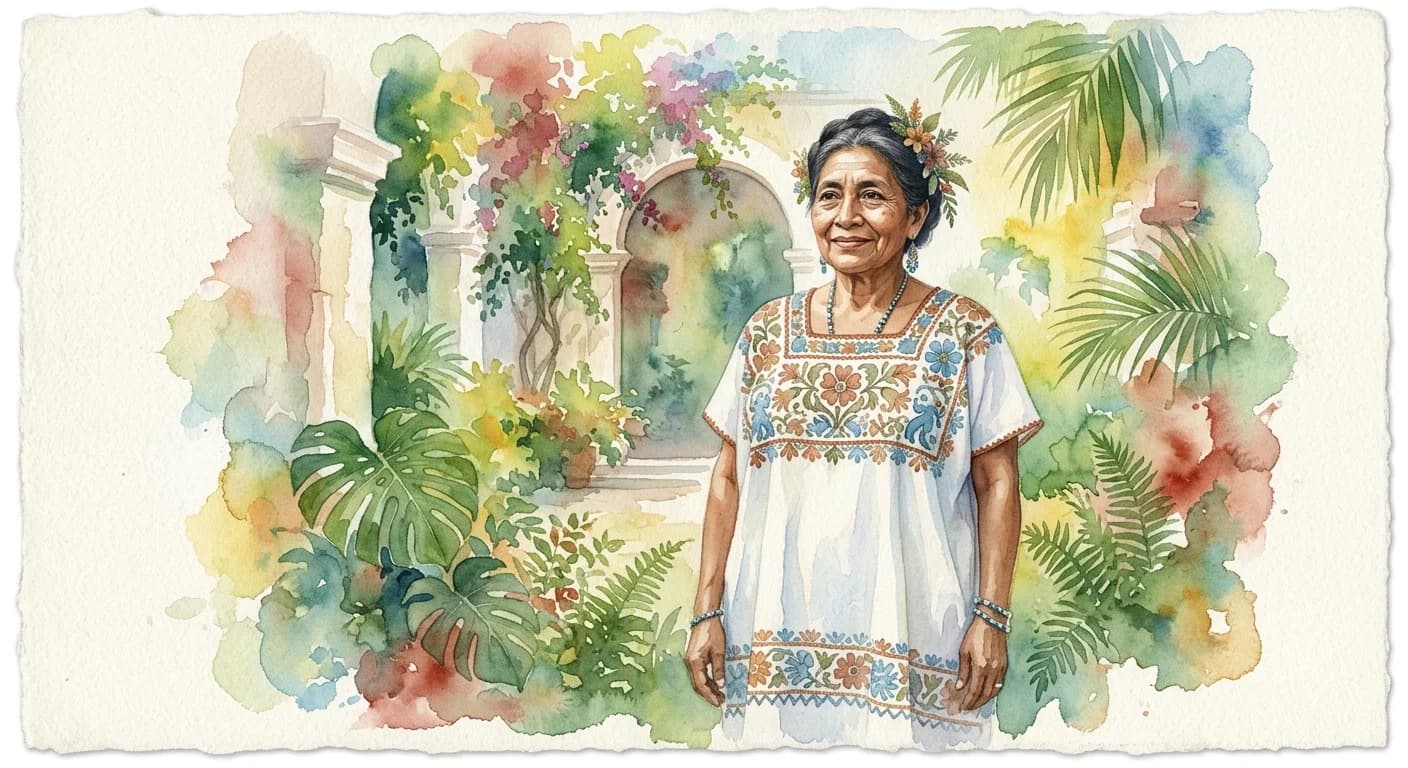
    Artistic representation of Hipil
    Yucatec Maya•
    🇧🇿Belize🇬🇹Guatemala🇲🇽Mexico

    Hipil

    /hee-PEEL/

    Meaning

    The hipil is far more than a simple garment; it is a vibrant textile tapestry embodying the soul of Yucatec Maya culture. This traditional sleeveless or short-sleeved dress, meticulously crafted from cotton, becomes a canvas for intricate embroidery and woven patterns, each stitch telling stories of ancestral heritage, community, and the natural world. Wearing a hipil is a profound act of cultural affirmation, a visual poem that expresses deep pride in one's roots and a living connection to generations past and present, signifying belonging and continuity within the Maya identity.

    Literal Translation

    Dress

    The Story Behind the Word

    The hipil's existence is deeply rooted in the continuous thread of Maya civilization, predating colonial influences and evolving over centuries. It reflects a worldview where clothing is not merely utilitarian but a sacred extension of identity, cosmology, and social standing. The motifs embroidered or woven into each hipil often represent elements of the natural world—flowers, birds, geometric patterns—that carry symbolic meaning, connecting the wearer to the land, the cosmos, and ancient deities. The painstaking craftsmanship involved speaks to a culture that values patience, artistry, and the transmission of knowledge through generations. It reveals a people who see beauty in tradition, strength in community, and whose history is literally woven into the fabric of their daily lives. The hipil is a living cultural artifact, a testament to resilience and the enduring spirit of the Maya.

    Experience It

    Festival Day Radiance

    Elena carefully puts on her finest hipil, embroidered with vibrant red and blue flowers, for the village's annual patron saint festival. Each stitch feels like a hug from her grandmother, who taught her to embroider, and as she walks through the plaza, she feels a profound connection to her community and ancestors.

    Everyday Grace

    Maria wears a simple, white hipil with understated blue embroidery as she tends her garden, its loose cotton fabric perfect for the tropical heat. It's her everyday attire, a comfortable and practical garment that effortlessly carries the elegance and cultural spirit of her Yucatec heritage, even in mundane tasks.

    The Deeper Meaning

    The hipil embodies a philosophy of identity deeply intertwined with heritage and environment. It speaks to a worldview where personal expression is communal, and beauty is found in tradition and craftsmanship passed down through generations. It suggests that true selfhood is not isolated but is a rich tapestry woven from ancestral stories, community bonds, and a reverence for the natural world, all expressed through the living art of textiles.

    Did You Know?

    Often, the embroidery patterns on a hipil are unique to a specific village or region, acting as a visual identifier that can tell you where the wearer is from, much like a family crest or tartan.

    How It's Used

    Used to refer to the traditional Maya dress, particularly in rural communities and during cultural events.

    Emotions
    belonging,comfort,pride
    Contexts
    celebration,daily life,family
    🇧🇿Belize🇬🇹Guatemala🇲🇽Mexico

    by Annelise Dubois·Written Mar 14, 2026·Updated Apr 3, 2026

    Related Words

    Explore more
    SobremesaSpanish

    Sobremesa is the cherished, often extended period immediately following a meal, particularly lunch or dinner, where diners remain seated at the table to enjoy conversation, coffee, and digest not just the food, but the company itself. It’s a dedicated time for unhurried social bonding, storytelling, and shared laughter, transforming a simple meal into a profound communal experience. Far from just clearing the dishes, sobremesa is an integral part of Spanish social life, often lasting for hours.

    Pura vidaSpanish

    More than just 'pure life,' "Pura vida" encapsulates a profound philosophy of embracing the present moment with unwavering optimism and gratitude. It's a daily commitment to finding joy in simple pleasures, accepting life's challenges with a positive spirit, and prioritizing well-being over material possessions. This ubiquitous phrase reflects a national identity built on resilience, community, and an deep appreciation for nature's bounty.

    MamihlapinatapaiYaghan

    Mamihlapinatapai encapsulates that profound, unspoken moment when two individuals lock eyes, each silently acknowledging a mutual desire or intention, yet both hesitate to be the first to act upon it. It's a delicate dance of anticipation, a shared gaze brimming with common understanding and a quiet longing for the other to break the ice. This intricate look carries the weight of a shared, uninitiated potential, a silent conversation where both parties are perfectly aware of what could happen, but neither makes the first move.

    UbuntuZulu/Xhosa

    Ubuntu is a profound African philosophy that translates to 'I am because we are,' signifying that an individual's humanity is inextricably linked to the humanity of others. It embodies the belief that our existence and well-being are deeply intertwined with the community. This concept emphasizes compassion, reciprocity, dignity, and the understanding that true fulfillment is found not in isolation, but through collective flourishing and mutual support. It's a call to recognize and affirm the humanity in everyone, fostering a sense of interconnectedness.