Huapango
/wah-PAHN-goh/
Meaning
Huapango is a captivating Mexican folk music and dance form from the Huasteca region, characterized by its infectious, syncopated rhythms and the virtuosity of its musicians. It features a unique ensemble of jarana, quinta huapanguera, and violin, often accompanied by the distinctive falsetto singing known as 'voz de cabeza.' More than just a genre, huapango is a vibrant cultural expression embodying the resilience, joy, and communal spirit of rural Mexican life, transforming any gathering into a lively celebration of heritage and identity.
Literal Translation
The origin of the word 'huapango' is debated, but it is believed to derive from the Nahuatl word 'huapán-co,' meaning 'on the plank' or 'on the wood,' possibly referring to the wooden platforms used for dancing or the instruments themselves.
The Story Behind the Word
Huapango is deeply rooted in the mestizo culture of the Huasteca region, a blend of Indigenous (primarily Nahua, Teenek, and Otomi) and Spanish traditions. Its very existence speaks to the syncretism that defines much of Mexican identity, where string instruments introduced by the Spanish met with pre-Hispanic rhythms and vocalizations. The 'zapateado' dance, performed on a wooden platform, is not merely entertainment but a percussive instrument itself, symbolizing a connection to the earth and the collective heartbeat of the community. Huapango often tells stories of love, nature, and daily life, serving as a vital oral tradition that preserves regional history and values, fostering a powerful sense of belonging and pride among its practitioners and audiences alike. It embodies a worldview where music and dance are integral to social cohesion and the expression of shared human experience.
Experience It
Fiesta del Pueblo
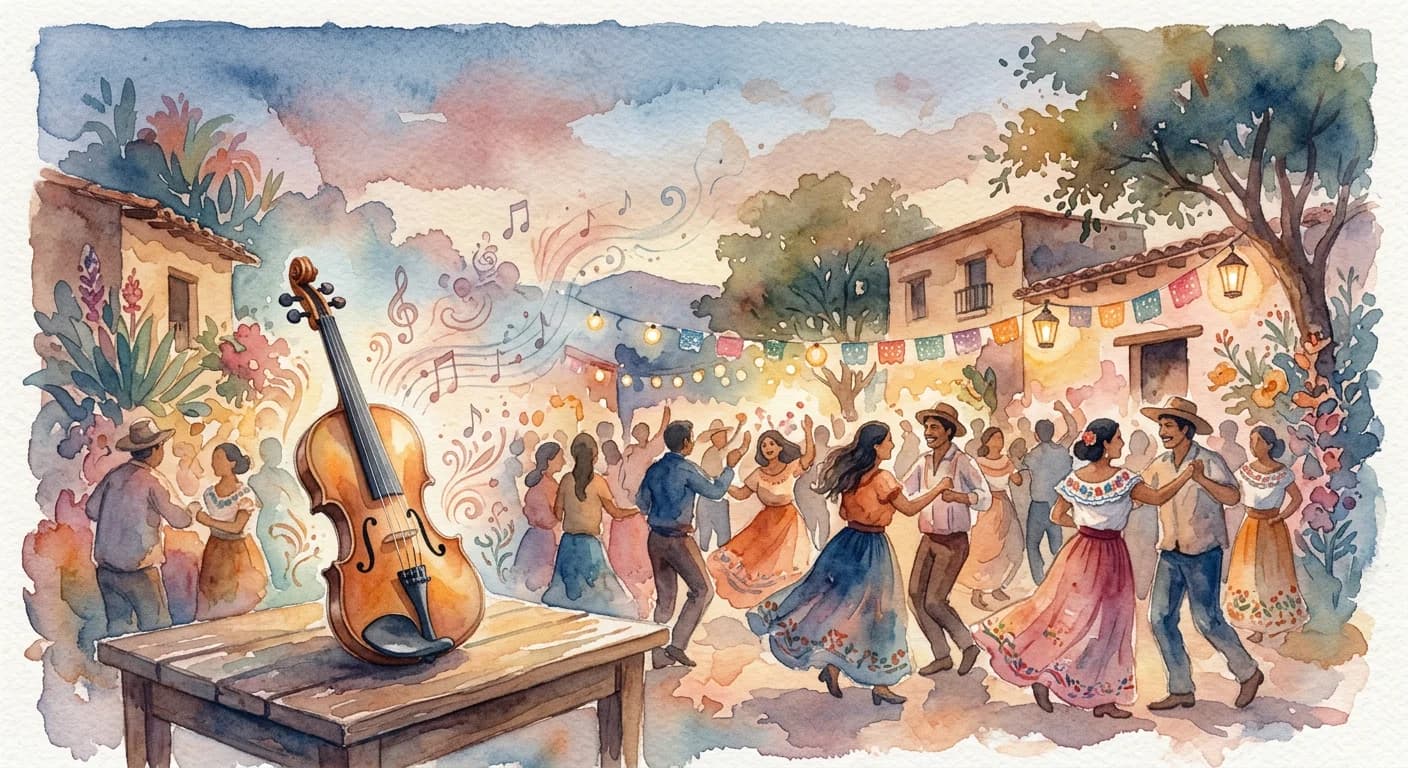
The annual town fiesta was in full swing, and as the evening deepened, the air vibrated with the first lively chords of a huapango. Couples, young and old, spontaneously gravitated towards the wooden platform, their feet beginning the intricate zapateado, a percussive dialogue with the music, while the 'voz de cabeza' soared, narrating tales of the countryside.
Family Gathering
During the extended family reunion, Tío Pedro, with his quinta huapanguera, started a familiar melody. Soon, his cousin joined on the jarana, and the room erupted into an impromptu huapango. Laughter and clapping filled the air as children tried to mimic the rapid footwork, witnessing a living tradition passed down through generations.
What Gets Lost in Translation
English speakers often perceive huapango simply as 'Mexican folk music.' However, it's far more specific than that; it's a distinct regional genre with very particular instrumentation, vocal techniques, and dance forms. Mistaking it for mariachi or other Mexican music styles overlooks its unique cultural nuances and the deep historical roots specific to the Huasteca region. It's not just 'a dance,' but an entire cultural ecosystem.
Across Cultures
While distinct, huapango shares thematic and structural similarities with other Latin American folk genres. Its vibrant string ensemble and percussive dance resonate with Peruvian 'marinera' or Venezuelan 'joropo,' both of which also feature intricate footwork and strong regional identities expressed through music and movement. The call-and-response singing often found in huapango also has parallels in various African diasporic musical traditions.
The Deeper Meaning
Huapango reveals a worldview where joy, resilience, and community are not merely emotions but active principles embodied through collective artistic expression. It underscores the philosophy that life's challenges are met with spirited celebration, and that identity is forged and reaffirmed through shared cultural practices. The intricate interplay of instruments and dancers reflects a harmonious interdependence, a microcosm of an ideal society where each part contributes to a vibrant, unified whole.
Did You Know?
The unique falsetto singing style in huapango, 'voz de cabeza' (head voice), is said to mimic the calls of birds or the high-pitched cries used in traditional Indigenous ceremonies, adding an ethereal quality to the music.
How It's Used
Huapango is used to describe the musical genre, the dance associated with it, and sometimes the festive gatherings where it is performed.