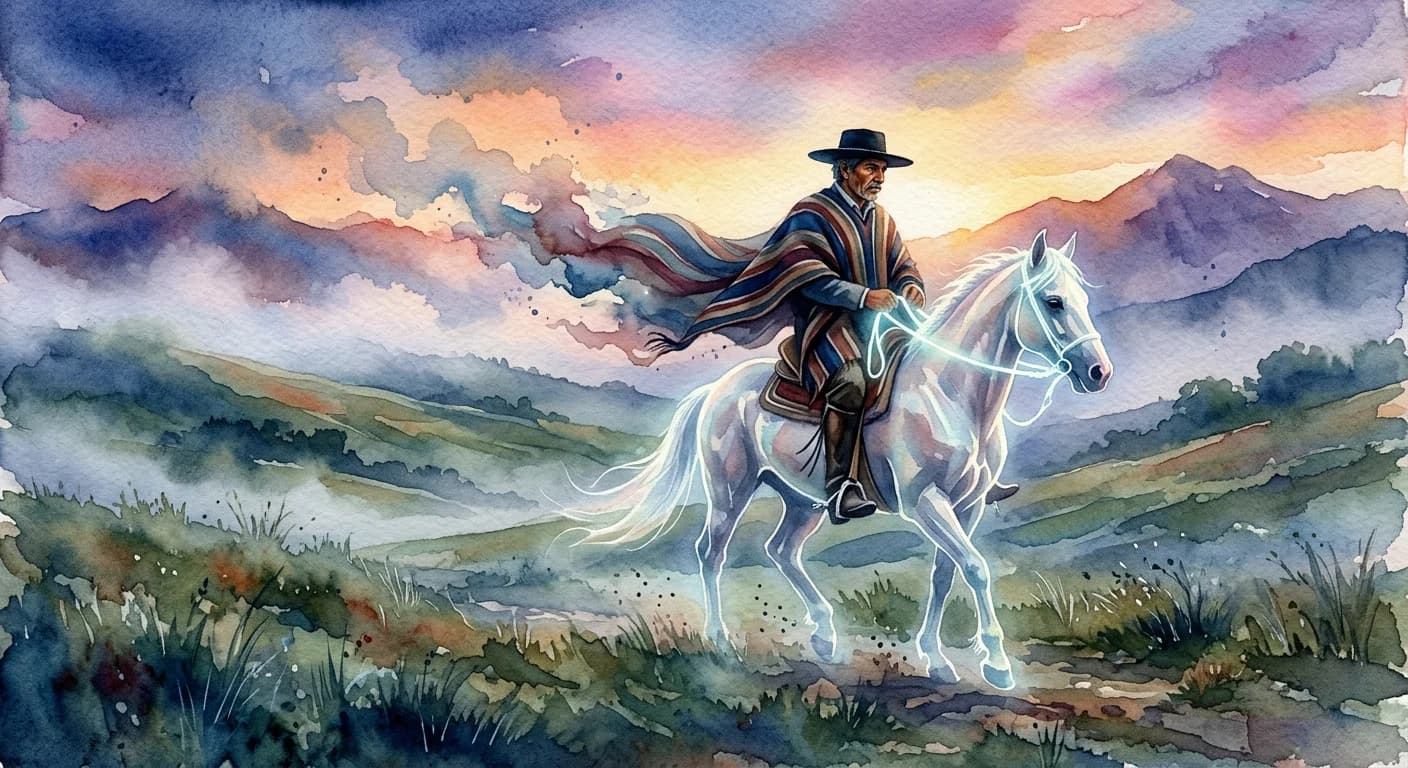
Huaso
/WAH-so/
Meaning
A "Huaso" is more than just a Chilean horseman; he is the quintessential emblem of Chile's agricultural heartland and national identity. This figure embodies a rugged individualism, profound respect for the land, and masterful horsemanship, all deeply woven into the fabric of Chilean folklore. Dressed in his traditional manta, chupalla, and espuelas, the huaso is a living symbol of Chile's rural heritage, often seen expertly maneuvering his horse in a rodeo or playing the melancholic cueca on his guitar, representing a proud, rustic charm unique to the nation.
Literal Translation
Cowboy, horseman (in a Chilean context)
The Story Behind the Word
The huaso emerged from Chile's colonial past, particularly from the central agricultural valleys (zona central) where cattle ranching and farming were dominant. Unlike the more nomadic cowboys of other regions, the huaso's lifestyle was deeply tied to the hacienda system, fostering a strong sense of belonging to a specific piece of land and its traditions. This figure became a symbol of Chilean independence during the 19th century, representing the common man and the country's unique mestizo identity. The huaso's attire, music (cueca, the national dance), and the Chilean rodeo (rodeo chileno) are all integral cultural expressions that showcase his skill, bravery, and deep connection to Chilean heritage. He embodies a philosophical balance between the untamed spirit of the horse and the disciplined work of the farm, reflecting a national ethos of resilience and pride in one's roots.
Experience It
Rodeo Champion
The crowd roared as the huaso, in his vibrant manta, skillfully guided his horse to pin the steer against the 'atajada.' His precision and the horse's agility were a testament to years of practice, embodying the spirit of the Chilean rodeo and the mastery of the rural horseman.
Fiesta Patriotism
During the Fiestas Patrias, the sound of a cueca filled the air. A huaso, strumming his guitar with an infectious rhythm, invited a woman to dance. His proud stance and traditional attire made him the focal point, a living representation of Chilean culture and celebration.
The Deeper Meaning
The huaso represents a profound connection to ancestral land and a rejection of purely urban values, embodying a philosophy of self-reliance, respect for nature, and the preservation of traditional skills. He symbolizes a national reverence for hard work, community, and the enduring beauty of a life lived in harmony with the rhythms of the earth, suggesting that true wealth lies in heritage and connection, not just material gain.
Did You Know?
The traditional Chilean rodeo, where huasos compete, is not about roping or riding a bucking bronco, but about expertly guiding a steer to a halt against a padded wall, showcasing precise horsemanship.
How It's Used
Refers to a Chilean cowboy or rural horseman, often associated with traditional Chilean culture, music, and rodeo events.