Irezumi
/ee-reh-ZOO-mee/
Meaning
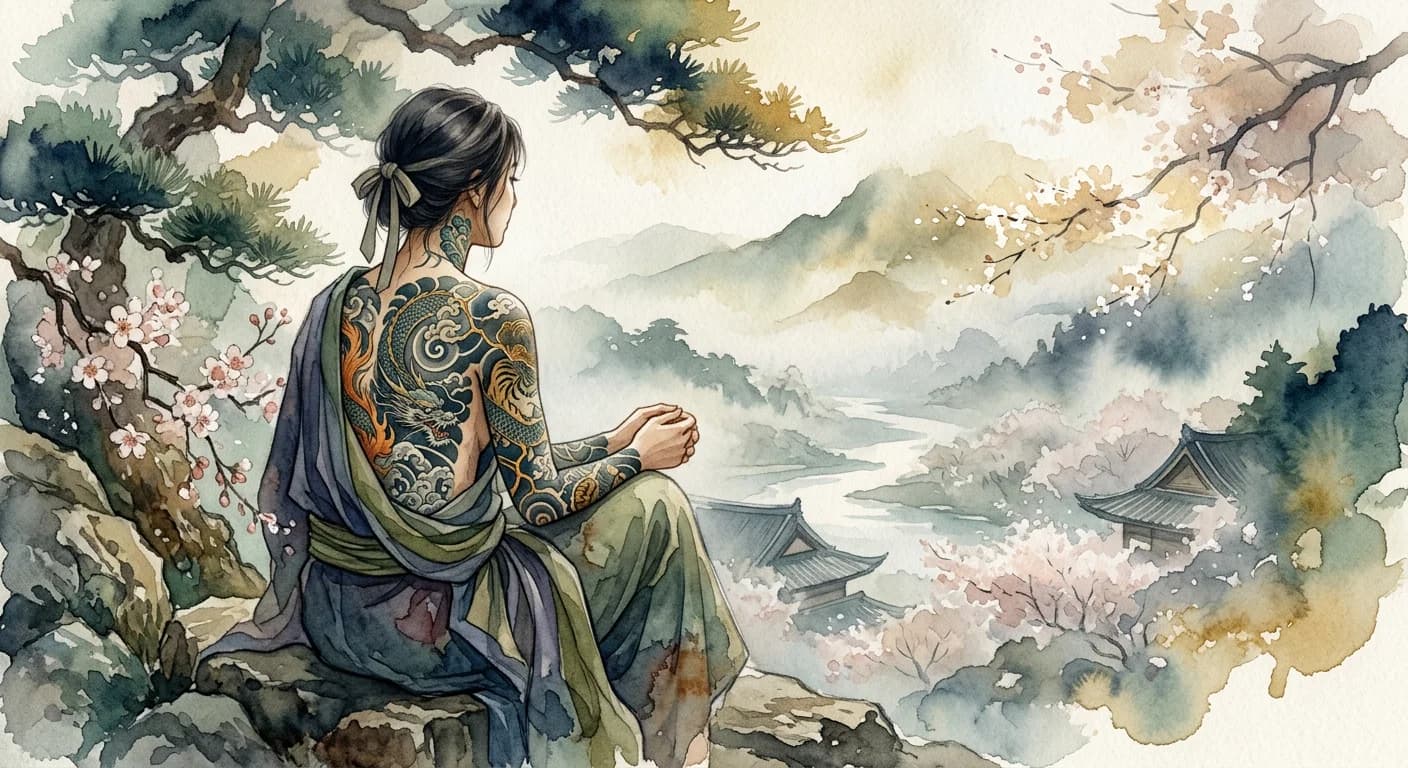
Irezumi denotes the traditional Japanese art of tattooing, characterized by its expansive, intricate designs often covering significant portions of the body, from full sleeves to entire body suits known as horimono. Far beyond mere decoration, these masterful works embody profound narratives, drawing from mythology, nature, and folklore to tell a personal story or represent a deeply held philosophy. Each stroke, meticulously applied by hand, transforms the skin into a living canvas, reflecting a powerful blend of artistic discipline, spiritual reverence, and personal declaration.
Literal Translation
insert/tattoo
The Story Behind the Word
The practice of Irezumi boasts a rich and complex history in Japan, evolving from ancient decorative and spiritual markings to a sophisticated art form. While early forms were used for identification or protection, during the Edo period (1603-1868), Irezumi flourished among firemen, laborers, and even samurai, often depicting heroic figures, mythical beasts like dragons and phoenixes, or scenes from famous literary works like 'Suikoden.' Despite periods of official prohibition, which paradoxically cemented its allure as a symbol of rebellion and resilience, Irezumi continued to thrive underground. Its existence reveals a Japanese worldview that values deep commitment, aesthetic beauty, and the ability to convey profound meaning through symbolic imagery, even when it challenges societal norms. The endurance of Irezumi speaks to a culture that appreciates mastery, patience, and the powerful connection between art and identity.
Experience It
The Fisherman's Dragon
Old Kenji, a retired fisherman, often rolled up his sleeves to reveal a vibrant blue dragon coiling around his arm. He'd tell his grandchildren it was a protective spirit, inked onto him during his youth, guiding him through turbulent seas and bringing good fortune to his nets. The dragon's scales shimmered as he gestured, a testament to decades of sun and salt. He fondly remembers the pain and pride of its creation.
Cherry Blossom Resolve
At the annual festival, a young woman named Akari proudly displayed the delicate cherry blossoms and crashing waves adorning her back, peeking from beneath her yukata. Each petal, a symbol of life's fleeting beauty, represented her journey through adversity and her embrace of change. The intricate design, a modern take on classic Irezumi, was a quiet declaration of her strength and resilience, a personal narrative etched onto her skin.
What Gets Lost in Translation
Many English speakers mistakenly associate all Irezumi with organized crime (Yakuza). While some Yakuza members do bear Irezumi, it's a vast oversimplification. The art form predates the Yakuza and is embraced by many ordinary Japanese people, particularly historically by laborers and artists, for its aesthetic beauty, spiritual significance, and personal expression, independent of criminal affiliation.
Across Cultures
Similar to Irezumi's deep cultural roots, Māori moko in New Zealand are intricate facial and body tattoos that convey lineage, status, and personal history, serving as a powerful visual identity. Samoan tatau, particularly the pe'a for men and malu for women, are extensive, hand-tapped tattoos signifying courage, service, and cultural commitment, with rituals and tools passed down through generations.
The Deeper Meaning
Irezumi embodies the Japanese aesthetic principle of 'iki' – a sophisticated, understated elegance mixed with a hint of defiance or flair. It reflects a worldview where beauty can be found in the subtle, the personal, and even the illicit; where commitment to an art form, enduring pain for a profound purpose, and transforming the ephemeral body into a lasting canvas are deeply valued expressions of self and cultural identity.
Did You Know?
Did you know that in the Edo period, Irezumi sometimes functioned as a form of punishment, where criminals received tattoos for their offenses? Over time, this stigmatization ironically led many to embrace elaborate tattoos as a defiant symbol of belonging to a subculture.
How It's Used
Used to refer to the practice and art of Japanese tattooing, distinguishing it from Western tattoo styles.