U.
HomeRegionsLanguagesEmotionsCollections
Find Your Word

“The limits of my language mean the limits of my world.”

— Ludwig Wittgenstein, Philosopher

Untranslatable

A curated collection of the world's most beautiful expressions—words that remind us language is humanity's greatest invention.

  • Home
  • Collections
  • Regions
  • Countries
  • Emotions
  • Tags
  • Contexts
  • Finder
  • Europe
  • Asia
  • Americas
  • Africa
  • Middle East
  • About
  • Contact
  • Privacy Policy
  • Terms of Service

2026 © Untranslatable. All rights reserved.

    /
    /
    1. Home
    2. /
    3. Americas
    4. /
    5. Jangada
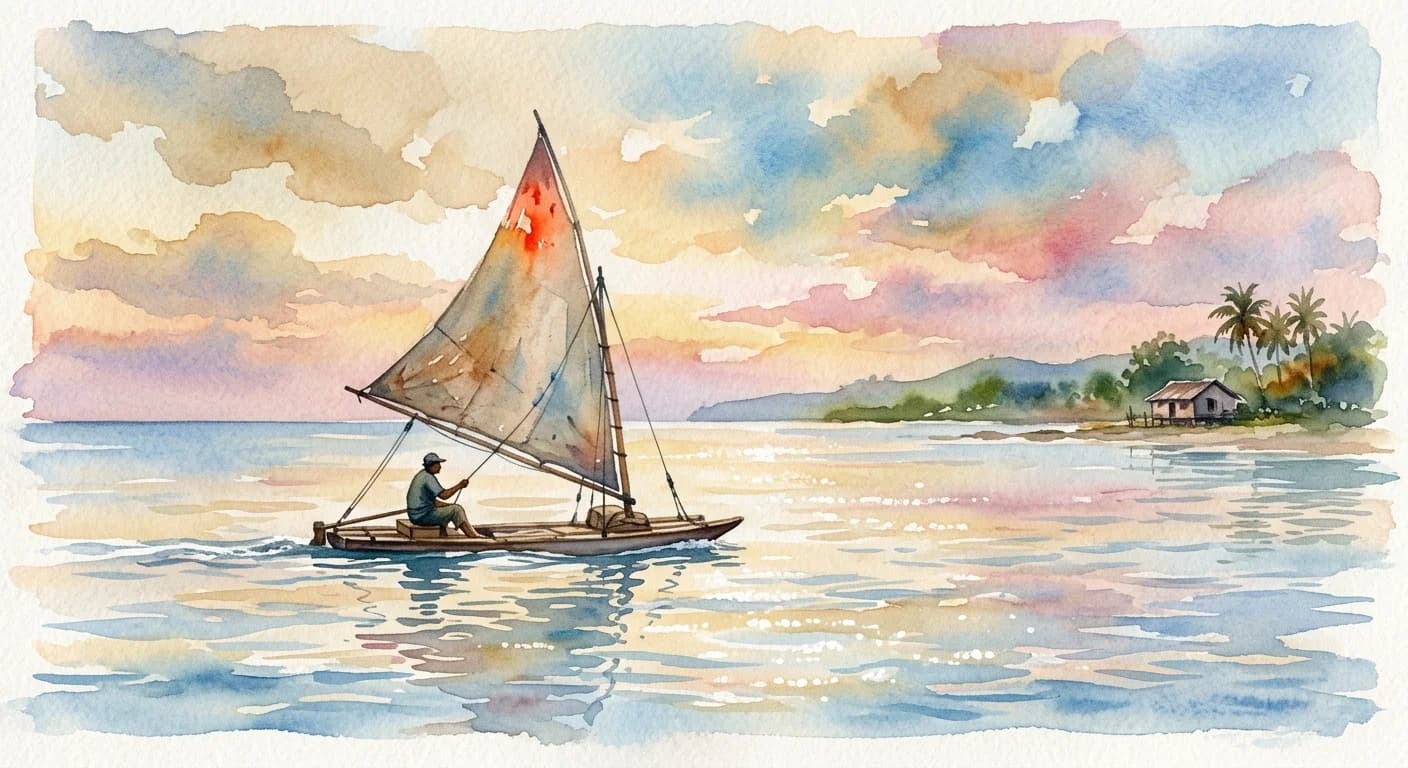
    Artistic representation of Jangada
    Portuguese•
    🇧🇷Brazil

    Jangada

    /zhahn-GAH-dah/

    Meaning

    A jangada is far more than a mere raft; it's an iconic symbol of Brazilian coastal life, particularly in the Northeast. This simple, yet incredibly robust, sailing vessel is traditionally crafted from six balsa wood logs lashed together, featuring a single mast and a triangular lateen sail. It embodies the profound resourcefulness and intimate connection to the ocean held by artisanal fishermen, representing not just a means of livelihood but a rhythmic dance with the sea and a testament to enduring ingenuity.

    Literal Translation

    raft

    The Story Behind the Word

    The jangada's existence is deeply rooted in the historical and geographical realities of Brazil's northeastern coast. Developed by indigenous peoples and later adopted by Portuguese settlers and Afro-Brazilians, it became the primary tool for fishing in a region where larger, more complex vessels were impractical or unavailable. Its design reflects a profound understanding of local currents, winds, and the properties of balsa wood, emphasizing harmony with nature over brute force. The jangada reveals a culture that values self-sufficiency, resilience in the face of adversity, and a deep respect for the ocean's bounty, viewing the sea not as a barrier but as a life-giving partner. It embodies a philosophy of making the most of minimal resources, turning simple materials into a vessel capable of navigating vast stretches of open water.

    Experience It

    Dawn's First Light

    Before the sun kissed the horizon, old João pushed his jangada into the gentle waves. With a practiced hand, he hoisted the sail, feeling the familiar pull of the wind as he set out for the morning's catch, his silhouette merging with the vast expanse of the Atlantic.

    A Community's Spirit

    After the storm, the villagers gathered to repair the damaged jangadas. Children brought fresh balsa, women prepared food, and men worked tirelessly, knowing that their collective livelihood depended on these humble vessels returning to the sea.

    The Deeper Meaning

    The jangada embodies a philosophy of humble resilience and sustainable living. It speaks to a worldview where humanity works in concert with nature, utilizing its gifts with respect and ingenuity rather than seeking to dominate it. It underscores the value of simplicity, self-reliance, and the profound connection between a community's survival and its environment, reflecting a deep wisdom in adapting to natural rhythms.

    Did You Know?

    Despite their simple construction, jangadas are remarkably seaworthy, capable of traveling hundreds of kilometers offshore and enduring significant ocean swells, a testament to their ingenious design.

    How It's Used

    Used to refer to a traditional raft or small sailing boat, especially in Brazil. It can also be used metaphorically to describe a simple, improvised solution or a journey undertaken with minimal resources.

    Emotions
    belonging,comfort,gratitude,peace
    Contexts
    dining,nature,travel,work
    🇧🇷Brazil

    by Anya Petrova·Written Mar 14, 2026·Updated Apr 3, 2026

    Related Words

    Explore more
    Dolce far nienteItalian

    Dolce far niente captures the profound joy and effortless pleasure derived from simply existing without obligation or purpose. It's the art of savoring moments of pure, unadulterated idleness – lying in the sun, watching the clouds drift, or enjoying a leisurely coffee – not as a break from work, but as a valuable state in itself. This 'sweetness of doing nothing' is a conscious embrace of stillness and contentment, allowing the soul to breathe and the senses to fully engage with the present.

    SobremesaSpanish

    Sobremesa is the cherished, often extended period immediately following a meal, particularly lunch or dinner, where diners remain seated at the table to enjoy conversation, coffee, and digest not just the food, but the company itself. It’s a dedicated time for unhurried social bonding, storytelling, and shared laughter, transforming a simple meal into a profound communal experience. Far from just clearing the dishes, sobremesa is an integral part of Spanish social life, often lasting for hours.

    Pura vidaSpanish

    More than just 'pure life,' "Pura vida" encapsulates a profound philosophy of embracing the present moment with unwavering optimism and gratitude. It's a daily commitment to finding joy in simple pleasures, accepting life's challenges with a positive spirit, and prioritizing well-being over material possessions. This ubiquitous phrase reflects a national identity built on resilience, community, and an deep appreciation for nature's bounty.

    MamihlapinatapaiYaghan

    Mamihlapinatapai encapsulates that profound, unspoken moment when two individuals lock eyes, each silently acknowledging a mutual desire or intention, yet both hesitate to be the first to act upon it. It's a delicate dance of anticipation, a shared gaze brimming with common understanding and a quiet longing for the other to break the ice. This intricate look carries the weight of a shared, uninitiated potential, a silent conversation where both parties are perfectly aware of what could happen, but neither makes the first move.