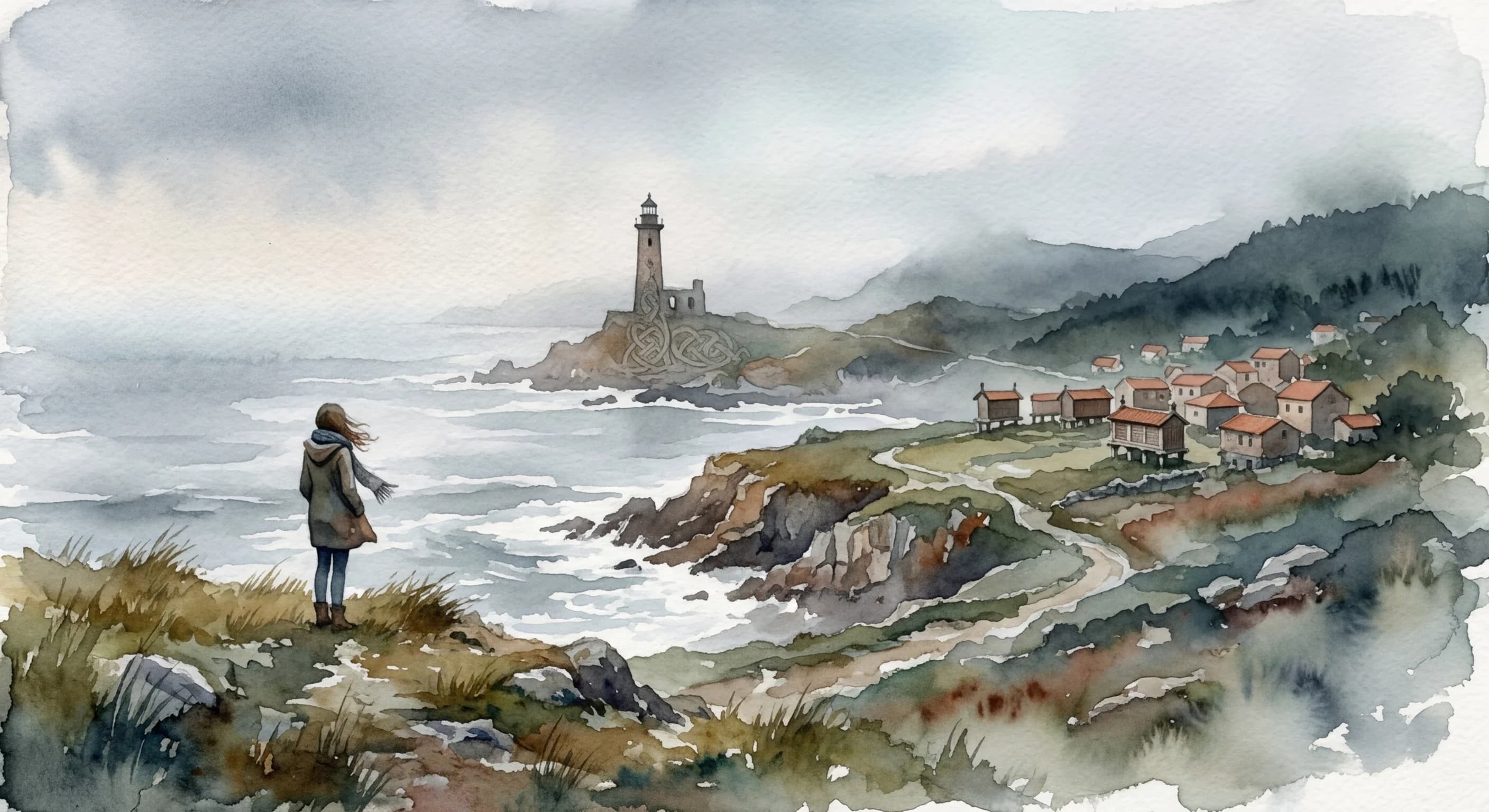
Tener morriña
/TEH-nehr moh-REE-nyah/
Meaning
To "tener morriña" is to experience a profound, almost visceral ache for one's homeland, a melancholic longing that transcends simple homesickness. It's a deep yearning for the familiar landscapes, the specific scent of the rain, the taste of traditional food, and the comforting rhythm of local speech, often felt most intensely when one is geographically distant. This emotion is bittersweet, a poignant blend of cherished memories and the sorrow of absence, reflecting a powerful, intrinsic connection to one's Galician roots and identity.
Literal Translation
To have longing/homesickness
The Story Behind the Word
The existence of "tener morriña" is deeply rooted in Galicia's history of emigration. For centuries, Galicians left their homeland in search of work, scattering across Spain, Europe, and the Americas. This constant departure fostered a collective consciousness of separation and longing. The word embodies a resilience in embracing one's identity even when far away, a recognition that a part of oneself remains tethered to the misty green landscapes and the unique cultural fabric of Galicia. It reveals a culture that values connection to place and heritage above all, where absence only intensifies affection and belonging.
Experience It
A Taste of Home
Elena, living in London for years, bit into a perfectly cooked 'empanada gallega' at a Spanish festival. Suddenly, a wave of 'morriña' washed over her, not just for the food, but for the Sunday family lunches in her grandmother's kitchen, the sound of Galician chatter, and the damp, salty air of her coastal village.
Distant Shores
Working on a fishing boat off the coast of Canada, Mateo gazed at the vast, unfamiliar ocean. He felt a profound 'morriña' for the familiar gray skies of Finisterre, the distinct cry of the gulls over the Rías Baixas, and the comforting presence of his community. The beauty of his new surroundings only highlighted his deep longing for home.
What Gets Lost in Translation
English speakers often equate "tener morriña" with mere homesickness or nostalgia, missing the profound, almost existential ache it represents. It's not just a desire to return for a visit, but a deep-seated emotional response to being separated from one's cultural and ancestral essence. The term implies a more enduring, pervasive sadness that can color one's entire experience abroad, rather than a fleeting feeling.
Across Cultures
Similar concepts exist across cultures that have experienced significant emigration or have strong regional identities. Portuguese has "saudade," a deep emotional state of melancholic longing for a person or place. Romanian has "dor," a profound longing or yearning. Hawaiian's "ho'omana'o" can encompass a wistful remembrance. These words all share the nuance of a longing that is often beautiful in its sadness, a connection to something deeply missed.
The Deeper Meaning
"Tener morriña" speaks to a philosophy where identity is inextricably linked to place and memory. It suggests that our roots are not merely geographical markers but fundamental components of our being. This concept highlights the human need for belonging and the recognition that true selfhood is often forged and sustained within a specific cultural and natural environment, making separation a profound disruption to one's inner equilibrium.
Did You Know?
The word "morriña" is believed to derive from "morro," referring to the muzzle of an animal, implying a longing so strong it makes one 'hang one's head' in sadness, like a homesick animal.
How It's Used
Used to express a feeling of homesickness or nostalgia for one's native land, particularly when living abroad or in a place that feels unfamiliar.