Junkanoo
/JUNG-ka-noo/
Meaning
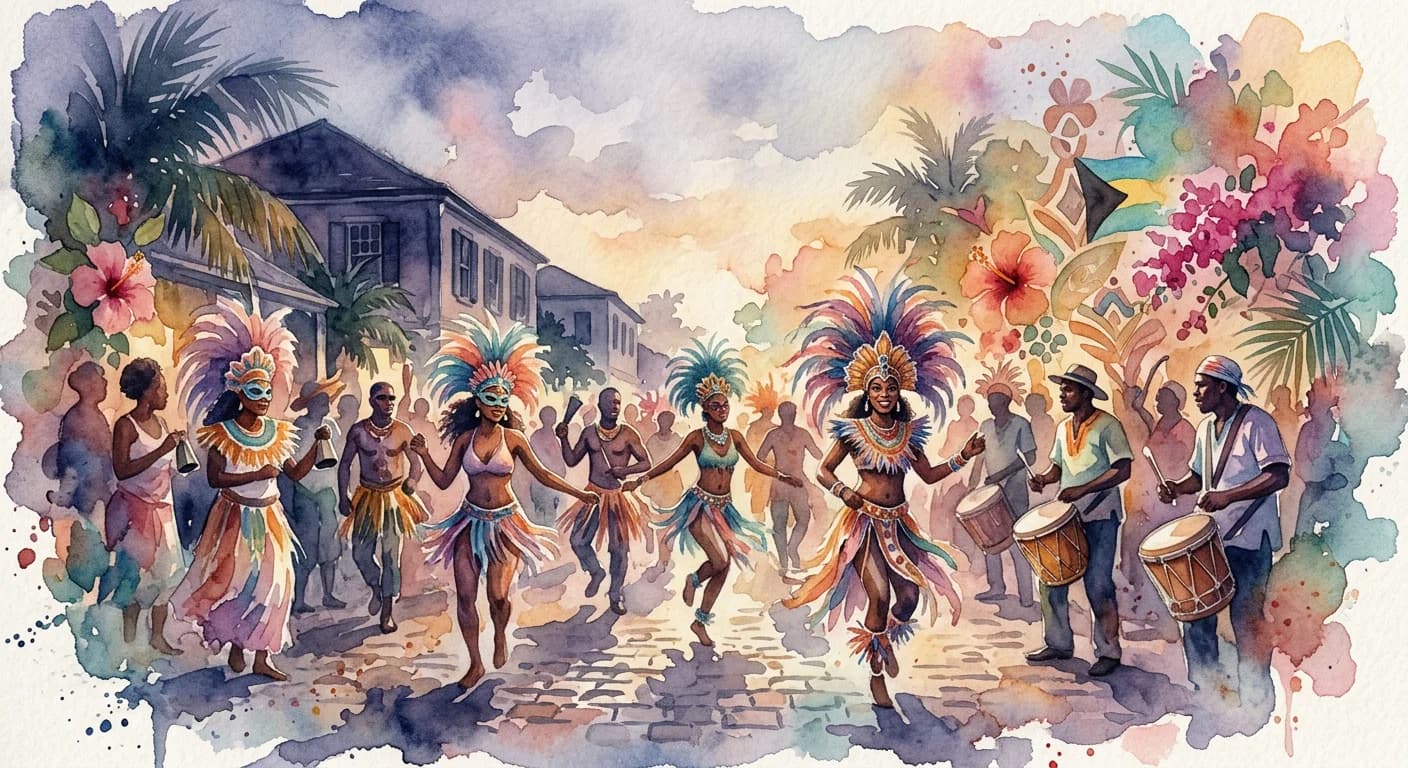
Junkanoo is the pulsating heart of Bahamian cultural celebration, a spectacular street parade and music festival primarily igniting on Boxing Day and New Year's Day. It's a dazzling explosion of meticulously crafted, vibrant crepe paper costumes, driving rhythmic drumming, the clang of cowbells, piercing whistles, and the joyful blare of brass instruments. This infectious, ancestral beat compels revelers into communal movement and ecstatic release, embodying a profound spirit of collective joy, creative ingenuity, and powerful self-expression. Far more than a mere festival, it is a spiritual and cultural inheritance, proudly asserting Bahamian identity.
Literal Translation
The exact etymology is debated, but it is believed to have origins in West African languages, possibly related to the Akan word 'anuanom' meaning 'brothers' or a reference to John Canoe, a West African slave who led a rebellion.
The Story Behind the Word
Junkanoo's roots delve deep into the era of slavery, providing enslaved Africans in The Bahamas a rare opportunity for communal gathering and celebration during their few days off around Christmas. It served as a vital outlet for cultural preservation, resistance, and a temporary escape from daily hardships, allowing them to reconnect with their ancestral traditions through music, dance, and elaborate disguise. After emancipation, Junkanoo evolved into a powerful declaration of freedom and identity, becoming a cornerstone of Bahamian national pride. It embodies a philosophy of resilience, community, and the transformative power of art and music to unify and uplift, reflecting a people who transformed adversity into vibrant, joyous expression.
Experience It
Boxing Day Dawn
As the first hint of dawn touched Nassau, the streets erupted. A child, perched on his father's shoulders, watched in awe as a Junkanoo rush-out band, a kaleidoscope of color and sound, danced past, the thump of goatskin drums vibrating through his chest.
Costume Creation
Inside the shack, weeks of meticulous work culminated. Hands, sticky with glue and paint, carefully fastened the last piece of fringed crepe paper to a towering headdress, perfecting a Junkanoo costume that would soon shimmer under the streetlights, ready to tell its story.
The Deeper Meaning
Junkanoo encapsulates a profound Bahamian worldview rooted in resilience, communal unity, and the redemptive power of creative expression. It reveals a culture that finds strength and identity in collective celebration, transforming historical struggle into a vibrant, joyous affirmation of self. The ephemeral nature of the costumes, discarded after each parade, speaks to a focus on the shared experience and the present moment of revelry rather than material permanence.
Did You Know?
The elaborate Junkanoo costumes, often taking months to create, are traditionally made from salvaged materials like cardboard and crepe paper, a testament to ingenuity and resourcefulness.
How It's Used
Junkanoo is used to refer to the festival itself, the music and dance associated with it, and the participants. It's a central part of Bahamian identity and celebrated with immense national pride.