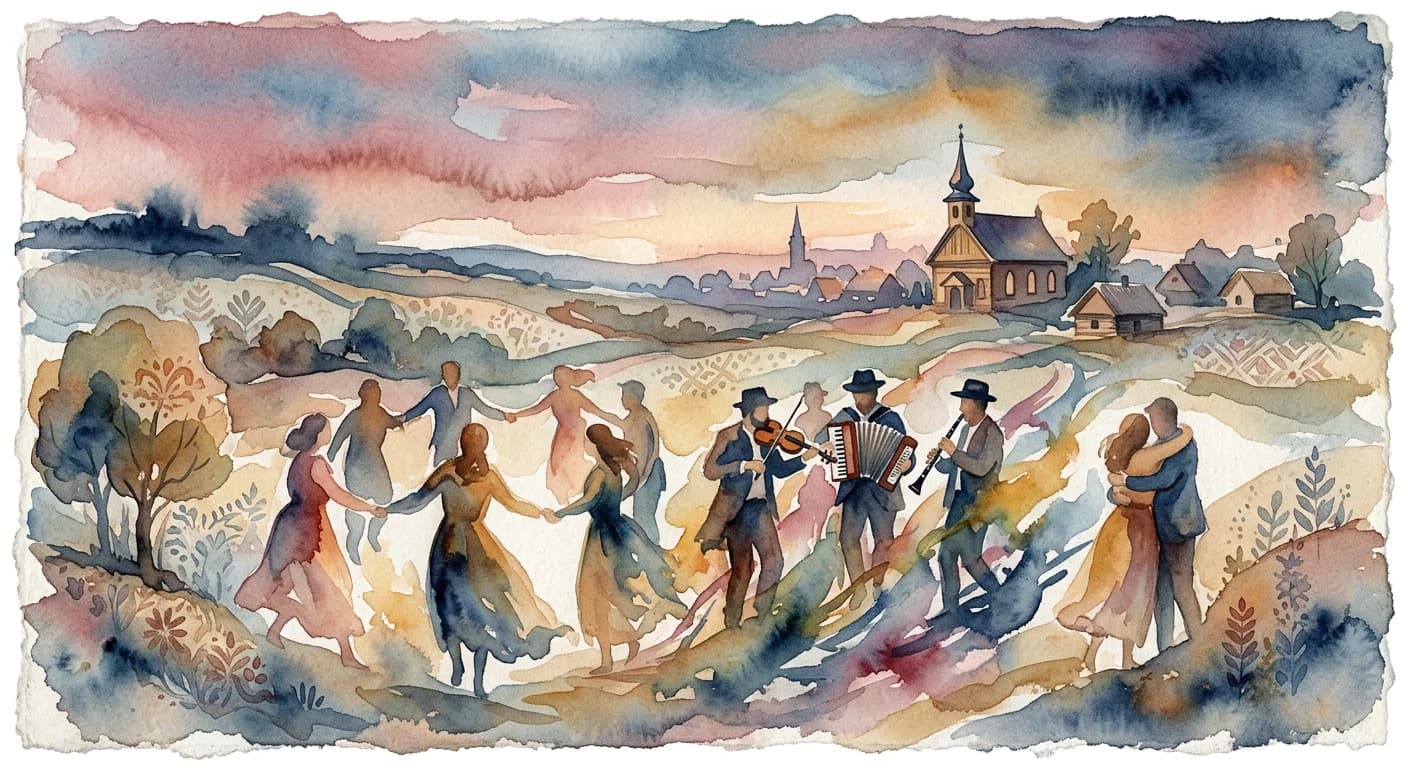
Klezmer
/KLEZ-mer/
Meaning
Klezmer denotes a vibrant musical tradition rooted in the Ashkenazi Jewish communities of Central and Eastern Europe. Far more than just a genre, it embodies a profound cultural heritage, weaving together a complex tapestry of human emotions. The music can be exhilaratingly lively and celebratory, perfect for joyous occasions, yet it also carries a deep vein of melancholy, reflecting the historical resilience and struggles of the Jewish people. This unique fusion of spirited joy and profound sorrow, often conveyed through intricate melodies and soulful improvisation, makes it uniquely poignant and impossible to fully capture with a single English term.
Literal Translation
Musical instrument / musician of the lute
The Story Behind the Word
The word 'Klezmer' itself derives from the Hebrew 'kley zemer,' meaning 'vessels of song' or 'musical instruments,' later evolving to refer to the musicians themselves. This tradition emerged from the itinerant Jewish musicians who traveled between shtetls, providing music for all life events – from births and weddings to funerals. Their music was a sonic chronicle of Jewish life, adapting melodies and rhythms from surrounding cultures while infusing them with a distinctly Jewish soul. It became a vital cultural adhesive, preserving identity and providing both catharsis and celebration in often challenging circumstances. The coexistence of joy and sorrow within Klezmer reflects a worldview that acknowledges life's inherent duality, finding beauty and expression in both.
Experience It
A Wedding Simcha
The band struck up a lively 'Freylekhs,' and Sarah's wedding reception erupted in joyous dancing. The clarinet wailed with a mix of exuberance and a touch of sweet longing, perfectly capturing the bittersweet emotions of a daughter leaving home, yet celebrating a new beginning. This was true klezmer, moving hearts and feet simultaneously.
Reflecting on History
At the Jewish cultural festival, a slow, soulful 'Doina' filled the air, the violin weeping with a haunting melody. It wasn't just music; it felt like a collective sigh, a remembrance of ancestors and their journeys. For many in the audience, this klezmer piece was a profound connection to their heritage, evoking centuries of stories without uttering a single word.
The Deeper Meaning
Klezmer embodies a profound philosophical understanding of life's inherent paradoxes: joy and sorrow, resilience and vulnerability, celebration and remembrance. It suggests that true human experience embraces both the ecstatic and the melancholic, finding expression and meaning in their complex interplay. This musical philosophy encourages living fully, acknowledging all facets of existence rather than compartmentalizing emotions.
Did You Know?
Historically, klezmer musicians were often marginalized, seen as low-status entertainers. Yet, they were indispensible, serving as the emotional backbone of their communities, carrying stories and feelings through their instruments.
How It's Used
Klezmer is used to refer to the genre of music itself, as well as the musicians who play it. It is typically heard at Jewish celebrations, weddings, holidays, and cultural events, but has also gained popularity in broader musical contexts worldwide.