Kolo
/KOH-loh/
Meaning
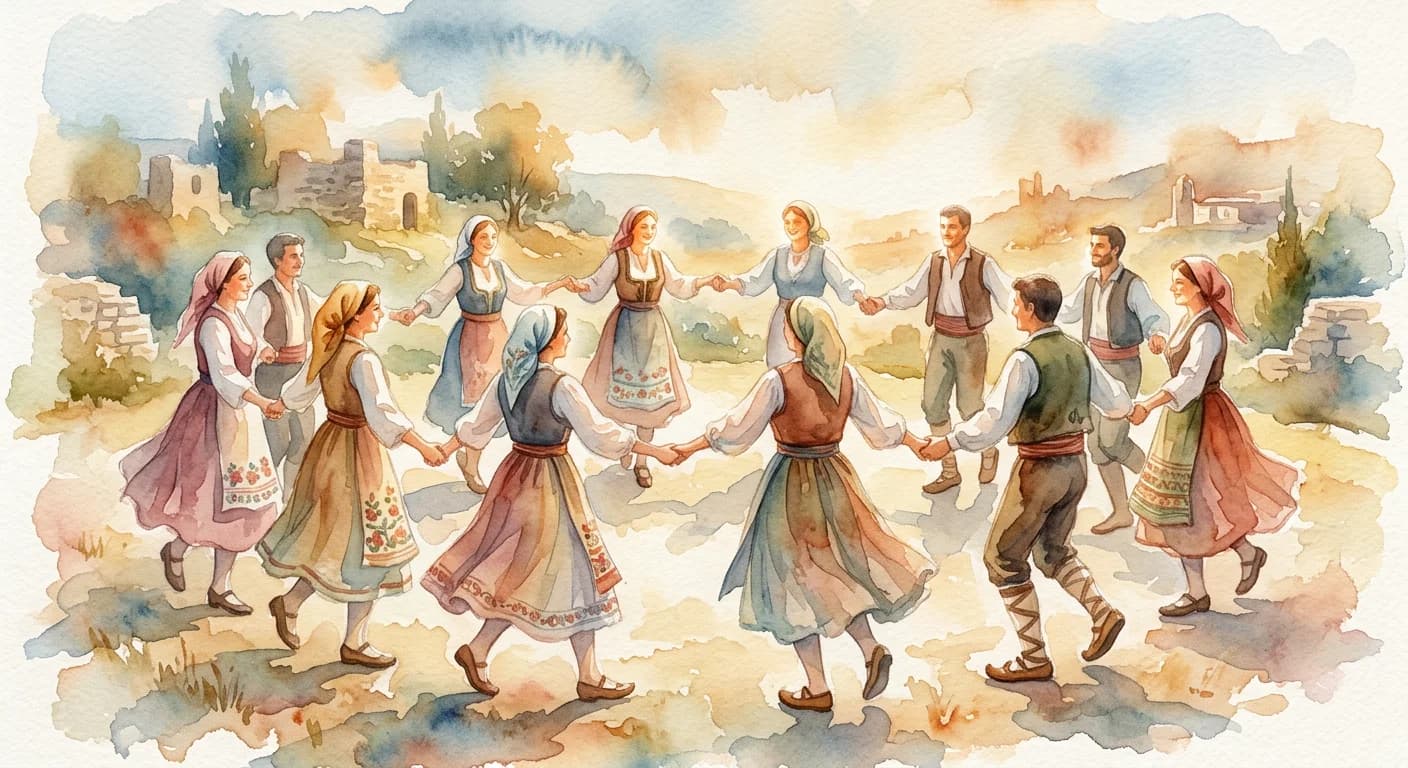
Kolo is far more than a simple dance; it is the pulsating heart of Serbian communal life, a vibrant circular folk dance that weaves together generations in shared rhythm and spirit. At every celebration, from joyous weddings to solemn village festivals, participants link hands, forming an unbreakable chain that symbolizes unity, continuity, and an enduring connection to their heritage. Its intricate steps and spirited music don't just entertain; they evoke a profound sense of belonging and national pride, transforming individual joy into a collective expression of identity and resilience.
Literal Translation
circle
The Story Behind the Word
The kolo's origins are deeply rooted in pre-Christian Slavic traditions, where circular dances were often performed in rituals to honor deities, ensure fertility, and ward off evil. Its enduring presence reflects a cultural emphasis on community, solidarity, and the collective over the individual. In a land historically marked by invasions and struggles for independence, the kolo has served as a powerful symbol of national unity and cultural preservation, a testament to the Serbian people's ability to find joy and strength in communal bonds. It embodies the philosophy that identity is forged in shared experience and that cultural heritage is a living, breathing entity passed down through active participation, not just observation.
Experience It
Wedding Celebration
The band struck up a familiar tune, and instantly, hands reached out, forming a large, joyful kolo that snaked through the wedding hall. Grandparents, parents, and children, all laughing and moving in unison, celebrated the newlyweds, their steps a rhythmic echo of generations past.
Village Festival
Under the warm summer sun, the entire village gathered. After the speeches, the music began, and soon a massive kolo formed in the central square. Farmers, teachers, and children, all linked, moved as one, a living circle celebrating their shared harvest and enduring community spirit.
The Deeper Meaning
The kolo embodies a profound philosophy of interconnectedness and resilience. It teaches that true strength and joy are found not in isolation, but in collective harmony and shared experience. The unbroken circle represents continuity, the cyclical nature of life, and the enduring spirit of a community that moves forward together, hand in hand, through all of life's rhythms.
Did You Know?
The longest recorded kolo involved over 10,000 people, demonstrating the incredible power of this dance to unite vast numbers in collective celebration and cultural expression.
How It's Used
Kolo is performed at social gatherings, celebrations, weddings, festivals, and other community events.