U.
HomeRegionsLanguagesEmotionsCollections
Find Your Word

“The limits of my language mean the limits of my world.”

— Ludwig Wittgenstein, Philosopher

Untranslatable

A curated collection of the world's most beautiful expressions—words that remind us language is humanity's greatest invention.

  • Home
  • Collections
  • Regions
  • Countries
  • Emotions
  • Tags
  • Contexts
  • Finder
  • Europe
  • Asia
  • Americas
  • Africa
  • Middle East
  • About
  • Contact
  • Privacy Policy
  • Terms of Service

2026 © Untranslatable. All rights reserved.

    /
    /
    1. Home
    2. /
    3. Asia
    4. /
    5. Kulintang
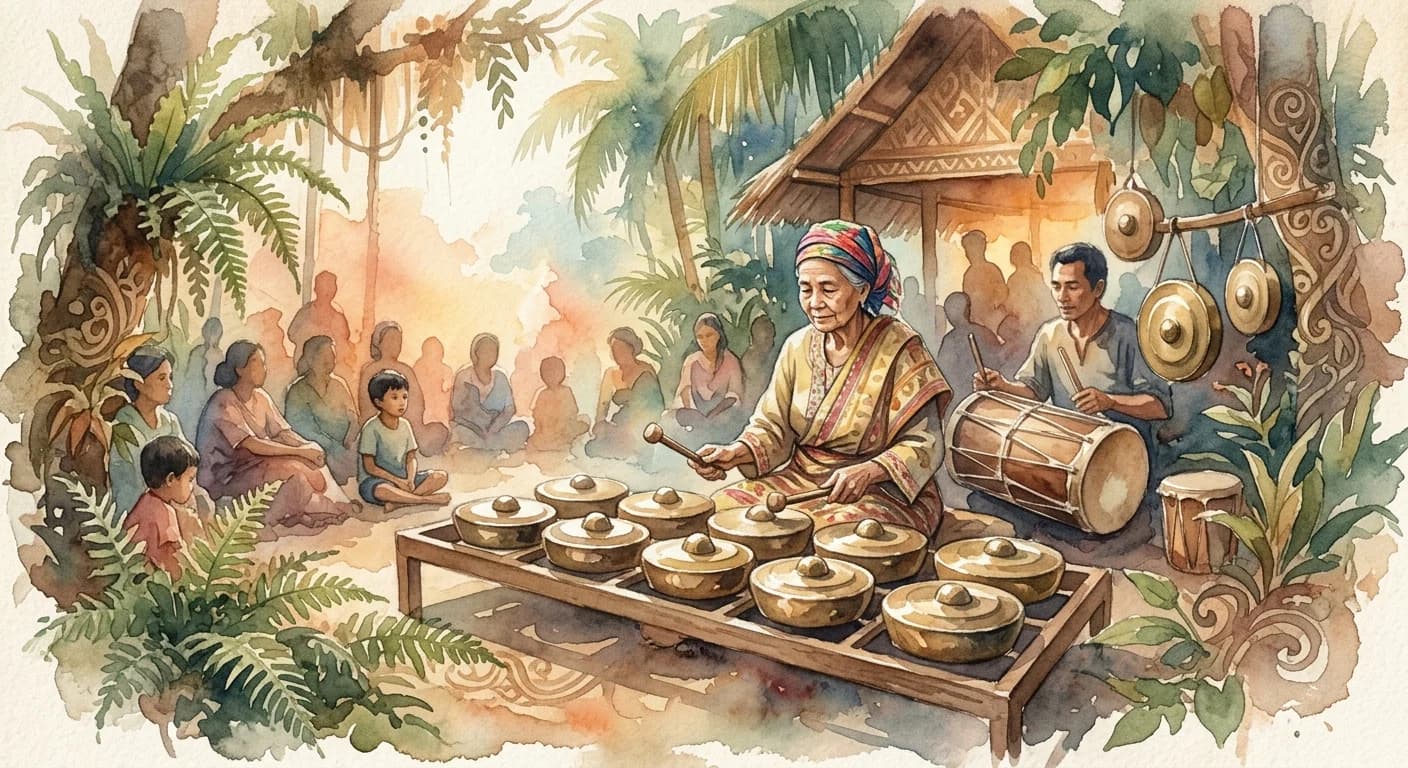
    Artistic representation of Kulintang
    Maguindanao•
    🇵🇭Philippines

    Kulintang

    /koo-lin-tang/

    Meaning

    Kulintang refers to the vibrant, ancient gong-chime ensemble central to the musical traditions of the Maguindanao and other indigenous peoples of the southern Philippines. This intricate orchestra, featuring graduated gongs laid horizontally, is played by a group of musicians who weave complex, interlocking melodies and rhythms. More than just instruments, the kulintang symbolizes a living cultural heritage, its resonant tones evoking community, tradition, and the enduring spirit of the Moro people.

    Literal Translation

    The term 'kulintang' itself refers to the entire ensemble of instruments, not just a single gong.

    The Story Behind the Word

    Kulintang music is deeply interwoven with the social fabric and spiritual life of the Maguindanao and other related groups. Historically, it served not only as entertainment but also as a form of communication, a marker of social status, and an integral part of rituals, from healing ceremonies to royal court performances. Its existence reveals a worldview where music is not merely an aesthetic pursuit but a vital force connecting individuals to their ancestry, community, and the cosmic order. The complex interplay of gongs mirrors the communal harmony and intricate social structures valued within these societies, reflecting a profound respect for tradition and collective identity.

    Experience It

    Wedding Celebration Festivities

    At a Maguindanao wedding, the air pulsed with the vibrant, percussive sounds of the kulintang. As guests arrived, the musicians played lively, intricate melodies, setting a celebratory mood and signifying the importance of the union within the community, drawing everyone into the joyous occasion.

    Preserving Ancestral Echoes

    During a cultural festival, a group of young Maguindanao musicians performed a traditional kulintang piece passed down through generations. Their synchronized movements and the gongs' rich tones transported the audience, showcasing the enduring power of their heritage and their commitment to keeping ancestral music alive.

    The Deeper Meaning

    The kulintang embodies a philosophy of communal interdependence and harmonious coexistence. Each gong, with its unique pitch and role, contributes to a greater, unified sound, much like individuals within a community. It teaches that true beauty and strength emerge not from isolation, but from the intricate, balanced interplay of diverse elements, reflecting a holistic worldview where every part is essential to the whole.

    Did You Know?

    Unlike many orchestral instruments, kulintang ensembles historically didn't rely on written notation; music was (and often still is) learned and passed down aurally, emphasizing improvisation and deep listening.

    How It's Used

    Kulintang music is traditionally performed during celebrations, rituals, and important social gatherings such as weddings, festivals, and peace ceremonies. It plays a vital role in preserving cultural identity and storytelling within these communities.

    Emotions
    belonging,joy,nostalgia,warmth
    Contexts
    celebration,family,greeting,seasons
    🇵🇭Philippines

    by Anya Petrova·Written Mar 14, 2026·Updated Apr 3, 2026

    Related Words

    Explore more
    GezelligDutch

    Gezellig encapsulates a profound sense of warmth, belonging, and convivial comfort, extending beyond mere coziness to embrace the social and emotional atmosphere. It's the feeling of being truly at ease, surrounded by good company, laughter, and a shared sense of contentment. This untranslatable term describes not just a physical space, but a holistic experience where time seems to slow down, fostering genuine connection and a deep sense of well-being.

    SobremesaSpanish

    Sobremesa is the cherished, often extended period immediately following a meal, particularly lunch or dinner, where diners remain seated at the table to enjoy conversation, coffee, and digest not just the food, but the company itself. It’s a dedicated time for unhurried social bonding, storytelling, and shared laughter, transforming a simple meal into a profound communal experience. Far from just clearing the dishes, sobremesa is an integral part of Spanish social life, often lasting for hours.

    Wabi-sabiJapanese

    Wabi-sabi is the profound appreciation for the ephemeral, the imperfect, and the incomplete aspects of existence. It is about discovering beauty in the subtle textures of age, the unique character of flaws, and the gentle decay that marks the passage of time. This philosophy encourages a quiet acceptance of impermanence and a mindful connection to the natural world, finding elegance in simplicity and authenticity.

    IkigaiJapanese

    Ikigai is more than just a reason to get out of bed; it's a deeply personal and evolving sense of purpose that brings genuine fulfillment and joy to one's life. It represents the sweet spot where your passions, talents, needs of the world, and what you can be paid for beautifully converge. Discovering your ikigai often leads to a life lived with intentionality, resilience, and a profound connection to one's contributions. It's the intrinsic motivation that fuels a meaningful existence, regardless of external circumstances.