U.
HomeRegionsLanguagesEmotionsCollections
Find Your Word

“The limits of my language mean the limits of my world.”

— Ludwig Wittgenstein, Philosopher

Untranslatable

A curated collection of the world's most beautiful expressions—words that remind us language is humanity's greatest invention.

  • Home
  • Collections
  • Regions
  • Countries
  • Emotions
  • Tags
  • Contexts
  • Finder
  • Europe
  • Asia
  • Americas
  • Africa
  • Middle East
  • About
  • Contact
  • Privacy Policy
  • Terms of Service

2026 © Untranslatable. All rights reserved.

    /
    /
    1. Home
    2. /
    3. Europe
    4. /
    5. Churro
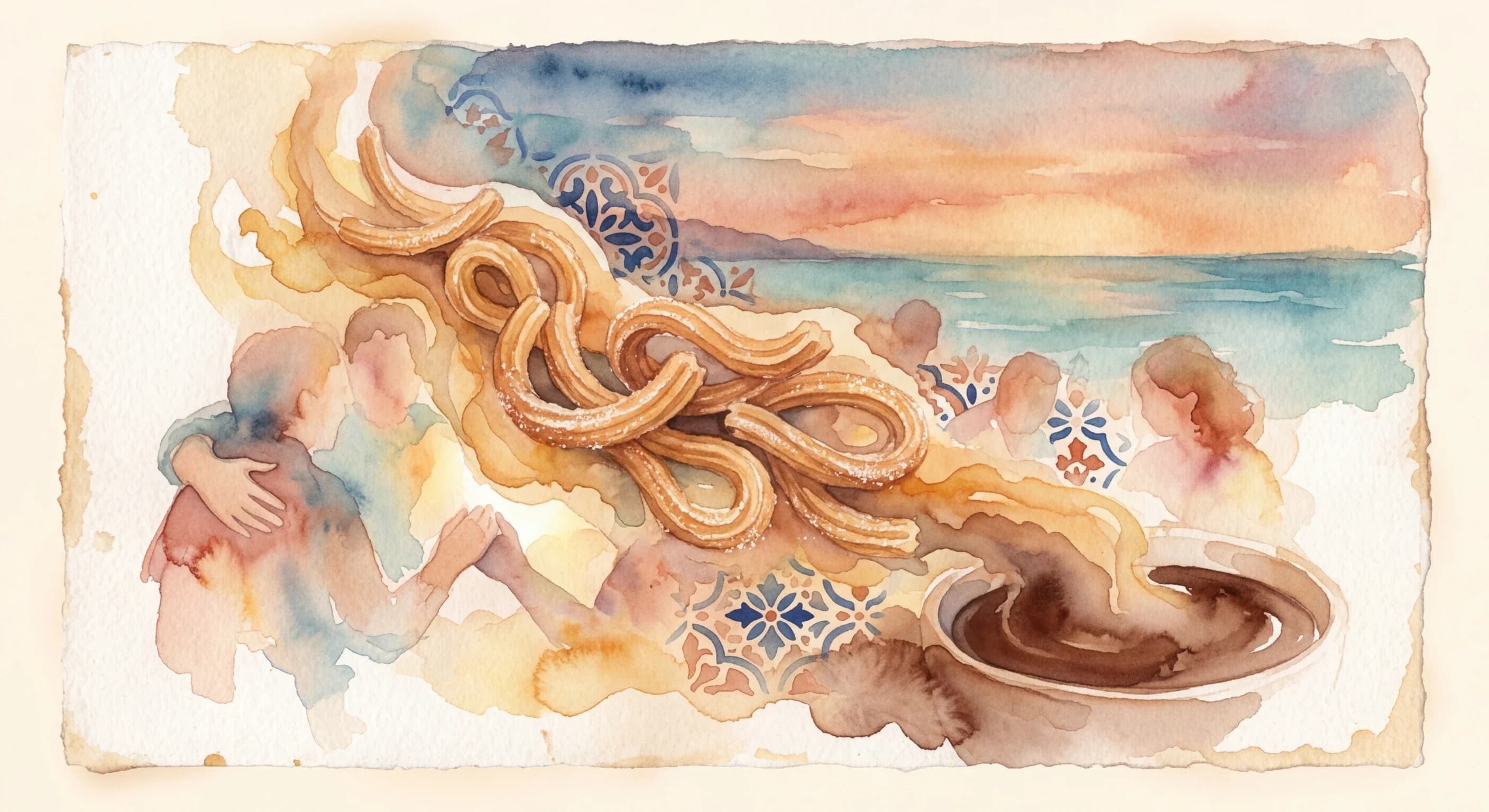
    Artistic representation of Churro
    Spanish•
    🇦🇷Argentina🇨🇱Chile🇨🇴Colombia🇨🇺Cuba🇩🇴Dominican Republic🇲🇽Mexico🇵🇪Peru🇵🇷Puerto Rico🇪🇸Spain🇺🇸United States🇺🇾Uruguay

    Churro

    /CHOO-roh/

    Meaning

    A churro transcends its simple description as a fried dough pastry; it embodies a deeply cherished culinary ritual in Spain. Often dusted with a glistening mix of sugar and cinnamon, its crisp exterior yields to a warm, tender interior, making it an irresistible treat. It's not merely a snack but a symbol of accessible joy, frequently enjoyed with family and friends at bustling street markets, during festive holidays, or as a comforting breakfast, especially when dipped into rich, velvety hot chocolate.

    Literal Translation

    The exact etymology is debated, but it is thought to be related to the Spanish word 'churro,' which refers to a breed of sheep with curly horns, possibly because the pastry's shape resembles these horns.

    The Story Behind the Word

    The churro's journey from humble origins, possibly linked to shepherds needing a simple, portable, and satisfying meal cooked over an open fire, to its status as a beloved national delicacy, speaks volumes about Spanish culture. Its prevalence in street food culture and at 'churrerías' (specialized churro shops) highlights a societal value placed on communal eating, informal gatherings, and the simple pleasures of life. The act of sharing churros, particularly on cold mornings or after a late night out, fosters connection and reinforces a sense of tradition. It reflects a culture that savors moments of collective indulgence and finds beauty in well-executed simplicity, often making the ordinary feel extraordinary through shared experience.

    Experience It

    Sunday Morning Treat

    The aroma of freshly fried dough wafted through the plaza, guiding Ana and her grandparents to their favorite churrería. They settled at a small, round table, dipping the crisp, warm churros into steaming cups of thick, dark chocolate, sharing stories and laughter as the city slowly woke up around them.

    Festival Night Delight

    Under the twinkling lights of the local fiesta, a queue snaked around the churro stand. Pablo, clutching a paper cone brimming with sugar-dusted churros, navigated the lively crowd, sharing bites with his friends as they watched the fireworks burst overhead, the sweet crunch a perfect accompaniment to the festive atmosphere.

    The Deeper Meaning

    The churro, in its ubiquity and simplicity, subtly reveals a Spanish philosophical appreciation for 'joie de vivre' – the joy of living. It underscores the importance of shared sensory experiences, the value of tradition in everyday life, and the belief that happiness can be found in accessible, unpretentious pleasures. It champions the idea that the best things in life are often those enjoyed collectively, fostering connection and creating lasting memories over a humble, sweet treat.

    Did You Know?

    While commonly associated with Spain, some theories suggest churros might have originated in China, brought to Europe by Portuguese explorers, evolving from a fried pastry called 'youtiao'.

    How It's Used

    Typically refers to a fried dough pastry, commonly eaten as a snack or dessert, especially during holidays or festivals. It can also refer to a street vendor selling these pastries.

    Emotions
    belonging,comfort,joy,warmth
    Contexts
    celebration,dining,family,seasons
    🇦🇷Argentina🇨🇱Chile🇨🇴Colombia🇨🇺Cuba🇩🇴Dominican Republic🇲🇽Mexico🇵🇪Peru🇵🇷Puerto Rico🇪🇸Spain🇺🇸United States🇺🇾Uruguay

    by Annelise Dubois·Written Mar 10, 2026·Updated Apr 3, 2026

    Related Words

    Explore more
    HyggeDanish

    Hygge is more than mere coziness; it's a holistic embrace of comfort, warmth, and belonging that nourishes the soul. It describes the intentional creation of an intimate atmosphere where simple pleasures, genuine connection, and mindful presence converge, fostering a profound sense of contentment and well-being. It's about finding joy and peace in the small, everyday moments, often shared with loved ones.

    SaudadePortuguese

    Saudade encapsulates a profound, melancholic longing for something or someone cherished that is absent, often with the bittersweet knowledge that it may never return. It's a deep emotional state tinged with nostalgia, evoking a sense of loss for past experiences, places, or people, yet also holding a tender appreciation for the beauty of what once was. This yearning is not merely sadness, but a complex tapestry of desire, memory, and a poignant acceptance of absence, holding the beloved in a warm, persistent embrace within the heart.

    GezelligDutch

    Gezellig encapsulates a profound sense of warmth, belonging, and convivial comfort, extending beyond mere coziness to embrace the social and emotional atmosphere. It's the feeling of being truly at ease, surrounded by good company, laughter, and a shared sense of contentment. This untranslatable term describes not just a physical space, but a holistic experience where time seems to slow down, fostering genuine connection and a deep sense of well-being.

    Dolce far nienteItalian

    Dolce far niente captures the profound joy and effortless pleasure derived from simply existing without obligation or purpose. It's the art of savoring moments of pure, unadulterated idleness – lying in the sun, watching the clouds drift, or enjoying a leisurely coffee – not as a break from work, but as a valuable state in itself. This 'sweetness of doing nothing' is a conscious embrace of stillness and contentment, allowing the soul to breathe and the senses to fully engage with the present.