Lilong
/LEE-long/
Meaning
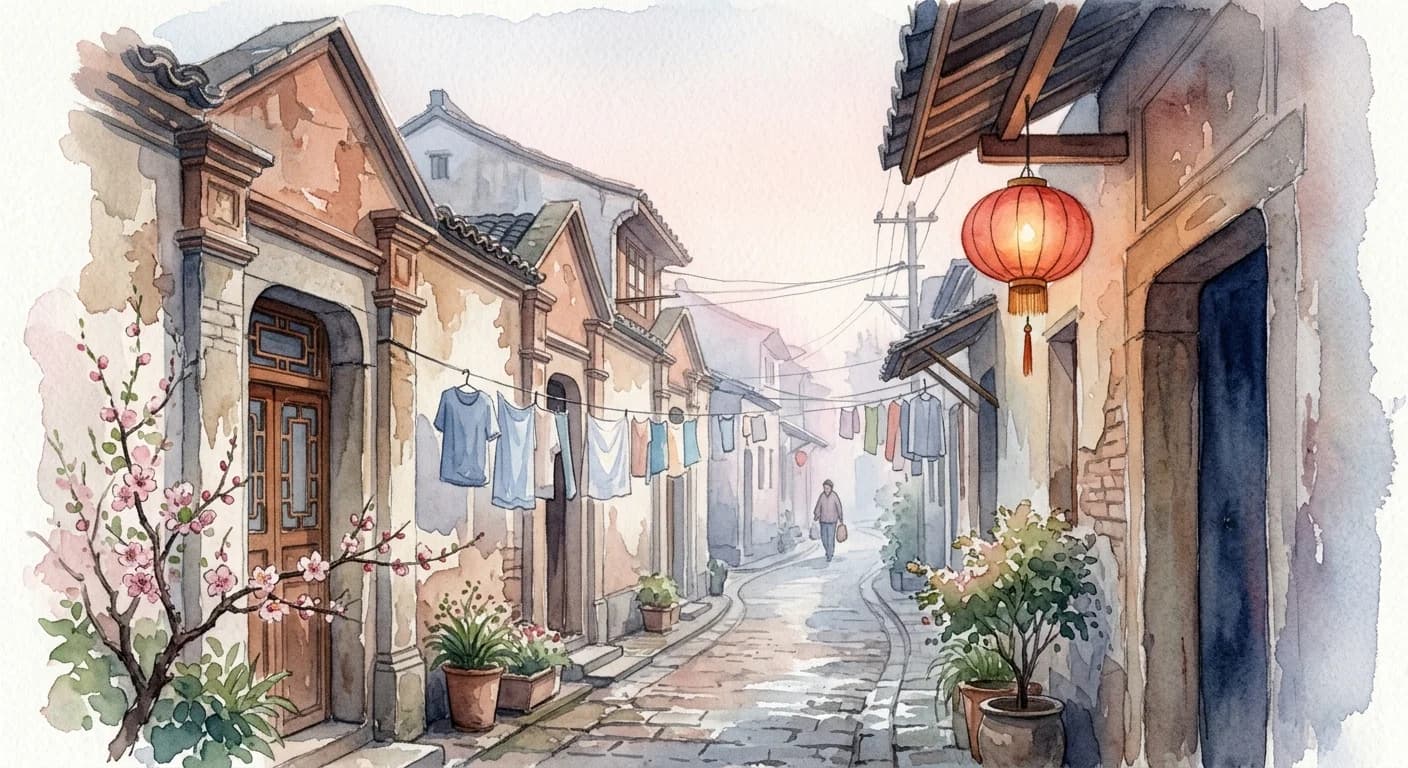
Lilong refers to the intricate network of narrow alleyways and the distinctive Shikumen (stone-gate) houses that define old Shanghai's urban landscape. More than just physical spaces, they are vibrant arteries of community life where the rhythm of daily existence unfolds publicly and intimately. Within these close quarters, neighbors share not only walls but also stories, meals, and the collective memory of a bustling, interconnected past, fostering a profound sense of belonging that stands in stark contrast to modern urban anonymity.
Literal Translation
Lane/Alley
The Story Behind the Word
The word 'lilong' exists because it encapsulates a unique urban phenomenon born from Shanghai's rapid growth in the late 19th and early 20th centuries. As waves of migrants flocked to the city, the Shikumen housing style emerged, efficiently packing many families into dense, yet self-contained, communities. This necessity fostered a culture of shared resources, mutual reliance, and public-private blurring, where front doors opened directly onto the communal alley, inviting interaction. 'Lilong' reveals a worldview where personal space is often communal, and identity is deeply intertwined with one's neighbors and immediate surroundings, reflecting resilience and adaptability in the face of rapid modernization and population influx. It embodies the spirit of a bygone era where local bonds were paramount for survival and social cohesion.
Experience It
Morning Lilong Buzz
Auntie Li opens her Shikumen gate, setting out a small table for her morning tea. Across the lilong, Mr. Wang is already practicing tai chi, his movements fluid in the narrow space, while children chase a stray cat, their laughter echoing off the stone walls.
Evening Stories
As dusk settles, families bring small stools out into the lilong, fanning themselves in the humid air. Neighbors chat about their day, share gossip, and watch over each other's children playing nearby, the scent of cooking wafting from various doorways.
What Gets Lost in Translation
English speakers often perceive 'lilong' merely as an architectural style or a type of alley, missing its profound social dimension. It's not just about the buildings, but the specific way of life, the dense social fabric, and the communal interdependencies that thrived within these unique spaces. The translation 'lane' or 'alley' fails to convey the deep sense of shared identity and collective experience inherent to a lilong community.
Across Cultures
While no direct equivalent exists, concepts of close-knit urban communities can be found globally. Italian 'vicoli' or 'sottoporteghi' in Venice share the narrowness and communal feel, though lacking the specific architectural style. Japanese 'roji' (alleyways) similarly evoke a sense of hidden, intimate urban spaces, often with a shared history. The 'kasbah' in North African cities, with its winding alleys and dense housing, also shares a spirit of close community living, albeit with different cultural expressions.
The Deeper Meaning
The concept of 'lilong' inherently challenges the Western ideal of absolute privacy and individualistic living. It champions a philosophy of 'collective intimacy,' where personal life is interwoven with the community's fabric. This reveals a worldview that values interdependence, shared space, and the rich tapestry of human connection forged through constant, close proximity, suggesting that true belonging often arises from the shared experiences within a communal sphere.
Did You Know?
Many Shikumen houses in lilongs were designed with a blend of Chinese courtyard housing and Western terraced housing, reflecting Shanghai's unique East-meets-West architectural fusion.
How It's Used
Used to describe the narrow alleyways characteristic of old Shanghai neighborhoods, and by extension, the lifestyle and community associated with them.