U.
HomeRegionsLanguagesEmotionsCollections
Find Your Word

“The limits of my language mean the limits of my world.”

— Ludwig Wittgenstein, Philosopher

Untranslatable

A curated collection of the world's most beautiful expressions—words that remind us language is humanity's greatest invention.

  • Home
  • Collections
  • Regions
  • Countries
  • Emotions
  • Tags
  • Contexts
  • Finder
  • Europe
  • Asia
  • Americas
  • Africa
  • Middle East
  • About
  • Contact
  • Privacy Policy
  • Terms of Service

2026 © Untranslatable. All rights reserved.

    /
    /
    1. Home
    2. /
    3. Americas
    4. /
    5. Macumba
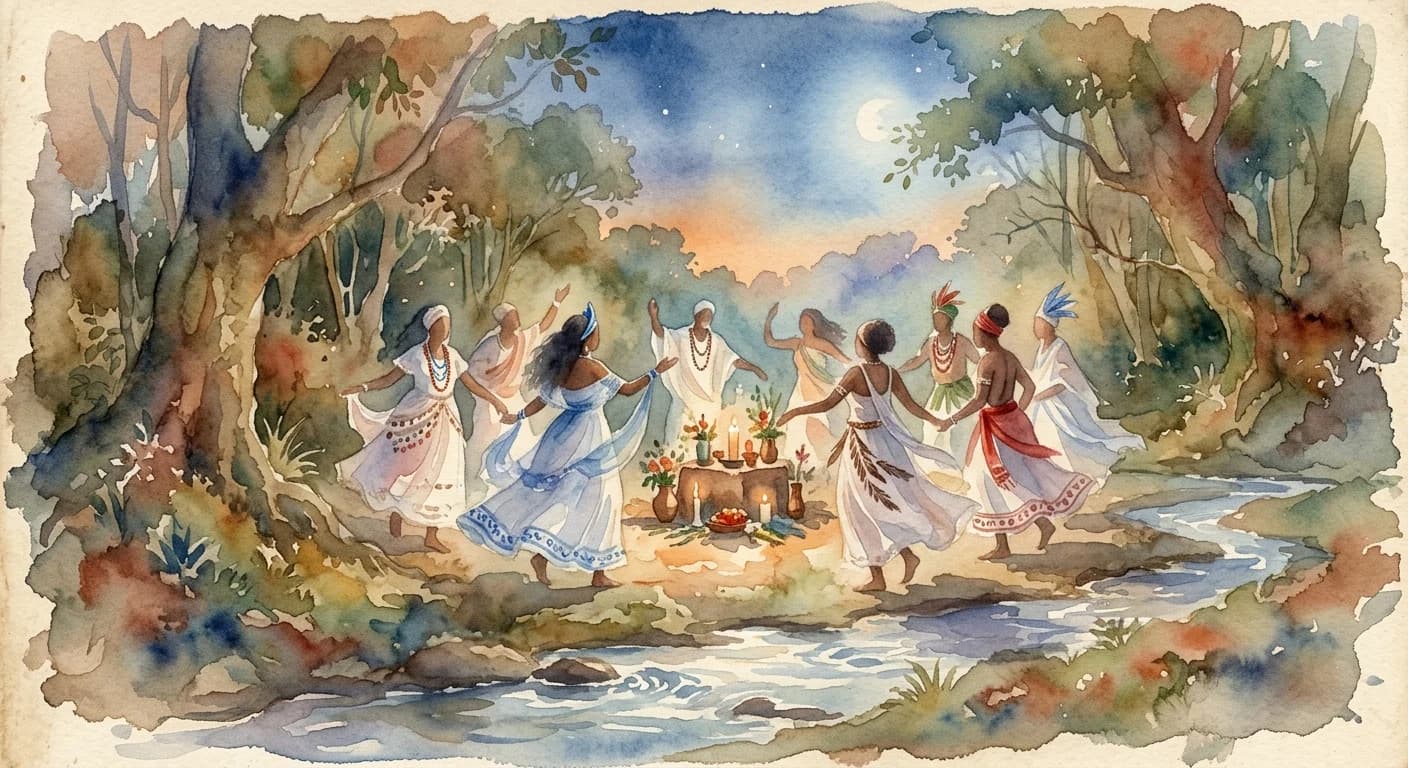
    Artistic representation of Macumba
    Portuguese•
    🇧🇷Brazil

    Macumba

    /mah-KOOM-bah/

    Meaning

    Macumba refers to a vibrant, syncretic Afro-Brazilian spiritual tradition deeply rooted in African ancestral worship, Catholicism, and Indigenous beliefs. It is a profound spiritual path involving elaborate rituals, drumming, dance, and offerings to connect with powerful orixás (deities) and spirits, seeking healing, protection, and guidance. Far from a monolithic entity, it encompasses a spectrum of practices that provide a vital connection to heritage and a framework for understanding the world's seen and unseen forces.

    Literal Translation

    The origin of the word 'Macumba' is debated, but it is thought to derive from Bantu languages, possibly referring to a type of dance or musical instrument, and was adopted into Portuguese.

    The Story Behind the Word

    The word 'Macumba' emerged from the crucible of the transatlantic slave trade, as enslaved Africans in Brazil ingeniously preserved their spiritual heritage by blending it with the Catholicism imposed upon them. This syncretism was a survival mechanism, allowing African deities (orixás) to be worshipped under the guise of Catholic saints. The term originally referred to a musical instrument or a ritual gathering, but over time, it became a pejorative umbrella term used by dominant society to demonize all Afro-Brazilian religions, including Candomblé and Umbanda. For practitioners, however, it represents resilience, an unbroken spiritual lineage, and a worldview where the sacred permeates the mundane, and ancestral wisdom guides daily life.

    Experience It

    A Plea for Healing

    A mother worried about her child's persistent illness decided to seek help beyond conventional medicine. She visited a Mãe de Santo, who, through a Macumba ritual involving prayers, herbs, and offerings, sought the intervention of Orixá Omolu for healing and restoration.

    Community Celebration

    The community gathered at the terreiro, the temple, for a vibrant Macumba celebration. The rhythmic drumming and soulful singing filled the air as devotees, dressed in white, danced with fervor, allowing the orixás to 'mount' them, bringing messages and blessings to all present.

    The Deeper Meaning

    Macumba embodies a worldview where the spiritual and material realms are inextricably linked, and life is understood as a continuous interaction with ancestral spirits, nature, and divine forces. It emphasizes community, respect for elders, and the importance of maintaining balance and harmony with the cosmos, reflecting a deep ecological and communal consciousness where humans are part of a larger, interconnected spiritual web.

    Did You Know?

    While often used broadly, 'Macumba' is not a single religion but an overarching term that can refer to various Afro-Brazilian spiritual practices, including Umbanda and Candomblé, each with its distinct rituals and deities.

    How It's Used

    Used to describe Afro-Brazilian religious practices and their associated rituals, music, and dance.

    Emotion
    belonging
    Contexts
    celebration,spirituality,tradition
    🇧🇷Brazil

    by Anya Petrova·Written Mar 14, 2026·Updated Apr 3, 2026

    Related Words

    Explore more
    SobremesaSpanish

    Sobremesa is the cherished, often extended period immediately following a meal, particularly lunch or dinner, where diners remain seated at the table to enjoy conversation, coffee, and digest not just the food, but the company itself. It’s a dedicated time for unhurried social bonding, storytelling, and shared laughter, transforming a simple meal into a profound communal experience. Far from just clearing the dishes, sobremesa is an integral part of Spanish social life, often lasting for hours.

    Pura vidaSpanish

    More than just 'pure life,' "Pura vida" encapsulates a profound philosophy of embracing the present moment with unwavering optimism and gratitude. It's a daily commitment to finding joy in simple pleasures, accepting life's challenges with a positive spirit, and prioritizing well-being over material possessions. This ubiquitous phrase reflects a national identity built on resilience, community, and an deep appreciation for nature's bounty.

    MamihlapinatapaiYaghan

    Mamihlapinatapai encapsulates that profound, unspoken moment when two individuals lock eyes, each silently acknowledging a mutual desire or intention, yet both hesitate to be the first to act upon it. It's a delicate dance of anticipation, a shared gaze brimming with common understanding and a quiet longing for the other to break the ice. This intricate look carries the weight of a shared, uninitiated potential, a silent conversation where both parties are perfectly aware of what could happen, but neither makes the first move.

    UbuntuZulu/Xhosa

    Ubuntu is a profound African philosophy that translates to 'I am because we are,' signifying that an individual's humanity is inextricably linked to the humanity of others. It embodies the belief that our existence and well-being are deeply intertwined with the community. This concept emphasizes compassion, reciprocity, dignity, and the understanding that true fulfillment is found not in isolation, but through collective flourishing and mutual support. It's a call to recognize and affirm the humanity in everyone, fostering a sense of interconnectedness.